Wednesday, December 17, 2008

Central Chengdu (Part II): Zhaixiangzi Alley


Next, taking taxi again, I'm taken to an alley called Zhaixiangzi (窄巷子). This is an up-and-coming district of Chengdu, where old, single-story houses with a courtyard inside were (and are being) restored to become trendy restaurants and bars. I'm rather surprised that Chengdu, a local city of China, has already reached such a stage of modernization: mixing tradition with the latest trend to create something new, which Westernized Japan just managed to achieve only less than a decade ago. Sometimes the aesthetic of people involved in this restoration project is in doubt, as exemplified by Starbucks on this alley, but the whole atmosphere is what I haven't experienced anywhere else in this world. It's an intriguing area of Chengdu.

Central Chengdu (Part III): Chunxi Road

The final destination of my half-day trip around central Chengdu is Chunxi Road (春照路), the city's main shopping street. It is the kind of ugly, tacky street every city in developed countries has, like Oxford Street in London and Drottningsgatan in Stockholm. Every travel guide for Chengdu seems to feature this street, but it's not really worth visiting. If I had visited the street in the evening, I might have had a different impression, though.

0102030405

01: Probably the only old building in this area
02: China Keep Walking
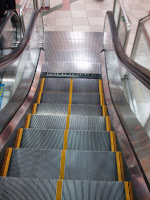
03: An escalator (inside the Ito Yokado department store) with a yellow line in the middle separating the walking lane on the left and the standing lane on the right
04: An electric cooking gadget for Chinese people which saves the time for preparing broth from chicken bones etc. I've never seen something like this in Japan.
05: Ito Yokado, a Japanese department store chain

Hotel Review: Mt Emei International Hotel

I stayed at Room 716 in Mt Emei International Hotel from 13 to 17 December, 2008.

The Good:
The internet access in bedrooms (with a LAN cable provided) for free of charge.

A kettle, rather than a coffee maker, in the bedroom (but only with Chinese tea bags; I forget bringing my favorite Twining English Breakfast teabags...)

All the written messages in the hotel are both in Chinese and in English (although the staff rarely speak English).

Near the hotel is an area with lots of small restaurants, bars, toy stores, and foot massage parlours, many of which are open until very late where you feel what must be the old Chinese town life before all the modernization took over.

Opposite the hotel across the large street is a big, Sichuan hot pot restaurant called 呉銘火鍋, where you can enjoy the local cuisine.

The Bad:
The bedroom faces a large, busy street. Even on the seventh floor, I hear the street noise.

On some floor below, loud music plays until 4 am, making the bedroom on the 7th floor noisy.

The restaurant serves breakfast of mediocre quality without few Western options, offering warm orange and lemon juice for some reason.

Even though the hotel has about 15 floors, there are only two lifts. It always takes a while to go down to, or up from, the ground floor.

Toothbrushes and toothpaste are provided, which is good, but the brush is not new, and the toothpaste tastes like bad medicine.

The toilet is easily blocked by flushing too much paper.

The glass door of a shower cubicle cannot be shut completely, allowing shower water to spill over to the bathroom floor.

The shower head is fixed to the wall.

Even though I put the sign "Don't disturb" all day, the front desk calls my room to ask me if I need cleaning. After telling them, "I'm fine," a room cleaner knocks on the door. Seems like the front desk didn't understand my English.

The Ugly:
Receptionists are horrible.

When I first arrived at the hotel, there were a few people standing in front of the front desk, talking to the receptionists. So I was waiting for them to finish. There were 3 receptionists, looking in their 20s, and 2 of them deal with these customers together, with another one doing something else. None of these 3 receptionists tried to make an eye contact with me. After 20 minutes, they seemed to finish dealing with the customers, but they never made an eye contact with me. Some other guests came to the reception without looking at me, talking to the receptionists. And they got served. Seems like there is no such a concept as queuing in this city. So I talked to one of the receptionists. It turned out she cannot speak English. Nor can the other receptionists. Maybe that's why they won't try to notice my presence. By handing out my passport, without speaking English, they figured out what I was asking for. But while she was dealing with me, a group of hotel guests came, asking her to return their luggage. And she did. There's no such a concept of queuing in this city.

When I was about to take a shower (so I was naked) in my bedroom after checking-in, a phone rang. It was from the front desk. A guy who did speak English told me I needed to pay a deposit of 200 yuan. I put on my clothes back, went down to the front desk, and gave my credit card. It didn't work. I paid a deposit in cash.

When a Chinese friend of mine asked where to have a drink near the hotel, the receptionist who dealt with my checking-in recommended the bar in the hotel. When my friend said we preferred a place outside, she just said, "Just go over there across the street."

At 11 pm on the day of arrival and in the last evening, the phone in the bedroom rings. It's an offer of massage. Very annoying if you go to bed early.

Verdict:
Unless you need to provide accommodation to international guests for a conference held in South Western University of Finance and Economics (which is located a 15-minute walk away from the hotel), you may want to avoid using this hotel. If you speak Chinese, the service may be much better, though.

Tuesday, December 16, 2008

Sichuan hot pot


Have dinner at 呉銘火鍋, a popular restaurant chain for Sichuan hot pot, with my former Japanese supervisor, his Chinese student, this student's female friend from Sichuan, and her former middle school classmate.

Broth in a pot (as shown in the above) is heated to boil, and a variety of meats, seafoods, and vegetables are poured into it. For some foods like thinly sliced beef, you pick up a piece with your chopsticks and dip and hold it into the broth until baked (about a minute). Cooked foods are then dipped in dipping sauce mixed with sesame oil, coriander, etc. before you put them into your mouth. It's very hot (the broth includes not only chili but also Sichuan pepper, which adds a distinct, tongue-paralyzing flavor to chili's hotness). But I cannot stop eating because it's very delicious. I'm also impressed by the variety of foods that Chinese people eat with this hotpot.

I end up eating a lot. For the following two days, my stomach feels uneasy. :)


Restaurants in China typically offer the cover sheet for a coat or a jacket that customers hang over the back of a chair.

Monday, December 15, 2008

Dinner at Shun Xing Ancient Tea House

The conference dinner is held at Shun Xing Ancient Tea House (順興老茶館), a restaurant located on the third floor of the Chengdu International Exhibition and Convention Center. The Sichuan dinner is excellent. (Some dishes are too hot to eat, though.) When everyone is about to finish eating, the dinner show begins. Dance by good-looking girls in traditional costume, shadow play, three masked men fire-spitting and face-changing (click here for a YouTube video), comedy by a woman and a guy who puts a lit candle on top of the head, singing by an old guy with rudimentary instruments. Honestly speaking, it is shabby. I'm a bit offended as the show interrupted my conversation with other diners.

By searching through Japanese websites, I learn that this restaurant is one of the three major places in Chengdu where tourists can enjoy chuanju or Sichuan opera. And the consensus among Japanese tourists is that the quality of the opera at this restaurant is the worst among the three. No wonder.

But the quality of food is still excellent.

Suburban Chengdu

Photos that I took in the area to the north of South Western University of Finance and Economics (north-west Chengdu). Notice that many photos are foggy, and no one seems to know whether Chengdu is foggy all day because of natural fog or smog. (Chengdu is traditionally famous for foggy weather.)
010203
0405

01: A convenience store chain ubiquitous in Chengdu, where I keep buying Gogo no Kocha Milk Tea (produced by a Japanese beverage company Kirin), my favorite bottled milk tea back in my high school days.
02: The gate of a residential complex. There are quite a few residential complexes like this one in Chengdu where high-rise buildings surround a square that functions as a parking lot and as a playground for kids.
03: A typical apartment building in Chengdu with green-white stripe roofs (no balcony though).
04: A bank branch. All the bank branches in China seem to have a long electric signboard which advertises financial items in scrolling messages.
05: A pedestrian crossing that leads to a signboard. Pedestrians need to walk outside the crossing to reach the sidewalk.

06070809

06: A covered food market surrounded by high-rise residential buildings.
07: High-rise residential buildings in Chengdu usually come with shops on the ground floor.
08: A trendy hair salon sandwiched by uninspiring shops.
09: A square with several restaurants.

101112
10: A chaotic traffic crossing
11: Residential buildings with a rather well-maintained bus.
12: The gate of a middle school

13141516

13: The sun in the thickly foggy (or smoggy) sky in the afternoon
14: South Western University of Finance and Economics
15: Pedestrians waiting for the green light. Motorcyclists and bikers completely ignore traffic signals in China. Pedestrians therefore wait between car lanes and bike lanes.
16: Toy stores open late in the evening.

Sunday, December 14, 2008

lunch in Chengdu

(This blog entry includes Chinese letters. If you see garbled letters, try to change your browser's letter encoding.)

I stayed in my hotel room for the whole day as I needed to prepare my presentation at the Hong Kong Economic Association conference tomorrow, except when I needed to have lunch.

A five-minute walk from the hotel takes me to a street called 石人西路, which seems to be an old high street in this part of Chengdu. Several small restaurants without any wall on the street, typical for developing countries, line up. I pick the one that looks the most hygienic, even though the one next door attracts the most customers. I say to myself, "Chinese people's taste may not be the same as mine."

Naturally, the waitress serving me does not speak English. She starts communicating in writing Chinese letters. She first writes down two letters, one meaning rice and the other meaning noodle. I pick rice. Then she recommends one particular rice dish on the menu. But I know what I want to eat: stir-fried rice, and I know the Chinese spelling of it (炒飯) because we Japanese use the same letters for this Chinese dish popular in Japan. I identify these letters in the menu, but there are several. I pick one. The waitress writes another Chinese letter which is not the one in Japanese. But I figure out it means hot or spicy (as a part of the letter looks similar to the letter meaning hot in Japanese kanji). The waitress seems to try to make sure that I don't mind a hot dish. I'm a bit scared, but give it a try.

A cup of barley tea and a small plate of chopped cabbage fried with sesami oil are immediately served. The cabbage is good, much, much better than the shredded raw cabbage soaked in vinegar that every pizzeria in Stockholm serves as a side dish. (Don't ask me why Swedes choose such salad as a side dish for pizza.)

Then the hot stir-fried rice with chopped pork and a variety of vegetables including chili comes. It's not very hot but very tasty, perhaps better than any lunch that I had in Stockholm in the last one year and three months. For the first time in a couple of months, lunch makes me happy. And all of this costs 7 yuan (0.7 euro).

I do not remember the name of this restaurant. Instead I take a picture of it:

Saturday, December 13, 2008

A trip to China

A trip to a foreign country always involves "surprise, surprise". Here's the list of surprises on the first day of my trip to China.

At immigration in the Beijing airport:
In front of the immigration officer's counter, there is a small gadget with which you can give a feedback to the service of the immigration officer who is checking your passport. You can press one of the four buttons to judge by a 4-scale measure. And this gadget is out of the immigration officer's sight, located on a small shelf on your side below the counter.

A dragon statue in front of the path to the security checks in Beijing Capital International Airport
Beijing Capital International Airport domestic departure lounge
No coffee shop around at all (Starbucks and some cafes are available before passing the security gate). The only place you can get a cup of coffee is KFC, which also serves an excellent egg tart. (In the international departure lounge, on the other hand, there are only coffee shops of mediocre quality with so-so sweets.)

Air China
Economy seats of an Air China plane flying from Beijing to Chengdu are very comfortable. Much better than a seat of SAS's plane from Stockholm to Beijing, which hurt my buttocks within an hour. The seat width is quite generous by making the corridor quite narrow.

Chengdu Airport
In the baggage claim area, three people are waiting for passengers, collecting their baggage tags to make sure no one takes a wrong suitcase.

Taxi from Chengdu Airport
Outside the airport, there is no obvious taxi stand. There was a queue of dusty taxi cars, which makes me wonder if it's safe to take these taxis. Then a young woman, dressed in tidy clothes, approached me, offering a taxi ride to my hotel. She doesn't speak English, but after I show her the name of my hotel in Chinese letters, she types 100 with her mobile phone keypad. More expensive than what I heard, which is 60 yuan. But I gave it a try. Then she took my luggage and walked towards the outside of the airport parking area for 5 minutes, by calling someone with her mobile repeatedly. Another woman who speaks a bit of English joins her, and they took me to the highway path outside the airport. Two minutes later, a car that doesn't look like a taxi comes with a male driver, and I was rushed into the front seat. Seems like they are running an illegal taxi service. So they cannot enter the airport. But the car is much luxurious than those taxis queuing just outside the airport building, and the seat was comfortable. And the driver passes many cars by changing the lane frequently on the highway. Maybe it was a good deal.

Saturday, December 06, 2008

Designer shaver


Brought to you by Hitachi. (The above photo is taken from Amazon.co.jp).

Wednesday, November 26, 2008

Why a Japanese DJ hugely popular in Europe doesn't want to live in Europe

Yoji Biomehanika, a Japanese DJ, is hugely popular in Europe, and therefore travel to Europe many, many times a year, taking more than 10 hours to fly from Japan each time. His friends wonder why he doesn't live in Europe. An European promoter even offered him a house in Europe.

But he still lives in Japan. Why? He says,

"No matter how many times I stay there, I still don't understand the way of life in Europe. Especially, I can't stand horrible foods. I want to say this out loud. There's no country like Japan where you can eat great foods. I won't be able to compose good music if I eat bad foods."


I agree with him.

Political Economy of Reform

There is a small theoretical literature on the political economy of reform. Here's an attempt to relate each paper to each other.

The seminal paper by Fernandez and Rodrik (1991) considers two kinds of reform. First, welfare-improving reform. Second, majority-benefiting reform. Both types of reform can be stalled due to individual-level uncertainty (whether or not each citizen benefits from reform is unknown to themselves).

Jain and Mukand (2003) show that welfare-improving reform can be implemented even with individual-level uncertainty if voters can vote on whether to compensate the losers from reform after reform is enacted. However, majority-benefiting reform still cannot.

Dewatripont and Roland (1995) instead analyze the case where citizens do not know whether each reform improves welfare.

All the above papers analyze the political feasibility of reforms in terms of conflicts of interest among citizens. Majumdar and Mukand (2004) instead look at it in the political agency framework (conflict of interest between government and citizens), showing why policy-makers often resist scrapping their failing policies and adopt high-risk policy experiments.

Saturday, November 15, 2008

Who must pay bribes and how much?

Development economists interested in bribery should read Svensson (2003) before designing their research. I've seen a couple of papers on corruption which completely ignore the contribution made by this piece of research.

He takes great care of designing the firm survey to solicit reliable information on bribe-paying behavior, which should be followed by anyone who wants to collect bribe data by surveys.

His empirical findings include:

(1) Firms are more likely to pay bribes if they are required to deal with the public sector officials (using public infrastructure, engaging in international trade, and paying taxes). In other words, formal sector firms are more likely to pay bribes than informal sector ones. A theoretical reason is that such firms lose a lot by refusing to pay bribes.
(2) More profitable firms are as likely to pay bribes as less profitable firms. But more profitable firms pay a larger amount of bribes than less profitable ones, conditional on bribe payments. This is an interesting fact. Barely profitable firms still need to pay bribes, if a very small amount, so that they can keep operating.
Any theory on bribery contradicting to these findings is hard to appreciate (unless counter-evidence is provided). If your empirical finding is different from these findings, you need to explain why.

Wednesday, November 12, 2008

Hotel Review: Hotel Commonwealth in Boston

www.hotelcommonwealth.com

I stayed in room 515 (with a king-sized bed) for 3 nights from 7 November 2008.

The Good:
1. Location. Just within a minute from Kenmore subway station on the Green Line.
2. Friendly staff.
3. Pleasant antique furniture. The pale turquoise color is pretty.
4. Very comfy bed. I got very good sleep.
5. Tasty room service breakfast.
6. Very tasty puddings in the lobby for breakfast.
7. Wireless internet in bed rooms for free of charge

The Bad:
1. Elevators. You need to insert the room key card before pushing the floor button. (Except when you go down to the lobby floor.) Otherwise, the elevator won't take you to the floor of your room. And you need to insert the card several times until it works.
2. Sockets (for electricity and for internet) on the desk. It's hidden behind a wooden panel that looks like a drawer. As the distance between the sockets and the wooden panel is very short, the panel cannot be closed if you use a socket converter.
3. No coffee maker, let alone a kettle. Unless you use room service or take away from a coffee shop nearby, therefore, you can't drink coffee or tea in your room.
4. Although wireless internet is available, the room directory instructs you to use an ethernet cable hidden inside the desk drawer for access to the internet. And this cable doesn't work.

The Ugly
1. Shower. The shower head is fixed on the wall. The ugliest thing is its water pressure, which goes up with water temperature. When the warmth of water becomes just right, water pressure is so strong that my skin hurts. I couldn't rinse my body.

Verdict:
If you don't take shower, this hotel is recommended.

Monday, November 03, 2008

Nigeria (continued)

A while ago, I featured some articles on Nigeria that show the country's potential both in a good way and in an ugly way. Here's another installment (for the ugly way).

Sunday, November 02, 2008

From The Economist this week

"A biased market" - Media bias results not from its owner's political slant but from the demand of news consumers, according to studies by economists.

"Another country" - A dictator stepped down after his electoral defeat in the Maldives.

"Keep'em guessing" - Prime minister of Japan won't call a snap election because he might barely win it.

"Cross straits" - Taiwanese hate mainland China.

"Spine" by Suilen (2007)

One of my recent favorite music pieces.

Ill Flava

For the first time since I moved to Stockholm, I go to a nightclub featuring drum & bass. Since last September, Bysis (Hornsgatan 82, 5 min walk from Mariatorget tube station) has been hosting the drum & bass party Ill Flava every Saturday. I finally manage to have an opportunity to check it out.

Arriving at the venue shortly after 11 pm, there are only 3 English-looking guys sitting at a table at the back. The music is not drum & bass but lounge-ish breakbeat. A couple arrive just before 11:30 after which the entrance fee of 60 krona is imposed. The 3 guys leave the venue. The DJ starts spinning drum & bass beats. Several more punters (half male half female) come to the venue, sit at the table, and leave without dancing ever by midnight. The couple starts dancing. By the time I leave the venue around 1 am, no one else comes to the venue.

Horrible. Is it because tonight is too cold (below zero degree)? Is it because everyone is tired of celebrating Halloween last night? (Young Swedes do celebrate Halloween, perhaps as a pretext for drinking.)

Compared to London nightclubs, the quality of sound systems is not excellent, probably not ideal for bass-intensive drum & bass music. But it's reasonably decent for this size of a nightclub. The illumination system is quite good. The DJ is actually good at mixing different tunes in a smooth way. The venue interior is cozy.

I guess what's lacking in this party is advertisement. The venue is not located in a happening area during the night. Unless you aim for this particular party, people won't show up. Perhaps it needs an additional attraction. Fabric, London's nightclub that has been supporting drum & bass after its demise in the late 1990s, attracts punters by its maze-like structure and an incredibly good sound system. It certainly contributes to the survival of drum & bass by exposing to drum & bass those people who otherwise would not even know what it is.

Anyway, during the past one year or so, I have been appallingly demotivated about work and life. A nightclub atmosphere with my favorite drum & bass music playing makes me feel down to earth, probably for the first time ever since I came to Stockholm, and allows me to think hard about what motivated me in the past and what makes my life happy.

And I find it tonight.

Saturday, November 01, 2008

How to buy foreign currency in cash if you live in Sweden

Buy foreign currency in cash at Forex in Sweden: No fees but a 4 percent commission against the interbank exchange rate.

Withdraw cash at an ATM in a foreign country with your Swedish bank card: a fee of 35 krona plus a 2.5 percent commission against the interbank exchange rate.

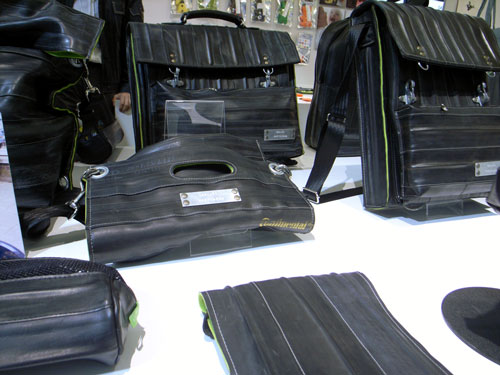
KREJCI's bags

(This photo is taken from Excite Ism Concierge "Tokyo Designers Week 2008 Report" 31 October 2008)

Bags made of recycled bicycle tires produced by Krejci from the Netherland.

Recycling is one major trend among designers these days, but design usually suffers. Krejci manages to achieve both good design and environmental friendliness. What impresses me is that good design of these bags is achieved by the recycled material itself, rather than by coating them with something else that's good-looking.

Friday, October 31, 2008

Venice Architecture Biennale 2008

Here's a video report by Monocle on Venice Architecture Biennale 2008. Part I and Part II.


Although the report is critical of the Biennale, judging from the video, it seems to me much more interesting than Venice Art Biennale 2007, which I visited.

Thursday, October 30, 2008

Impact of Successful Assassinations on Political Regime and Wars

My memory has been weakening recently. As an attempt to remedy this, I'll start writing down on this blog what I learn from reading papers, books, news media, etc.

Empirical findings from Jones and Olken (2008) "Hit or Miss? The Effect of Assassinations on Institutions and War":

When an assassination is attempted against the national leader...

1. If the dictator is killed, democratization is likely to follow.

2. It does not matter for subsequent political regime change if a leader in democracy is killed.

3. If the leader facing a small-scale war (less than 1000 battle-related death per year) is killed, the war is likely to be intensified.

4. It does not matter for the onset of a war whether the leader is killed.

5. If the leader facing a large-scale war (1000 deaths or more per year) is killed, the war is likely to be terminated.

Monday, October 27, 2008

A source of great research ideas in economics

I've decided to get this blog back in operation. But each post will be brief.

Reading Chris Blattman's blog for the first time in weeks reminds me of an important tip for applied economists. Hal Varian says, "Look for ideas in the world, not in the journals." Ray Fisman says, "I always tell graduate students that if they want innovative thesis ideas, to read the newspaper, not the economics literature. ... You usually don’t get exciting new research ideas while reading Econometrica."

I almost forgot this important tip. At least, when you think about building a model, the kind of assumptions you want to make should be what you have learned from world events, not from academic papers in economics.

And this reminder seems to have an immediate impact on my research today.

Friday, October 17, 2008

FT on rating agencies

A very good article from FT magazine on one of the causes of the current world financial crisis.

Sunday, September 21, 2008

Chase & Status

So the most creative music producers right now are Chase & Status coming out of my favorite drum & bass scene? Click below to see if it's true.

Take Me Away, the most selling drum & bass tune in the past one month

Eastern Jam, one of the biggest dubstep tunes this year

And here you can listen to their DJ set, including many of their own tracks, broadcast on BBC Radio 1 on 9 August 2008.

The End

I just learned that The End, my favorite nightclub in London and the nightclub I visited many, many times during my 5-year life there, will close its doors for good next January after 13 years in business. I'll try to catch one of its final nights.

Saturday, September 20, 2008

A boutique designed by Zaha Hadid


Yet another must-visit was opened in Tokyo: Neil Barrett's flagship store designed by Zaha Hadid.

Address: 3-17-6 Minami-Aoyama Minato-ku Tokyo

The photos on the right are obtained from Excite Ism Concierge (18 September, 2008).

Sunday, September 14, 2008

Michele McLaughlin "The Eternal City"


Video-wise, nothing particularly interesting. But this piece of simple piano music sounds good to me.

Saturday, September 13, 2008

Annika Larsson "Dolls" at Andrehn-Schiptjenko

(The image below is taken from Andrehn-Schiptjenko's website)

A video installation that lasts almost 50 minutes. You never understand what is going on in this video. There are five guys appearing in an artificially constructed white cube with a few lines and signs of red, blue, or black on the floor and the wall alongside a white cupboard on the wall and a small square platform on the floor with stairs on two sides. The video starts with a scene of a coffee maker making coffee with the sound of the coffee-maker replaced by some abstract music mocking the sound of coffee dripping. Once coffee is ready, a gray-haired guy in ski boots starts trying to bring a cup of coffee and a toast to another guy with glasses sitting on a chair just a couple of meters away. But he takes almost 20 minutes to do so, by dropping coffee cups on the floor and climbing up to the platform with help of a black, stout guy, etc. Another guy in a black suit who appears to be the principal along with the guy with glasses helps him by pouring coffee into a cup and putting a slice of bread into a toaster, which is hidden inside the cupboard. When the toast is done, the gray-haired guy, who appears to be the two principals' agent number one, smiles, by the way. He finally manages to pass the cup of coffee and the toast to the glasses-wearing principal, who simply put them on the side table without drinking or eating. Above the cup of coffee and the plate of the toast is the black, reversed-triangle mark on the wall. The next turn is the black, stout guy, or agent number 2, in boots with spikes beneath the sole. His task is to detach the cupboard from the wall and to destroy it with a hammer placed by the black suit principal under the wall sign of three parallel short blue lines. He also takes almost 20 minutes to do this task with help from other guys, because he drops the driller from his hand so one of the principal ends up detaching the cupboard, etc. Finally, a man with a black mask covering around his eyes, wearing a pair of skate shoes, challenges the task of passing a key to the black suit principal standing on the blue circle mark on the floor, just a couple of meters away from him. He also needs help from other guys. When he finally reaches where the black suit principal is standing, he stands with his back facing the principal. He inserts the key into the principal's pocket inside the suit jacket, by using his hands behind his back. When the task is complete, the video ends.

It doesn't make much sense, but it is much better than most movies and television programs. The video manages to stay at the borderline between absolute nonsense and something deep. And the video shooting technique is impressive. How each scene is framed by the video camera, and the sequence of scenes, is well-crafted. The shoes or the face expressions of the five guys are focused many times, making the viewer guess the emotion and character of these guys. The images of lines and signs in the white cube are inserted many times, making the viewer wonder the meaning of these geometric marks. Finally, the background sound construction is superb, too. The sound of dropping coffee cups or keys is erased, making the whole scene somewhat out of this world. The very abstract music actually expresses the anxiety of protagonists very well.

Certainly, this is not everybody's kind of video. But I love it because I love it without understanding it. That's the sufficient condition of good art.

For the detail on the artist and the work, visit the gallery's website.

Wednesday, August 20, 2008

My former job market paper submitted

I've finally done with the submission of my former job market paper to a journal, the most urgent task for any tenure-track assistant professor in economics during the first year of the job, on the 366th day since I moved to Stockholm. Phew.

Sunday, August 17, 2008

Wallpaper by Hanna Werning

These photos are obtained from www.byhanna.com.


The wallpaper design is good, and the idea to display it in the ruins amazingly suits these patterns. For more works by Hanna Werning, visit her website.

Saturday, July 19, 2008

Private property rights enforcement

A great example of private property rights enforcement when the state is weak. HT: Dani Rodrik.

The 10 most livable cities in CHINA

Monocle and many others have published the list of the world's most livable cities. Usually, no Chinese city appears in the list. What if you have to live in China but you can choose which city to live? Here's the list of the 10 most livable cities in China, based on opinion polls by Chinese.

Twist by 4 Use

The photo is from Excite Ism Concierge, July 18, 2008.


Moroso Twist tables, designed by 4 Use.

Sunday, July 06, 2008

If you have to say goodbye to your beloved one...

If you have to say goodbye to your beloved one, and if it hurts so much you don't know what to do, just acquire the characteristics of that person that you love. (Mikami Chisako, October 8, 2007)

I've probably been doing this unconsciously.

Saturday, July 05, 2008

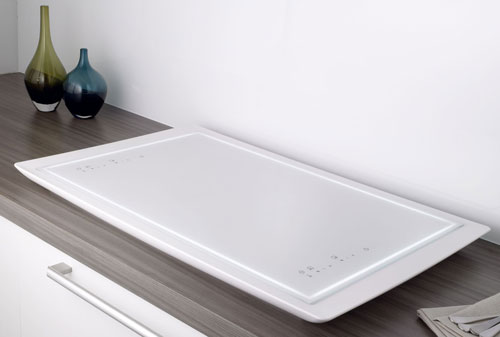
Electrolux E-dish

The photo is obtained from Excite Ism Concierge.


I hate electrical cookers. But if they come in style, I'm tempted.

Electrolux will start selling E-dish (see the picture above), which you can put anywhere in your kitchen as long as it connects to the power socket. That's a revolutionary concept.

And the design is sleek.

But I realize this is not an electric cooker. It is an induction cooker. It requires pans and pots tailored to such cookers...

Friday, July 04, 2008

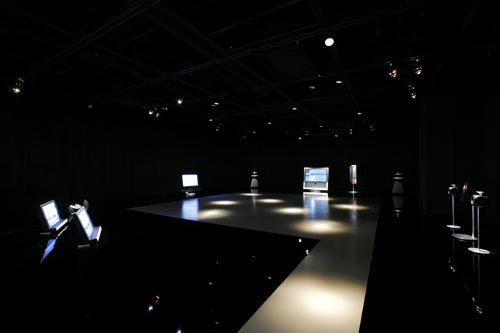
Bang & Olufsen's exbition in Tokyo

The photo is obtained from Excite Ism Concierge


Excite Ism reports Bang & Olufsen's exhibition in Tokyo. The above is the photo of the exhibition entrance. The art director of this exhibition is Tatsuya Matui, a robot designer. The black parts of the floor reflect light, looking like the surface of a lake at night. Beautiful.

Saturday, May 31, 2008

Meguro

Have lunch with a friend at Kioku, a restaurant in the entrance lobby of Hotel Claska on Meguro Street. It's got a nice ambience, perfect for Saturday branch, and the food is good enough (if not excellent).

Meguro Street has attracted many furniture and interior goods stores. Brunch+time stands out among them. It stocks many table boards made of one piece of natural wood (i.e. not engineered wood), reminding me of the beauty of wooden pieces of furniture.

Friday, May 30, 2008

Supermarkets in Tokyo

I follow my mother to buy foods and other daily stuff at supermarkets in the neighborhood. Three things surprise me.

First, the package of vegetables allows you to see in your mobile screen the face photo of farmers who produced them. The package has a QR code on it. Scan the code with your mobile handset, and you'll see the farmers' face on the mobile screen. (QR codes are everywhere in Japan now.)

Second, after passing the till, ice cubes are on offer for free of charge so customers can keep vegetables etc. cold and fresh on the way home.

Finally, Ito Yokado, one of the major supermarket chains in Japan, delivers what you just bought to your home on the same day for just 100 yen (0.61 euro). What's more, for what need to be kept refrigerated, they keep them in a special bag that keeps the inside cool.

Do you want to live in Tokyo by now?

Thursday, May 29, 2008

Emily Kame Kngwarreye vs. Turner Prize Winners

Roppongi has become a place for art lovers. Located within a walking distance are three major art museums in Tokyo. I visit two of them today: The National Art Center Tokyo and The Mori Museum. (The third museum is The Suntory Museum.)

Photo: The lobby hall at the National Art Center Tokyo.

The National Art Center Tokyo exhibits the works by Emily Kame Kngwarreye, an Aborigine painter. The exhibition collects about 100 pieces of her work, spanning her entire career.

The first glance at them puzzles me. All the paintings are very abstract, presenting a very different world. The curator's explanation in a video playing in a separate booth from the gallery helps me realize that her paintings reflect the place where she lived in her entire life: a desert in the middle of Australia. She basically drew what her eyes had always caught. Once I'm used to her ways of expression, I start noticing her mind-blowing sense of color. She mixes different colors in a pleasant way. This aspect of her talent blossoms in Earth Creation. Now that I have had an experience to seeing green leaves and colorful flowers burst into blooming suddenly right after the end of winter in Stockholm, I can appreciate what Emily painted in this work.

Another aspect of her talent, the use of dots to paint a canvass, allows the picture to look three-dimensional. The best to watch her paintings is from a distance. (And this exhibition is laudable in that it allows viewers to do this by using the vast exhibition space fully.) It is like when we see the cityscape from the top floor of a skyscraper as beautiful. Each dot is rather ugly, but when these dots get together and viewed from a distance, they produce a beautiful picture. How did she manage to envision this effect when she was drawing on a canvas on the ground (that's her way of painting)?

Once she established her fame in the contemporary art world by the early 1990s, she changed her style. That was when she was over 80 years old. She stopped using dots. Instead, she focused on line drawing. The exhibition shows her pieces of work during this period, which are honestly speaking not very good. But she made a break-through by painting Big Yam Dreaming with white lines on a black background, that is, by ditching what made her famous: dot painting and the incredible use of colors. That was just one year before her death in 1996.

Even after that, she tried a new approach. In the last series of paintings (drawn just two weeks before her death), she discarded even line drawings. She attempted to create a new world just by her keen sense of color. Would you start doing a new thing when you expected the end of your life in the very near future?

The pictures of her painting are scattered on the web. None of these do her any justice. Her works are best appreciated by watching the original from a distance. If your city invites her exhibition, do visit it. You won't regret it.

-----

After Kngwarreye, contemporary art pieces by Turner Prize winners displayed in the Mori Museum inevitably look small-scaled. Each artist does reveal something new. In Mother and Child, Divided, Damian Hirst, for example, makes me realize the difference in what is inside the body between a cow and a calf. It's not like every part of the body becomes larger when one grows up. In a project House, Rachel Whitered managed to visualize the space inside a house that is going to be demolished, that is, something nobody cares about, by making a concrete cast. In a video entitled Deadpan, Steve McQueen shows what each person cares most about is different. (And I realize one of the video works that I saw in Venice Biennale 2007 (Sophie Whettnall's Shadow Boxing) is basically a copycat of McQueen's work, although I prefer Whettnall's.)

Overall, however, what Turner Prize winners try to convey to viewers appears to be rather trivial in comparison to Kngwarreye's works. Maybe because Turner Prize winners fail to produce beauty.

------

Tokyo is not just a city for great foods and amazing shopping experience anymore. It is now a place to allow the luxurious comparison of totally different strands of great art. Chanel has chosen Tokyo as the second city to exhibit Mobile Art. Tokyo allows its residents to keep up with what's happening in the world.

Tuesday, May 27, 2008

Ginza

During the past one year, the most dramatically transformed area of Tokyo is Ginza.

First off, I visit Marronnier Gate, opened on September 1, 2007. This 12-story shopping and dining complex surprises me in two senses. First, each of the top three floors for dining features different types of cuisine: the 10th floor for European, the 11th for Asian, and the 12th for Japanese. I'm not aware of any other buildings in Tokyo that organize their restaurants in this way, but it makes real sense. You usually feel like eating a particular type of cuisine, so you don't want to browse Japanese, Chinese, and Italian restaurants together around, do you?

Among the Japanese restaurants on the 12th floor, I try Sou, serving vegetable dishes from Kyoto with stylish decor of Japanese minimalism. My choice is "One Soup Three Vegetables", a lunch menu available only on weekdays. The vegetable soup with white miso in Kyoto style is superb. The price is just 1,500 yen (9.3 euro). By Tokyo standards, this is not cheap for lunch. But neither London nor Stockholm manages to serve a lunch dish that can be described as "superb" for this price.

Downstairs, Tokyu Hands occupies five floors from the 5th to the 9th of the Marronier Gate. Tokyu Hands is a well-established chain for homeware and DIY goods, sometimes selling quirky stuff. But it's never associated itself with style. In its newly opened Ginza branch, that's not the case anymore. It signifies the recent change in trend in Tokyo towards a better quality of life.

Walking on Marronier Street to the east from the Marronier Gate, you'll see De Beer's first store in Asia, opened on March 20, 2008. Just have a look at its wavy facade:


A further change to Ginza's landscape is Swarovski's flagship store, the first for the brand, on Chuou Dori (Central Street). Opened on April 1, 2008, Tokujin Yoshioka designed the store interior under the theme of crystal forests.

Ginza has also seen Giorgio Armani, Cartier, Bvlgari, and Dunhill open or renew its flagship store during the past one year, and they are not just another store in this world. They feature good design and something only available in Tokyo.

Nowadays, anything that is hyped or proves to be popular in the West comes to Tokyo. H&M will finally open its first store in Japan, again in Ginza, this September. Channel's much-hyped mobile art exhibition comes to Tokyo at the end of this month, before any European cities (but after Hong Kong). Plus Tokyo offers great and inexpensive eating-out experiences and excellent services even at budget stores, both of which are unthinkable in the West. What is the reason for not living in Tokyo?

Monday, May 26, 2008

A day in Tokyo

Leave my parents' home around midday. Have takoyaki (octopus balls) at Gindako for lunch. Eight balls of takoyaki for 500 yen (3.06 euro). Gindako is a nationwide chain. My hometown branch is located in a part of the railway station building that lunch takeaway stores occupy. Your choice includes Chinese, udon noodle, yakitori (grilled chopped-and-skewered chicken), croquettes, and bento boxes. All cost at most 1200 yen. It is hard to believe that everybody eats sandwiches every lunch on weekdays in the capital of some country in Europe. It'd be hard to believe for people in Stockholm, too, where almost every lunch place serves the same set of foods.

Pass the ticket barrier of the station and walk up to the platform where Juicer Bar sells freshly squeezed fruit juice: mango, melon, banana, etc. Take a 100ml cup of mixed fruit juice for 150 yen (0.92 euro). The store board says, "We will raise our price by 30 yen due to the recent world food price surge."

Take the Sobu line, and a 33-minute ride to the west takes me to Yoyogi station. Use the east exit of the station to walk to Shinjuku Takashimaya Times Square. Buy a bilingual art magazine Art It at Kinokuniya book store. Buy a pair of scissors at Tokyu Hands. The latest trend in scissors in Japan is fluorine-coated ones so that tapes and glue won't stick to scissors.

Go back to Yoyogi station and take Yamanote line. One station to the south is Harajuku. Get off the train and walk down on Omotesando boulevard to the east. Arrive at Tornado Mart where I asked to adjust the length of a pair of trousers that I bought last Wednesday. In addition to picking up the trousers, buy a black, tight, uniquely-designed jacket.

Walk down south to Shibuya. While the north side of Omotesando boulevard is packed with cutting-edge small boutiques for young men with Japanese original brands in stock (as written last Wednesday), the south side sees boutiques for Japanese people dreaming of Europe and America. These stores are horribly boring to me. I can find these stores in London, Stockholm, San Francisco, and other major cities in the West. Those on the north side are hard to find in the West.

Arriving in Shibuya, stop by at Tower Records. Buy a CD of gagaku music. Then stop by at Sakuraya where I browse USB flash drives. Japan produces a wide range of quirky USB flash drives like those shaped like sushi. I'm looking for a stylish one, and find IO Data's ToteBag series.

It's time to go home. Take the Hanzomon line to Kinshicho. Buy three cream puffs at Maple House in the railway station building. Beard's Papa is not the only cream puff available in Japan. Maple House's version has a cinamon flavor. Back at home, I eat it with my parents. All of us like it. And one cream puff costs 150 yen (0.92 euro). This is the kind of things Stockholm never offers me with...

Cheap but decent foods, cutting-edged design clothes, user-friendly stationery, and good-looking electronics items. That's what Tokyo offers. It's a paradise for materialistic people as we Japanese are.

Sunday, May 25, 2008

Kinshicho

My parents' home is located in eastern Tokyo. It takes about one hour (15 minutes by walk to the nearest station and 45 minutes by train) to major districts of Tokyo like Shinjuku and Shibuya. I finally understand why I got exhausted everytime I stayed in Tokyo for a couple of weeks. I'd go to such major districts of Tokyo almost everyday. My travel time was as long as 2 hours every day.

The situation has changed a bit. Kinshicho, another district of Tokyo just 30 minute away from my parents' home, has become a trendy spot during the past couple of years. And I'm quite satisfied by the shopping experience in this area today.

The Kinshicho branch of the Marui department store is not that different from other Marui branches in Shinjuku and Shibuya anymore. I manage to find good-looking pieces of clothes at Rupert (a dark turquoise t-shirt with long sleeves and a zipper neck hole), Michel Klein Homme (a khaki flax jacket with slightly short sleeves), TK (a white t-shirt with Japanese traditional patterns), and Comme Ca Men (a white t-shirt with a black and purple abstract art print).

And I visit Olinas, a recently opened shopping mall in Kinshicho. Quite a few fashionista girls walk into the mall, a scene unthinkable for Kinshicho until a few years ago. The mall is crescent-shaped with a double-height structure (you can see the top ceiling of the building from the ground floor), designed by RTKL. Although women's wear boutiques form the majority of the shops, several interior good stores are also found. There are some cafes I haven't seen before anywhere else in Tokyo. Surely this is a better shopping mall than the Brunswick in London, which just collects all the major, boring high street shopping chains.

Kinshicho beats London.

Saturday, May 24, 2008

Sumo wrestling

Today I stay at home all day because it rains outside.

The professional sumo wrestling tournament is broadcast on TV. Koto-oshu, a Bulgarian sumo wrestler, becomes the champion for this month's tournament. One third of the top 40 sumo wrestlers are now non-Japanese (mostly Mongolians and east Europeans).

Friday, May 23, 2008

Tokyo Dining Scene

Have dinner with Reiko, a friend of mine living in Tokyo. When we decide where to eat, she suggests the following: motsunabe, jingisukan, free-range chicken from Miyazaki prefecture (southern Japan), Okinawa cuisine (Okinawa is one of the southernmost islands of Japan), dojo (oriental weather loath), lamb shabu-shabu, game barbecue, shamo, oden, macrobiotec diet, and so forth. Can you believe such a wide variety of options available in Tokyo? People in Stockholm, where good dinner is almost always in French style, certainly wouldn't. Bear in mind that what Michelin Guide Tokyo revealed is just the tip of iceberg.

I pick game barbecue. Known as gibier in Japan, it has recently become popular in Tokyo because game meat contains less fat than standard meat. Fat-conscious Japanese girls love such food. Reiko takes me to a gibier restaurant named "Matagi ga machi he oritekita" (meaning that matagi has come down to the city; even by Japanese standards, it's unusual that a sentence is the name of a restaurant...) in Nakameguro, an area of Tokyo which has become trendy during the last five years.

The restaurant has a minimalist, stylish decor with aluminum pipes hanging from the ceiling above tables. Shichirin on which game meat is barbecued is placed under the pipe so the smoke goes out of the restaurant through the pipe. Tokyo and Seoul have many restaurants like this, but for the first time I see a restaurant that places such indoor barbecue pipes in a stylish way.

We have pheasant, boer, and moon bear. I never thought I would eat moon bear. Pheasant, boer, and moon bear taste like chicken, pork, and beef, respectively, but the texture is more consistent to the extent that it is still easy to bite. Meat is served with yuzu pepper, a spice that has recently become very popular in Japan. It goes quite well with barbecued meat.

Including half a bottle of Chilean red wine, two plates of vegetable, and homemade salted pork, we pay 9,000 yen (55.21 euro) in total. Given what we eat (i.e. something unusual to eat), do you still think Tokyo is the most expensive city?

Thursday, May 22, 2008

Tokyo National Museum

Ueno is a unique area of Tokyo. To the north-east of Ueno railway station, a number of museums are surrounded by trees and grass. To the south-east spreads Ameyoko, very Asian market streets full of food and clothes shops.

One of the museums in this area is Tokyo National Museum. The museum consists of four buildings, one of which is the Gallery of Horyu-ji Treasures designed by Yoshio Taniguchi before(?) he became famous for his redesigning of the MoMa in New York. I'm struck by his modernist approach to architecture. These days, new buildings almost always feature some curvature in them. Taniguchi's design escapes from it. Although foreigners (Wallpaper* City Guide, an FT columnist) praise this building, I'm not particularly impressed. But that's probably his aim: a building that does not obstruct or intrude into your mind just like kaiseki cuisine, which is actually quite difficult to achieve.

The exhibition inside is a bit disappointing. The explanation for each set of items on display is rather confusing. But some pieces of art are impressive.

Gallery 2 houses nearly 30 gilt bronze statues of sexy Guan-yin (Avalokitesvara in the female form). Local warlords in Japan back in the 7th century possess and worship these statues (about 50cm tall). 1400 years on, some Japanese people today possess figures of anime characters. Our preference does not seem to change much over the long history of Japan. :)

Another impressive piece is Kaikikyo (in gallery 5). This is a mirror given to Horyu-ji temple by Empress Komyo in 736. It depicts a sea with four islands at the edge in a 90 degree interval. The center is the sky while the edge is the ground. Within waves of sea and islands, animals and human beings are inserted. This is a piece of art back in the 8th century of Japan. It's beautiful. Its pictures on the web do not do justice to its beauty. You have to look at it with your own eyes.

The Museum Shop is unexpectedly good. Various items featuring pieces of Art in the museum are on sale. Dancing People catches my eyes. These figures (called haniwa) are made of clay and buried in the tomb of important figures back in the 6th century. I buy a keyholder of this pair of haniwa.

Then I go to the gallery where the Dancing People is on display. On the way is a gallery of Japanese art in the early 20th century. The gallery is spacious without too many objects so viewers can watch pictures from a distance. There are quite a few good and interesting pictures drawn by artists like Yokoyama Taikan. These guys take the Japanese drawings to a next level by incorporating Western ways of painting. One of Yokoyama's paintings draws Buddha preaching his followers in two hanging scrolls side by side. Buddha is in the the left scroll, and all the followers in the right, suggesting the difference in the level of enlightenment between the two. Although the way these figures are drawn is quite traditional Japanese, Yokoyama uses very vivid color of green, unusual for traditional Japanese paintings, to paint tree leaves above Buddha and the followers. The mixture of previously incompatible things, and the use of canvas (scrolls in this case) to suggest something more than what the picture itself tells, is very much like today's contemporary art.

Wednesday, May 21, 2008

Omotesando & Ura-harajuku

The only time I buy clothes is when I visit Tokyo, the world's most friendly city to anti-brand male fashionistas (i.e. fashion-conscious men who don't want to wear Paul Smith, Dior Homme, Giorgio Armani, etc.).

Ura-harajuku, off Omotesando boulevard, is the place to go for such men. Small alleyways are lined with myriads of small-scale boutiques for men (amazingly, there are more shops for men than for women). Various styles are on offer, and they are often creative.

What attract me this time are: a draped long-sleeved t-shirt with two strings hanging from both sides of the crow neck at Jackrose Luv Maison; yukata with contemporary patterns at Tokyo 135; a silver long-sleeved t-shirt at World Exe; and a bell-bottomed pair of trousers at Tornado Mart.

I also stop by at Omotesando Hills. As before, the ad campaign undermines the beauty of the inside of the building designed by Tadao Ando. In the photo below, the ad part is cut off from the frame although this is not the best way of framing the interiors of Omotesando Hills.

But I now learn there are some interesting stores which I can recommend.

Hida Omotesando (floor b2) displays expensive, but elegant wooden furniture made of Japanese cedar from Hida region (in the middle of Japan) designed by Enzo Mari. The grain of cedar makes these pieces of furniture look very unique and beautiful. The collaboration between Japanese traditional furniture makers (which have excellent skills of processing raw materials) and European designers like this one is an emerging trend in Japanese interior design.

Another interesting shop in Omotesando Hills is Kisara (floor b2), selling Japanese traditional textile and other handicrafts presented in a contemporary fashion.

Omotesando Saryo, a cafe at the main entrance of Omotesando Hills, serves Western sweets, pastry, and sandwiches with the decor inspired by Japanese tradition. For 1250 yen (7.67 euro), a croissant sandwich, a small bowl of salad, and yuzu (a kind of citrus only available in Japan) smoothie fill my stomach. The kind of cafes Stockholm never offers me with...