Saturday, November 27, 2010

Zollverein


 Kokerei Cafe, recommended for lunch if you visit Zollverein. They serve "typical coal miner meals" in an excellent way for an affordable price.

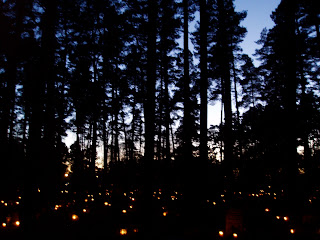
It's perhaps not a particularly new idea to convert the former industrial complex into something cultural. Beijing has the 798 Art District; Toronto has the Distillery District; Berlin has the Berghain nightclub (by far the best nightclub that I've ever been to). But Essen's Zollverein former coal mine industrial complex, particularly the Kokerei (coking plant) designed by Fritz Schupp (the 4th and 5th photos above), is probably the most aesthetic. It's worth a visit if you happen to be around the Ruhr district of Germany.

Friday, November 26, 2010

Cologne Cathedral


The Gothic architectural design, I learned, appears at its best if it's used for a very tall building. The Cologne Cathedral already looks magnificent from the outside, but the real beauty is inside. Soaring, rather thin pillars that are absorbed into the pointed arches on the high ceiling creates a kind of space that contemporary architecture cannot replicate.


Climbing the south tower (for 2.50 euro) is worthwhile not because of the view from the top (which is obstructed by the 2-meter high wire netting) but because of the views through windows on the way up. You don't often look down on a modern city landscape through the Gothic windows, do you?

And I'm surprised to see some contemporary art that's part of the cathedral. Gerhard Richter's contemporary counterpart of the stained glass window is only subtly out of place and somehow in place:


Among those stained glass windows, I love these:

Restaurant Review: L'Escalier

My lunch in Cologne was had at L'Escalier (Brüsseler Strasse 11; phone # 0221 205 3938).

They serve a two-course, delicate French lunch for 17.50 euro. The trick behind this affordable price for sophisticated dishes is serving in small portions. Having said that, every bite is enjoyable at this restaurant.

As an appetizer, three small heaps of orange-colored vegetables, pumpkins finely chopped and fried, carrots finely chopped and fried, and carrots thinly sliced and pickled, are served on a wooden, rectangular tray. Along with them come a basket of bread including fantastic home-made potato bread. The accompanied lemon butter is very nice. The amount of bread is generous enough that customers won't leave the restaurant with a hungry stomach.

Today's starter is carrot and ginger soup. Slightly frothed on top with chopped parsley, the soup that includes bits of carrots warms up my body frozen by near-zero temperatures outside. The amount of ginger in it is just right, not too much to disturb the taste of carrot and not too little to be insignificant.

The main course is a small chunk of pike-perch steak and several pieces of dumplings (nothing inside) served on vegetable ragout with tarragon flavor. Even though it is only a mouthful, pike-perch steak is beautifully done. And tarragon prevents the taste bud from getting bored with the otherwise straightforward taste of vegetable ragout.

After being satisfied with the foods, I feel like drinking a cup of black tea. This can be a risky way of finishing the meal. Black tea in Germany tends to be very poorly served. The most typical is a glass cup of hot water with a teabag and the lid, which is a total disaster to infuse black tea properly. (Why don't they put the tea bag into boiling hot water on their own before serving it?) But no such worry at this restaurant. They serve Darjeeling tea properly in a black tetsubin (Japanese cast iron tea pot).

Two waitresses work diligently and attentively. Even when I reveal my lack of knowledge on French foods (I couldn't tell tarragon from lemongrass), they just nicely correct my ignorance. They know what they are serving, so you can talk to them about the foods served. Of course, they speak English pretty well.

Highly recommended if you are around Cologne during the lunch time. It's a few minute walk from Rudolfplatz U-bahn station.

Friday, October 15, 2010

Skitsch

Just around the corner from the Bvlgari Hotel, Skitsch is a nice interior good / furniture shop in Milan. The store sells Senz umbrellas, a must-have if you live in a place where it's windy whenever it rains (which is true in Stockholm).

Tuesday, October 05, 2010

The Kungsholmen restaurant

I went to Kungsholmen, a famous, eclectic cuisine restaurant on the southern shore of the Kungholmen island in Stockholm, for dinner with Japanese economists. All of us are impressed by the quality of food. This is something. We are all from Tokyo, the world's capital of cuisine. Our taste buds are very picky.

Vietnamese beef salad, although it doesn't really taste like Vietnamese, is a pleasant experience with occasional sweetness of fruits in it. And veal entrecôte with chanterelles mushrooms is divine.

The restaurant looks like a luxury food court. Dinner tables are surrounded by food stalls of 7 different cuisine (including sushi and Swedish) in which you can see chefs cooking. But they are part of the decor. You don't have to go to these stalls to place an order. Waiters and waitresses come to your table to take your order.

As they do serve some Swedish dishes, the restaurant is recommended to anyone including visitors to Sweden.

Monday, October 04, 2010

National Cinnamon Bun Day

October 4th is the National Cinnamon Bun Day in Sweden. The cinnamon bun is the most common baked good, found in almost every cafe in Sweden.

And I don't like it at all.

Sunday, October 03, 2010

A taste of drumstep

There's a new sub-genre of music emerging at the intersection of drum & bass and dubstep. It's called drumstep. Here's a taste of it. Do wait until 1 minute and 8 seconds pass, when the gist of drumstep reveals itself.


Added on 5 June 2011: this tune was awarded the best track of the year 2010 by Drum & Bass Awards 2011.

Saturday, October 02, 2010

Du Chef

Yesterday I found a nice lunch place in Hammerby sjöstad. Du Chef, a tapas restaurant in the evening, serves Swedish lunch, charging 85 krona between 11:00 and 12:30 or 75 krona before 11am or after 12:30. (This pricing scheme reveals when Swedes have lunch most likely: quite early.)

As usual for lunch in Sweden, you pick a main dish (either meat, fish, or vegetarian), help yourself at a salad buffet, and slice bread on your own. Of course, an unlimited amount of coffee (or tea bags with warm, not hot, water) is included in the price.

But the main dish (skewered salmon with grönsaksris, which is supposed to be stir-fried rice with vegetable but tastes like vegetable pilaf, and skärgårdsröra, which seems to be one of the Swedish specialties, made of cream cheese, finely chopped anchovy or shrimps, chives, and finely chopped boiled eggs) tastes good. Certainly better than any of the lunch places in my workplace.

If you are around in the area of Sickla Udde around the lunch time, don't miss it.

Friday, October 01, 2010

Taking taxi in Stockholm on Friday afternoon

I went to Ikea to buy a desk for my apartment. On the way back, I took a cab.

It was around half past three in the afternoon. The highway was pretty busy. Swedes seem to leave office quite early on Friday. The taxi driver decided to get off from the highway and took an alternative route. The taxi fare meter kept the number rising and rising. What's the point of going to Ikea to buy a cheap, big furniture if bring it home by taxi costs more than the furniture?

Then the taxi driver, still on the way to my apartment, asked me if my company would pay the fare. I said no. Then he stopped the meter at 450 krona (48.6 euro), saying, "Friday afternoon is the bad time to take a cab. I didn't expect to take this long route."

It's perhaps something good about Stockholm.

Thursday, September 23, 2010

A great catering service in Stockholm

This evening I had one of the best dinner meals that I'd had in Stockholm at a PhD defense party. The caterer's name is Thomas Omfors.

If you plan to throw a dinner party by hiring the catering service in Stockholm, think of him as an option.

Friday, September 17, 2010

Johan Cöfcrantz Ramsey

With my colleagues, I went to a small jazz club (Glenn Miller Cafe) in Stockholm tonight. And my mind was blown up by an amazing jazz drummer named Johan Cöfcrantz Ramsey. He's a dynamo. He lifts up and down the tune very effectively with his drums. The way he changes the rhythm during the improvisation is always unexpected and dramatic, but he manages to avoid unraveling the whole tune. Usually, a jazz drum solo starts after other musicians stop playing, but in his case he's already started his solo when the audience realizes the solo has started. It's just fun to listen to his drums. Such a drummer is very rare in jazz, I suppose.

The experience was close to the one I had in New Orleans. Only if at least one of the other players were as assertive as he was. (I don't really like a band led by one musician.)

Sunday, September 12, 2010

A theory of the origin of the state

I always wonder what caused the emergence of the state. The answer to this question has an important implication to poverty reduction in developing countries because one of the biggest causes of underdevelopment is state failure (the best example of this is Somalia).

Google search takes me to an interesting theory proposed by an anthropologist named Robert L. Carneiro in his 1970 article. In a nutshell, the state emerges in agricultural land surrounded by mountains, seas, and deserts. In such an area, when all the cultivable land is cultivated, villages start fighting each other to conquer more pieces of land to sustain the population. When the conquerors rule the conquered, there is a need to create the administrative structure. This is the origin of the state.

But this theory was proposed 40 years ago. There must be a refutation to this theory, or some refinement to this theory by now. If I learn those, I will write a sequel to this post.

Wednesday, September 01, 2010

Housing in Stockholm (again)

After 3 years of living in Stockholm, reading a news article on the rental housing market in Stockholm like this one doesn't make me feel anything. Otherwise you as a foreigner won't be able to feel happy in this city.

But when I read that new arrivals from foreign countries to Stockholm University are camping in the campus because they fail to find an apartment to live, this sounds too much.

As far as I know, none of the political parties in Sweden ever mention this issue in the upcoming elections.

I'm moving (again) later this month. I was lucky to find a Swedish PhD student who studies in the US for a year from this autumn. Which also means that I have to find yet another apartment after he comes back next June.

That's life for foreigners in Stockholm. If you plan to live in this city, be prepared.

Tuesday, August 31, 2010

Lunch price in Stockholm

A survey reveals the average price for lunch (main dish, side salad, and coffee) in Stockholm is 76.9 kronor (8.2 euro, 10.2 US dollars, 6.7 UK pounds, 880 yen). My impression is that this is the minimum price for lunch.

Friday, August 20, 2010

Göran Lindberg and Sweden's dark side, by The Observer

A friend of mine living in UK told me about this article on Sweden by The Observer, a Sunday newspaper. It's a long article, but worth reading if you wonder what Sweden is like.

Wednesday, August 18, 2010

"Normalization" of Sweden

The general election is approaching in Sweden, and the incumbent government ministers are proposing what I would call "normalization" of Swedish society, presumably with an aim to win votes in the election reported to become quite close a race.

Two days ago, the minister in charge of immigrants' integration to society proposed to allow low wage jobs for refugees, by saying, "There is a difference between a well paid job and one that is poorly paid. However, the difference between having and not having a job is much greater."

Yesterday, the education minister proposes to allow smart students to take advanced classes in high school rather than to wait their fellow pupils to catch up, by referring the current Swedish education system as following the Jante Law, the key word to understand the Scandinavian societies.


For someone living in most other countries, it's hard to understand why these two policies are just proposals rather than the reality. But that's Sweden, cherishing the equality of its citizens more than anything else.

Thursday, August 05, 2010

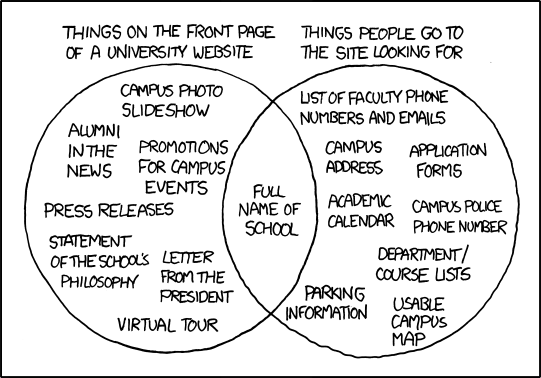
This is so true...

Source: XKCD

I often visit the website for a university to learn how to get there. It usually takes at least 5 minutes to obtain that piece of information...

HT: Chris Blattman

Sunday, August 01, 2010

Jante Law


  1. Don't think that you are special.
  2. Don't think that you are of the same standing as others.
  3. Don't think that you are smarter than others.
  4. Don't fancy yourself as being better than others.
  5. Don't think that you know more than others.
  6. Don't think that you are more important than others.
  7. Don't think that you are good at anything.
  8. Don't laugh at others.
  9. Don't think that any one of us cares about you.
  10. Don't think that you can teach others anything.


HT: Andaje

Wednesday, July 28, 2010

Leaf Cafe in Pordenone, Italy

I'm staying at a friend's place in Italy this week. This friend of mine is running a cafe in Pordenone, a town in northeastern Italy. Today I worked with my laptop all day at this cafe, and I came to a conclusion that Leaf (the cafe's name) is my ideal cafe: proper coffee, quality sweets, stylish but not intrusive decor, soothing background music, free wifi, tasty lunch, and some twist in menu such as matcha latte.

Tuesday, July 27, 2010

What is democracy: a case of Egypt

A long time ago, I listed up the requirements for a country to be a democracy often mentioned in social science studies. Here's the list:

A1: Suffrage is universal - (nearly) all adults can vote.
A2: The executive is directly elected or indirectly elected by legislature.
A3: Elective legislature exists.
A4: Opposition parties are allowed to exist.
A5: No gerrymandering (ie. manipulating electoral rules and districts in favour of the ruling party) is undertaken.
A6: Press freedom is ensured.

B1: Opposition candidates can freely run for office.
B2: Opposition candidates can freely conduct their electoral campaign.
B3: Voters can freely cast their ballots.
B4: Votes are neutrally counted.

C1: The executive is checked and balanced by legislature and judiciary.
C2: Non-elective veto players do not intervene politics.

The Economist magazine recently reported how the Egyptian ruling party has held power for a long time.

First, those who would oppose the ruling party find it difficult to register as voters.

Few people register because the legal period for doing so is short and comes many months before elections. Besides, registration involves a visit to a police station, which many Egyptians prefer to avoid.
This can be seen as violation of condition B3 above.

Second, condition B1 is violated:
The parties allowed to run for the People’s Assembly, Egypt’s parliament, are selected by a committee controlled by the ever-ruling National Democratic Party (NDP), which is headed by Mr Mubarak. Independents can stand, which is how the Muslim Brothers, banned as an organisation, field their candidates. But they risk arrest on some pretext, and harassment even without one. (...) Since 2005 there have been elections for the presidency, too, replacing the previous embarrassingly unanimous referendums. The next one of those is scheduled for September 2011, albeit under restrictive rules that, in essence, allow the NDP to choose not only its own candidate but his opponents as well.

Condition B2 is violated, too, if we regard the post-election period as the campaign period for the next election:
In the previous presidential poll, in 2005, nine selected opponents were allowed to run against Mr Mubarak, yet he still grabbed 89% of the vote by the official count. His closest challenger, Ayman Nour, a youthful lawyer, was locked up in prison on flimsy charges of forgery soon afterwards and released only last year.

Condition B3 is also more obviously violated:
In the parliamentary election of November 2005 voting was spread over three rounds because a ruling by the constitutional court required that judges should monitor it closely. The Brotherhood, wary of showing too much strength and so provoking a backlash, fielded candidates for only a third of the 454 seats. In the first round they trounced most rivals. In the second and especially the third round police simply locked many polling stations and sent everyone home.

The last half of the article talks about Mohamed ElBaradei, a potential presidential candidate. The strategy for the government to sabotage his campaign is to punish his supporters:
Kuwait, a country friendly to Egypt’s regime, summarily expelled a group of Egyptian workers who had innocently created a local support group for Mr ElBaradei. In advance of his scheduled visit to the rural province of Fayoum in May, companies that rent equipment for public events received warnings not to work with him or risk having their equipment seized. Private television stations have been “advised” to pay less attention to the upstart, well aware that their owners’ useful government links may be at stake.
These episodes violate condition B2 in a broad sense. But we could treat them as an additional condition for democracy: opposition supporters are not economically threatened by the government.

Monday, July 26, 2010

Isao Hashimoto (2003) "1945-1998"

A work of art can be more powerful than any social science studies or any politician's speech.

Chris Blattman's blog post took me to this video today. Please watch this with sound.


The video shows when and where which country conducted nuclear weapon tests (and the two actual uses of the weapon) in the periods 1945-1998.

After slowly showing three explosions in 1945, each second of the video represents a month and locates nuclear weapon tests conducted in that month (if any) on a map of the world. Each test comes with a tone (different for each conducting country), which is particularly effective to create a sense of something chilly going on when many tests are shown to be conducted in successive months.

You could convey the same information by listing these tests this way. But Isao Hashimoto's work is way more powerful to convey the message.

Sunday, July 25, 2010

Lake Barcis

It's a hidden gem in northeastern Italy: Lake Barcis. The turquoise water surface changes its expression depending on the sky as we arrived on the day of the precarious weather.

Friday, June 18, 2010

araisara

From this week's edition (June 14, 2010) of Nikkei Weekly...

Having been raised in Beijing, Sara Arai acquired the ability to combine the cultures of China and Japan --- sweeping dynamism and delicate beauty --- to create original fashions. ... In [her latest collection for autumn/winter 2010-2011], Arai used a traditional Japanese dying technique called yohenzome, which gives color a unique characteristic. This little-known technique is said to have its origins in the early Heian period (794-1185). Yohenzome-dyed fabrics seem to change color when light hits them from different angles. ... Under fluorescent light, a yohenzome article that is red under the sun changes to black.

I wanna see her collection in video, not in photos, as photos cannot express the changing-color feature of yohenzome (陽変染). Unfortunately, the video of her latest collection doesn't seem to be available online. (The photos are here.)

This is mind-blowing. The technique dating back to more than 900 years ago is revived to add a 4th dimension (time) to the three dimensional world of fashion with the color created by fluorescent light beyond the imagination of the original inventor of this technique more than 900 years ago.

I love this kind of attempt to broaden one's imagination.

The official website of araisara is here.

Monday, June 14, 2010

Flat-hunting in Stockholm still continues...

Although I just moved in to the current apartment two weeks ago, I have to keep looking for the next apartment to move in because I have to move out by the end of September.

Today I view one apartment in Kristineberg, the area I've never heard of before. It's located at the western edge of Kungsholmen (perhaps the least fashionable---the most laid-back, in other words---district of central Stockholm). It's a very quiet area with lots of green space. On the way to the apartment from Kristineberg metro station, I only see one supermarket in front of the station.

However, somehow it feels different from other uninspiring (sometimes even depressing) suburbs of Stockholm. After viewing the flat, I explore the area a bit. Just a few minute walk takes me to a good view of Tranebergsbron (an arch bridge connecting Kungsholmen and the area called Traneberg). Then, totally out of blue, I find a Tanzanian restaurant called Jambokula. Unlike usual eateries in a suburb of Stockholm, the decor is very neat and, when I'm browsing the menu at the entrance, a very tempting smell of foods floats into my nose. This is very, very unusual in Stockholm, I must say. When I think about it, I've almost never had this experience in this city. Swedish cuisine doesn't smell anything. All those trendy cafes and restaurants never ever tempt me by smell (even if food is actually good). It's such a shame that it is about 3 pm when I'm not hungry...

Then I walk down to Kristnebergs Strand, an unpaved footpath on the edge of the island of Kungsholmen. The view of Ulvsundasjön bay is beautiful. I'm told during the summer people barbecue here. That would be very nice, indeed.

I keep walking and enter the area known as Hornsberg, a former industrial area where urban redevelopment projects are ongoing. Red-bricked factories appear to date back to the early 20th century, judging from the presence of ornaments on the facade. It even looks beautiful. There is a well-designed skateboard rink, too. Post-industrial chic. That's what I miss in Stockholm. Finally, the missing piece for my image of a city is found here.

Then a massive shopping complex called Lindhagen where a branch of the major supermarket chain ICA, probably Stockholm's biggest, spans two floors of the spacious building. For every consumer good, all the brands available in Sweden seem to be on the shelf although, for some reason, the meat section is rather small (smaller than the entire section for sausages or for cheese), and they don't sell my favorite Nuremberg sausages. The shopping complex is far away from any metro station. Bus 49 stops in front but every 20 minute at best. Unless you have a car or live really close by, there's no point of visiting this place.

If I live in this area, Fridhemsplan is the closest busy area. I have lunch at a French-influenced cafe called Et Encore, located inside Grandpa, a well-known hip boutique. The menu is different from other standard cafes in Stockholm. A toast sandwich is fine, but the accompanied salad of not very fresh tomatoes, cucumber, and lettuce (a very typical salad in Stockholm) makes everything collapse. What's worse, their coffee is Caffe Monteriva, which I hate. By the way, they forget serving me with coffee. When I claim it after finishing the sandwich, a shop attendant gives me a macaron for free (which tastes good), telling me with a smile, "It's French, not Swedish." It seems a pure quality of Swedish sweets is what some Swedes also notice.

In Fridhemsplan, there are two big supermarkets. On the way home, I shop at one of them, DagLivs, which turns out to be one of the best supermarkets in Stockholm.

Sunday, June 13, 2010

Extra charges for low-cost airlines

Although a low-cost airline is a great way of traveling in Europe, you always feel ripped off when you book a ticket. This is because the amount you pay is always higher than the price you first see on the booking webpage.

To reduce this psychological pain, I take note of how much I need to pay more than the price shown immediately after the search, for four low-cost airlines that I often use, if I need to check in luggage, want to take the desired seat, and pay by credit card.

Ryanair: 29 euro (20 for 1 check-in luggage up to 15kg, 4 for priority q, and 5 for credit card payment).

EasyJet: 29.75 euro (11 for 1 check-in luggage up to 20kg, 9.5 for speedy boarding, and 9.5 for credit card payment)

Norwegian: 21 euro (8 for 1 check-in luggage up to 20kg, 8 for seat reservation, and 5 for credit card payment)

Air Berlin: 5 euro (for credit card payment)

Saturday, June 12, 2010

Coffee in Stockholm

One thing I don't like about Stockholm is the taste of coffee. Swedes, the world's second most coffee consumer in per capita terms (after Finland), seem to like sour coffee with a higher amount of caffeine than the average in the world. This taste preference extends to espresso, too.

Here's the typical experience of me drinking espresso or cafe latte in Stockholm. The first taste is pretty bad. But as I spend some money for this cup of coffee, I cannot really throw it away. So I keep drinking. By the time my tongue gets used to (or paralyzed by) the taste, my head starts feeling dizzy.

After three years in Stockholm, I almost dislike coffee.

But finally, finally I encounter a good cup of coffee in Stockholm. I visit Mellqvist Kaffebar on Rörstrandsgatan, the street known as little Paris (which I rather strongly disagree with), on the early Saturday afternoon. Just like other popular cafes in Stockholm, the cafe is rather small and, of course, packed with customers. The seating is not designed for a long stay, however. By the time I get a cup of single espresso, a counter table facing the window to the street gets vacant. I sit down and sip the espresso. A taste with several layers spreads within my mouth. This is a rare experience in Stockholm. What makes coffee fascinating is the mixture of different flavors which cannot be immediately verbalized. Coffee in Stockholm is easy to verbalize: sour. This one is not. When I look up, a board on the wall tells me that the coffee beans at this cafe are a blend of Brazilian Carmo Sitio Grota Sao Pedro (Google suggests Sítio Grota São Pedro is a famous coffee farm in Brazil) and Ethiopian Yirgacheffe Gibi Natural. And the beans are roasted by Haugaard (whose blog seems to be this one). Although its brie and salami sandwich is not perfect due to hard-to-bite bread, it seems I finally find my favorite cafe in Stockholm.

Kate Gilmore (2009) "Blood from a Stone" showcased at Crystal Palace

Instead of Magasin 3, which is already on summer vacations (see yesterday's post), I visit Hudiksvallsgatan, known by some as Stockholm's Chelsea, referring to the area of New York well-known for the clustering of art galleries. (For details about this area, see the post in my other blog Stockholm4Foreigners.)

Crystal Palace, a gallery that only recently moved to Hudiksvallsgatan, showcases video installations by a New York-based artist Kate Gilmore. Her work entitled "Blood From A Stone" catches my eyes. (A clip of this video can be seen on the artist's website.)

The video begins with the dark grey wall with ten shelves (also in dark grey) at the height of a person's head. The artist herself, dressed in a red top and a white skirt with little pink patterns at the hem, starts putting a white cubic box on one of the shelf. By watching her struggling to lift up the box, we learn she's trying to do a job that appears to be too tough for a woman. Once she manages to place the box on the shelf, white blood splashes at the back of the box and flows down the dark grey wall. She keeps lifting up white heavy boxes, one by one, and every time she places it on the shelf, white blood splashes and flows down the wall. She repeats this ten times until all the shelves are complete with the white box. The video ends.

Her movement in this video essentially goes against two laws of nature: gravity and the fact (or the artist may say everyone's perception) that female human beings are born to be physically weak. Each time she overcomes these two challenges, white blood splashes as if it suggested going against nature would hurt. But she places white boxes against the grey wall, and the color of blood is white, not red. It seems what she is doing is morally correct if the color of white represents purity

A few walks away, Galleri Andersson Sandström features another New York-based artist Barton Lidice Benes. His 2005 work entitled Painting attracts my attention. It consists of five picture frames in green, blue, brown, orange, and purple, respectively, which showcase dozens of tiny items the artist collects around the world, ranging from a fragment of a banknote of some country (a recurrent motif in his works) to a tiny toy doll, from a used condom package to a case of drawing pins. Since each item's color matches the picture frame's color, each set of junk looks very pretty as a whole. This is perhaps a nice way of displaying your own tiny, junky objects that you accumulate over your life.

Hudiksvallsgatan really appears to be Stockholm's Chelsea this weekend.

Friday, June 11, 2010

It's already the summer vacation period in Stockholm...

I feel worn out every day this week. I feel like being stimulated by unexpected contemporary art works. From all the pieces of information that I gather, Magasin 3 appears to be the best contemporary art gallery in Stockholm. Why not visiting Magasin 3 this weekend?

So I visit its official website for what's on right now, only to find that it's already closed for the summer.

I knew this place closes down during the summer vacation period, which typically spans from mid June to mid August. But it's still the first half of June!

I really don't understand this city...

Saturday, June 05, 2010

Bijin-tokei

By reading The Nikkei Weekly, the English version of Japan's financial newspaper, I've learned one recent fad in Japan.

A website called Bijin-tokei features a photograph of a Japanese bijin (good-looking girl) showing the current time written on a chalk board. It automatically renews the photo every minute so the website does work as tokei (clock). According to the Nikkei Weekly, the website attracts 370 million hits a month.

It's also available as an iPhone app, a Google gadget, or a Dashboard widget for Mac OS.

This is very Japanese. I just laughed out loud when I read the Nikkei Weekly article about this website.

What's more, the website recognizes where you are on the earth. I'm in Stockholm and the bijin shows the Central European time instead of the Japanese time.

If you are an anti-sexism Swede, don't worry. There is a male version called Binan-tokei as well. :)

Friday, June 04, 2010

Swedish House Mafia

Although I'm not particularly into house music, the name of Swedish House Mafia has reached my ears. Initially, I thought they were British or some other nationalities using the term "Swedish" without any reason. The Wikipedia reveals that that's not the case. They are Swedish, or at least living in Stockholm.

If I go to the nightclub in Stockholm where they play on the DJ deck, therefore, it should be the world class nightclub party. I check their DJ schedule. For the next three months, they have no plan to play in Stockholm.

It seems I should really forget about nightclubs in Stockholm.

Monday, May 31, 2010

ABCDE 2010 in Stockholm (Day 1)

The annual World Bank's conference on development economics (abbreviated as ABCDE) is currently held in Stockholm. I attended a couple of sessions and below is what I learned. Some are backed by solid evidence while others are speculation.

From Abhijit Banerjee's speech:

The failure of microfinance to have a large impact on firm creation and firm growth (Banerjee et al. 2009; Karlan and Zinman 2009; a summary by FT) may be due to its targeting of poor people and small-scale firms. It is medium to large scaled firms that are missing in less developed countries (LDCs) if the firm size distribution is compared to the one from developed countries (Hsieh and Klenow 2009), and that type of firms is probably the driver of economic growth. Governments in LDCs and development assistance agencies, however, have ignored these medium and large scaled firms.

The lack of evidence for the positive impact of education on economic growth may be due to the falling return to primary schooling relative to secondary schooling while education policies have been targeting primary school attendance in the past.

Evidence from conditional cash transfers shows just a small amount of cash incentives dramatically improve human capital investment. We do not have a good conceptual framework to explain this phenomenon.

The issue is how to get policy-makers to stop and think when we do not know at all how to change institutions as the fundamental cause of economic development.

From Geoffrey Heal's speech:

A solar panel power generator today costs 1.8 dollars per KW, cheaper than a diesel power generator. Like mobile phones which have revolutionized telecommunication in LDCs, solar panel may revolutionize power generation in LDCs in the near future.

From Keijiro Otsuka's speech:

Nigerians used to eat rice only on festivities like Christmas, wedding parties, and funerals. Now they eat rice every Sunday.

Back in the 1960s, rice yields were the same in Africa and in Asia. Now yields in Asia double while those in Africa stay the same.

The green revolution in Asia was initiated purely due to technological reasons, not driven by policy or institutions. Then the market and policy responds to promote the use of high-yielding varieties by selling fertilizer or by installing irrigation. In Africa, this didn't happen because of the price control imposed by the government.

Rice yield can be higher in some parts of Africa (Senegal, Tanzania, and Uganda) than in Asia. But rice farmers in Africa do not know even simple ways to increase yields such as creating bunds between fields and leveling fields (which are the norm in Asia).

From Sabine Bruntrup-Seidemann's speech:

In Benin in the 1990s, many civil servants were fired due to the structural adjustment programme. University students were no longer guaranteed government jobs upon graduation. These skilled, but unemployed people formed NGOs because it was when the international development assistance community started putting money to NGOs rather than the governments of LDCs.

From Tomoya Matsumoto's speech:

In a randomized experiment in Uganda (a joint work by Matsumoto and Takashi Yamano from GRIPS), giving fertilizer for free to maize farmers (and one-off 2 hour training of how to use fertilizer) increases the amount of fertilizer purchase in the following growing season. There was a similar intervention in Uganda several years ago. At that time, farmers didn't respond. What has changed in Uganda since then is the scarcity of land due to the rapid population growth and the opportunity to sell maize produce for good prices (merchants now come to rural areas to purchase produce). Maize farmers in Uganda, therefore, do care about how to maximize the amount of yields now.

Wednesday, May 26, 2010

Jackmaster - In The Mix For Lower End Spasm

While packing my stuff to move to a new apartment, I was listening to Sonar Radio. And this DJ mix was played. (Click "JACKMASTER - mix for Lower End Spasm" to listen.) Excellent stuff.

Freakonomics Blog on May 18, 2010 ...

is quite well written.

And a follow-up post is thought-provoking.

A Nigerian newspaper

Monocle magazine is a good source of information on the reality faced by journalists in developing countries. In its inaugural issue back in 2007, they reported the most popular radio DJ in Afghanistan (the video version of the article is here).

The latest issue (Issue 34, page 61) features Next, a Nigerian daily newspaper, launched by the Pulitzer Prize-winning journalist Dele Olojede, who "claims rivals have tried to sabotage his distribution network, forcing him to organise direct sales and subscriptions." That's Nigeria...

According to Monocle, Mr Olojede plans to turn Next into a pan-African international newspaper by 2011, targeting metropolitan middle class people on the continent.

Saturday, May 22, 2010

Friday, May 21, 2010

Laundry room surveillance

And another news article that can become news only in Sweden.

If you just stop the practice of sharing washing machines among apartment residents, this problem will go away.

Gender equality in Sweden

I'm rather surprised to learn that Church is the one to promote gender equality in this country.

But if a woman prefers to be "given away by her father" at the wedding, why should we discourage her from doing that? Yet another paternalistic attitude of the Swedish authority...

But this is the country where women are denied entrance to university because men are underrepresented (and these women sued)...

Wednesday, May 19, 2010

Flat-hunting in Stockholm ends, but continues...

I found an apartment!

In the morning, I finally managed to receive a reply from one of the landlords whom I sent a message to show my interest. He suggested viewing his flat at 7 pm. I agreed. The ad of his flat was one of those appearing around noon yesterday, and I contacted him by 1pm. It seems checking Bostad Direkt very frequently and contacting immediately after finding an apartment of interest is the key to success in viewing a flat.

But this flat is available from 1 July. I have to find a place to stay in June. What's worse, I'll be away from Stockholm between late June and early July. I may need a storage space for my belongings while I'm being away.

Asking around in my workplace reveals that Shurgard is the storage space provider of the city and that finding a weekly apartment in June may be difficult given that the Royal Wedding over the weekend of 19-20 June attracts lots of Swedes to the capital city.

Most apartments on Bostad Direkt is available from early June to late August. Finding one only for June seems difficult.

Then suddenly my cell phone rang. I thought it was someone whom I contacted. But no, she found my own ad on Bostad Direkt. Her flat was not yet advertised on Bostad Direkt. Some landlords seem to prefer contacting on their own to potential tenants rather than waiting for them to contact.

Her flat is in Södermalm, a relatively more bohemian district of Stockholm, and available from 1 June to 30 September. That's what I was looking for as the second best option. During July and August, Swedes leave Stockholm for their summer house in the country side. Rental apartment markets get even thinner. If I can stay until the end of September, I can search in September.

I decided to view her flat at 5:30 pm by canceling my schedule in the last minute.

The Södermalm apartment is located in a residential area planned rather well with lots of green space and playground for children with architectural design reminiscent of the last days of modernism (lots of geometric motif including circles). There are several supermarkets nearby. The landlady wants to rent this apartment as she stays in a summer house during the summer. She leaves quite a lot of her stuff in the apartment. So storage would be an issue. Of course no washing machine, although she told me many tenants in this apartment building own their own washing machine, making it easy to book your laundry time slot according to your own needs rather than to everybody else's needs. It's got a nice balcony. I thought I wouldn't live in this kind of modernism apartment in the middle of city center in my life if I passed this opportunity. Also the landlady speaks English very well and is a nice person. A metro line from the station 6 minutes walk away directly takes me to the workplace.

Then I went to see the other apartment at 7 pm. It's located in an area called Gullmarsplan. Compared to other suburbs, there are quite a few stores in this area although most of them are of a nondescript kind. A nine minutes walk from the metro station (which will be a bit too long during cold winter) took me to the apartment which is rather contemporary unlike others in the same area.

When I rang the door bell, a young couple came out with one more girl who turned out to be another prospective tenant viewing the flat. This couple invited all the potential tenants around the same time. A few more arrived while I was viewing. They want to lease this apartment because they bought their own and will move in early July. Since renting an apartment directly from the owner (usually the government) is very hard in Stockholm (usually you have to wait at least 2 years), many people are unwilling to give it up even if they don't need it. Thus they come into the subletting market, which is a good thing for foreigners in Stockholm. But this sounds like something really wrong.

Anyway, their idea is that the contact will end at the end of December, but if both parties agree, it will be extended. The apartment is spacious, build only 3 years ago, and very pleasant. No washing machine, of course, but since the apartment is on the ground floor, a few steps take you to the laundry room. But all the evening slots for the next 7 days were booked when I saw it.

If this apartment were available from 1 June, I would probably take it. But given the expected hassle to find a way to survive June (so I cannot focus on my job), a rather long distance to the nearest station (which matters a lot during sub-zero temperature winter), a rather depressing neighborhood, and most importantly no assurance of getting this apartment due to many competitors (whom I actually saw in my eyes), choosing this apartment over the one I saw before today seems to me too risky.

So I decided to take the apartment in Södermalm. And the landlady happily take me as her tenant.

My flat-hunting in Stockholm resumes this September...

Tuesday, May 18, 2010

Finding an apartment in Tokyo back in 2001

I found a blog post (by an American?) on finding an apartment in Tokyo in 2001. It seems foreigners find it difficult to rent an apartment in Tokyo. But they have a chance to view various apartments, if it takes a month to find a place to move in. I don't even have a chance to view many apartments...

Flat-hunting in Stockholm continues... (3)

Morning: Find two new apartments. But one of them is available only until the end of August. It turns out that finding an apartment in Stockholm is much more unpleasant than I expected (I expected the worst, but it's even worse than the expected worst level). I'm not sure if I want to continue doing this during the whole summer. The other one, available until the end of May next year, has no telephone number uploaded. So I email them. So far I haven't received any reply when I emailed. Writing in English may scare them off. Perhaps I should write, "You can reply in Swedish." I can use Google Translate.

Bostad Direkt is not very user friendly. I cannot hide those apartments I have no interest. It's hard to spot which ad is new since the last time I saw. Plus, even if an apartment is already taken (which I can tell by looking at the "Personal Tray" in which all the apartments I have checked the contact are listed), the search result still shows it. 

Then I get a call from the person whose apartment I'm going to visit tomorrow's morning. She tells me it's just taken...

Lunchtime: Find one new apartment. I immediately email him, after which I realize that the apartment is available from 1 July and I'll be away from Stockholm from 28 June until mid-July (I already booked the flight tickets, expecting that I should be done with the flat-hunting by the end of this month).

Evening: No new apartment found in the list. In total, there are 13 new apartments newly appearing in the list today for areas reachable by the metro in Stockholm. Nine of them, however, are available only during the summer.

Monday, May 17, 2010

Flat-hunting in Stockholm continues... (2)

Before going to work, I checked Bostad Direkt to see if any new apartment is listed.

I found two. Both in the city center. One is small but no specified date for contract termination. The other is slightly larger and quite expensive with 1 August as the termination date. I called both of them. No answer.

Around 5:30 pm, I checked Bostad Direkt again. A few more new apartments of my interest in suburbs. I called one which will be available from 1 July until 31 December. (So I would need to find a place to live in June as I have to leave my current apartment by the end of this month...) I was told there were already a few people coming to view the apartment. So I was waitlisted. Unbelievable. The ad was uploaded sometime during the day today. So I have to keep watching on Bostad Direkt even during my working hours?

I called another one which is available from 1 June to 31 August. I managed to get an appointment to view the flat on Wednesday morning. The idea is just to secure where to live during the summer and to continue searching for another apartment from Sepember or even from August, as the rent of this apartment is not very expensive.

Coming home and eating dinner, I checked Bostad Direkt again. One more apartment of my interest in a suburb available from 1 June to 31 June next year (but without washing machines, of course). No telephone number is uploaded as a contact. So I sent email.

I will keep you updated about my flat-hunting in Stockholm, to show you how difficult it is. Watch this space.

Friday, May 14, 2010

Flat-hunting in Stockholm continues...

I haven't found any apartment of my interest on Bostad Direkt since the last post. I guess it's about time to compromise.

Forget about using my own washing machine.

Forget about living in my favorite area of Stockholm.

Forget about staying in the same apartment for next 12 months.

As long as I can stay at least for next 4 months and I can go to work with just one change of trains, I should be happy.

This yields two apartments of my interest.

I called one place. It's already taken. The other one didn't pick up the phone.

Thursday, May 13, 2010

Is the club music scene in Stockholm essentially dead?

Kalendarium.se is supposed to be the best source of information on what's on in terms of the club music scene in Stockholm.

Today I discovered the site is dead. I can't believe this.

Wednesday, May 12, 2010

Cherry blossoms in Stockholm today

Kungsträgården (top); Stockholm University Frescati campus (middle); Lumaparken (bottom)

Flat-hunting in Stockholm

The worst thing about living in Stockholm is to rent an apartment. I'm currently renting an apartment from a Swede who was abroad for a year. He's back in the city now, and about two months ago, he asked me to leave by the end of this month.

I really don't want to move out from my current neighborhood called Hammarby sjöstad. Apartments in the city center are expensive and small. Other Stockholm suburbs are unpleasantly purely residential (no street life at all). But the only apartment listing website for non-Swedish speakers, Bostad Direkt, shows only a couple of apartments in this area during the last 1 month and a half. When I called them up, they were already taken.

Accepting the reality that I have to leave this neighborhood, I started searching for apartments in other areas by struggling with a poorly-designed search function of Bostad Direkt (it's de facto a monopoly, no incentive to improve their website). I want to stay at a new apartment at least for a year. But most apartments are only available during the summer time when apparently Swedish owners go abroad for summer vacations. Even if it's available for 12 months or longer, they usually come without washing machines due to the stupid norm of using the laundry room collectively in an apartment building, which is really unacceptable to me (and no Swede sympathizes with me on this). 

I found a couple of places. One is actually a house in Nacka, an eastern suburb. I called the owner up and he told me the address of the place. I searched it on the online map. It was in the middle of a forest. I also searched it on the public transport journey planner. The nearest bus stop is 1km away. No way.

Another place is in Älvsjö (pronounced "elf-ho"). I went to see it yesterday. Älvsjö is located 10 minutes away from Stockholm Central station by the commuter train. Once I got off the train, I realized this area is a countryside. A small supermarket, a couple of depressing newsstands, a couple of depressing pizzeria, a Chinese restaurant serving sushi (which very often happens in Stockholm), and a barber. (This set of urban amenity is actually better than other suburbs.) Otherwise, they are houses with lots of green. No apartment building here. If you love nature, maybe this is an ideal place to live given the proximity to the city center. But I don't really appreciate nature.

The apartment was actually a set of rooms in one of these rural houses. The owner of the house seems to mis-classify it on Bostad Direkt. It's the basement with small windows and with worn-out furniture. I have to pass this opportunity. Otherwise I will kill myself.

Another place is in Bromma, a western suburb of Stockholm. This place is available only until the end of October. But I have to compromise. I can search again in autumn. I called the owner, and she asked me to call her back in the morning today. I did. She told me she would call me back in 10 minutes. one hour has passed by now. She didn't call me back. I checked Bostad Direct again. Her advertisement disappeared. Why doesn't she just tell me it's already taken?

Another place is in Vällingby (pronounced ve-ling-bu), another western suburb which is actually rather attractive the last time I visited there for the Massagotti cafe. I called the owner up. She didn't speak English at all.

Now I exhausted the list of apartments of my interest. I'm not sure if I find one until the end of this month.

Tuesday, May 11, 2010

Winter is finally over in Stockholm, or so I believe

No more days of temperature below 10 for all day.

Saturday, April 24, 2010

A useful tool for those academics who use Mac OS X

These days, all the published academic papers are assigned the DOI identifier. If you type this number after "http://dx.doi.org/" in your browser address bar, you can directly access to the webpage from which you can download the paper.

It's annoying that you need to type "http://dx.doi.org/" every time, however. If you are an Apple user, there is an excellent solution. Check this out.

My typical Saturday morning issue in Stockholm

Japanese rice runs out. I won't be able to have dinner at home tonight. (I usually eat steamed Japanese rice for dinner at home). But I have to work today. What time does the Japanese food store close on Saturday? (Check its website.) Oh, 3 pm. But I don't think I'll be done with my work well before 3 pm today. What time does the store open today? Nine. Okay, but carrying a 5 kg bag of Japanese rice from the store to the workplace is not very pleasant. Oh, I also need to buy Japanese sake (which I use for cooking, not for drinking). What time does Systembolaget close? (Since alcohol sale in the private sector is prohibited, the Japanese food store does not sell Japanese sake. In case you haven't learned this yet, Systembolaget is the state alcohol sale monopoly in Sweden.) Damn, 3 pm. What time does it open? Ten. If I visit the Japanese food store first before 10 pm, then I have to carry the 5 kg bag of rice from there to Systembolaget... Then, carrying a 1.5 litter glass bottle of Japanese sake in addition to the 5 kg bag of rice from the store to the workplace is really unpleasant. Plus I will arrive at the workplace well after 10 am, which is not what I really want to do. I cannot do all these tomorrow, because both stores close all day on Sunday. By the way, I also have to think about where to have lunch today, because there is no place to eat over the weekend in the area where my workplace is located. And I still need to wear a coat for going out even in late April.

What should I do? Buying a car is an option, but I'd rather spend such an amount of money on the weekend breaks from Stockholm to visit London, Paris, Berlin, etc.


I didn't have this issue when I was studying for PhD in London, if I look back, because
(1) the Japanese food store was open until 8 pm, even on Saturday (and on Sunday),
(2) this Japanese food store also sells Japanese sake, and
(3) I can buy a rather tasty Indian curry ready meal at a supermarket near my school.

Thursday, April 22, 2010

A Japanese hairstylist in Sweden

For every fashion-conscious Japanese person living in the West, the biggest headache is haircut. Even top hairstylists in the West cannot really handle with the thick, black hair of Japanese people. A hairstylist in Tokyo once told me about the lecture delivered by Tony & Guy's (or perhaps Vidal Sasoon, I forgot) top hairstylist visiting Japan. After the lecture, she and her fellow Japanese stylists talked to each other, saying, "If you do what he told us to Japanese people, the hair style would be horrible." You cannot imagine how many young Japanese girls cried after their first haircut experience in the West.

I was lucky enough to meet Yumiko-san while I was in London. Here in Stockholm, I haven't been lucky enough to find my favorite hairstylist. Being Japanese is not enough. Being Japanese and stylish is the key.

Now in Göteborg, Sweden's second biggest city, a Japanese hair dresser opened her salon this month. Judging from the web design and the self-introduction emphasizing her experience in Tokyo, London, and New York, she appears to be the one I've long been looking for ever since I moved to Sweden.

But why Göteborg, not Stockholm?

I guess I will soon make a train trip to the difficult-to-guess-its-pronunciation second biggest city of Sweden (its English name is Gottenburg, by the way) to have my hair cut by her. I wanted to visit the city pronounced like "yo-tebory" anyway, to put Stockholm in perspective.

Icelandic volcano ash

Academics in Europe are also victims of Icelandic volcano ash. Our workplace was supposed to be hosting a couple of leading economists from the US from today until early next week, but they canceled the visit to Stockholm. My colleague visiting from Italy told me his home university has had lots of cancellation of seminar talks as speakers cannot fly to Italy. Another colleague is currently stranded in East Asia where he presented his research.

Inviting researchers from universities abroad is an essential part of academic life, to keep up with the latest advances in research. The volcano in Iceland interrupts us from doing this.

Wednesday, April 21, 2010

EU Green City award winning Stockholm

Here's a news article on how environmentally friendly Stockholm is. I'm always surprised how the city manages to combine urban amenity with nature seamlessly. But there is a downside to it. Rent regulation certainly discourages the building of new apartments which potentially harms environment. Nature-loving people mean less demand for cutting-edge urban amenity.

There is always a trade-off. The key is what you value the most.

Saturday, April 17, 2010

Saturday in Stockholm

What I don't like about Stockholm is Saturday.

I had to work today. I went to my workplace, and left by 5:30 pm. I needed to buy a loaf of bread at Gateau. Bread is in general not very good in Stockholm, and outside the city center there are essentially no bakery. It's impossible to walk a bit in your neighborhood to buy a tasty loaf. Gateau's grand blanc is one of my few favorite loaves. But I have to visit Gallerian, a shopping center at the heart of Stockholm.

By the time I arrived, it was past 6 pm. Two girls were busy closing down the shop. I saw three leftover grand blanc loaves in the showcase. But they just told me, "We are closed."

If you live in Stockholm, working on Saturday just makes you feel more miserable.

Small-sized retail stores close at 4 pm. The state alcohol monopoly seller Systembolaget even closes at 3 pm (to discourage alcohol consumption). Even the department stores NK and PUB close at 6 pm. As far as I know, the shop opens until the latest is Åhlens City, which closes at 7 pm. What's worse, those small-sized stores (including my favorite Japanese food stores) and, of course, Systembolaget close all day on Sunday. If you need to do shopping, you have to do it on Saturday by waking up early in the morning.

This is one example of why the harder you work, the harder your life gets in Stockholm. Working too hard on weekdays makes Saturday the only day for shopping, but if you work too hard, you don't want to wake up early on Saturday, do you? If you work hard over weekdays, you don't have time to plan ahead whether to shop on Saturday. When you realize you need to buy something on Saturday, it's pretty much too late.

What's worse, it's likely that you have to do laundry over the weekend in a pre-booked time slot (see this entry on doing laundry in Sweden), because booking the laundry room in the evening on a weekday is pretty much impossible and you can't do laundry in the morning or afternoon on a weekday if you work hard.

So I've stopped working on Saturday since long before. Today was an exception, and that reminded me of how stressful life in Stockholm can be for a person in American or East Asian style.

Thursday, April 15, 2010

The Local, Sweden's only English newspaper

I don't know why I feel depressed every time I read Sweden's only English newspaper, The Local. Today's top news reports about 40 percent of apartments in Stockholm are sublet illegally. As I now need to move out of the current sublet apartment and find it difficult to find a desirable one to move in, it just makes me depressed. (For the stupidity of rental apartment market in Sweden, see my previous post.)

Then this article reports a proposal of banning cash in small retail stores so that shopkeepers won't face a threat of robbery. Why does the Swedish authority love banning everything such as paying in cash to the bus driver (which has already been enacted, leaving the bus travel inconvenient to tourists), the sale of alcohol in the private sector (because Swedes drink too much), electric socket converters (because Americans in Sweden used it without knowing the difference in voltage between Europe and America, resulting in explosion), drinking bottled mineral water for employees in the municipal government of Göteborg, Sweden's second largest city (because tap water in Sweden tastes good and bottled mineral water is a waste of resources)?

Then The Local's guide to moving in Sweden begins with how to recycle what you want to throw away when you are moving. A very noble-minded way of starting the preparation of the moving... But the immediate concern for any mover is something else, isn't it?

The remaining articles talk about a benefit fraud (Sweden is a welfare state), child sexual abuse, and a serial killer incident.

But The Local is the only source of information on what's going on in Sweden for those foreigners who do not speak Swedish. I still have to read it every morning...

Sunday, April 04, 2010

Restaurant J

To be fair to the Stockholm dining scene, I should write something here on this blog when I do encounter good foods.

With my colleagues, I have an Easter dinner at Restaurant J tonight. Although the Easter menu itself doesn't sound very tantalizing (some of us indeed went for the usual menu instead), the actual dishes are very good.

According to the English menu, the starter is "smoked salmon served with spring salad and egg". This doesn't sound very tempting. But the Swedish menu says a bit more: varmrökt lax på vårsallad med kokt ägg, which means hot-smoked (not cold-smoked) salmon on spring salad with boiled egg (not just egg). The actual dish is even more. The hot-smoked salmon is actually a chunk (rather than slices) of smoked salmon fillet with a pleasant smell of smoke. Some of the leaves in spring salad taste earthy in a good way, making me feel spring (which hasn't come yet in Stockholm). And the creamy greenish dressing sauce (which is not mentioned in the menu at all) is properly done. I'm pleasantly surprised.

Then the main dish is "herb and lemon filled roast lamb served with garlic sauce, vegetables ragout and new potatoes" in the English menu. The Swedish menu says the garlic sauce is actually roasted garlic sauce. This sounds better, because when roasted, garlic tastes different, and raw garlic sauce reminds me of the one on kebab meal at one of the lunch places at my workplace (which is of course pretty bad). And the lamb and vegetables ragout that is actually served is more sophisticated than I expected. In other words, it tastes very good. The lamb is served in a French style rather than in an English style, and the vegetable ragout is not a collection of dices of vegetables (which I don't really like because of the rough texture) but white asparaguses or something (I'm not really sure what it is, but if it tastes fine, it's fine). And new potatoes. Even though I'm fed up with potatoes that always come with the main dish in Sweden, eating new potatoes is a very refreshing experience. I love them.

The dessert is citronfromage in Swedish. Lemon cheese? No, in Swedish, citronfromage means lemon mousse for whatever reason. And, very unusually for even good restaurants in Stockholm, this dessert is great, if not superb. The texture is right. The degree of sourness is right. Not too sweet and the right amount.

I learn one thing. It is essential to learn Swedish words for restaurant menus, because the English version (if available) doesn't precisely translate the original menu, which may make your choice wrong. If I didn't know that the smoked salmon was not the usual smoked salmon or that garlic sauce is actually roasted garlic sauce, I would have gone for other dishes. (Even the Swedish version of the menu of Restaurant J says too little about the dish, though.)

And that's what I have been doing: learning Swedish words often used in the menu. I browse the menu of a good restaurant in Stockholm online and translate each term by using not only tyda.se (the online Swedish-English dictionary) but also the Swedish wikipedia (and then clicking the link to the English version for the same item) and Google. Google helps me to find out a recipe for a particular dish in Swedish, and then I can translate it with Google Translate to see what kind of dish a particular Swedish term refers to.

The result is this. I'm still learning, but it seems to start paying off.

Oh, the price of the Easter 3 course meal is 360 krona (about 36 euro). It's not cheap, but this is the price to motivate Swedish chefs to cook properly.

Thursday, April 01, 2010

Sweden's Easter

The traditional Easter week in Sweden lasts from Thursday to Monday, and kicks off with a trick or treat-like candy hunt. Children dress up as påskkärringar (Easter witches) with long skirts, headscarves, painted red cheeks and freckles and go from house to house wishing people happy Easter. They get sweets in return for a drawing or song. Legend has it that the witches fly to Blåkulla (Blue mountain) the same night to meet the devil. (From SWEDEN.SE, the official gateway to Sweden)

I didn't know this even though this is the third Easter in Sweden. For the past two years, I lived in a foreign student colony hard to be accessed from anywhere in Stockholm (so there's no Swedish child around at all).

Children just showed up at my apartment today. As I hate candies, I don't have any. When I tried to give them some cookies (from Japan) as a compromise, they didn't accept them and went away.

Swedish children are very strict to the rule.

And perhaps the best example of the fact that I'm not part of the Swedish society at all (sigh).

Security alert to Hotmail users

It seems some Hotmail email accounts were recently hijacked by someone who wants to promote www.happyhu.com as an iPhone 3G vendor. I keep receiving an email from my former landlord in London (whom I haven't been in contact for long) with the following content:

Hey How are you these days? I bought one apple iphone 3gs black from this website www.happyhu.com ..
It's obvious that this is a spam. But it's hard to mark it as a spam, because all the messages from this person (whom you do know) will then be marked as spam.

I google this message content, and I found this person and this person facing the same problem.

Wednesday, March 31, 2010

Social Democracy

The concept of social democracy, quite popular in Sweden (some people often sing the anthem of social democracy in a party occasion), is something very unfamiliar to me. I know what it means. It just doesn't sound natural to me. It sounds very foreign to me. I now understand why.

After the Second World War, the Japanese politics was dominated by the Liberal Democratic Party, a conservative, right-wing party. The main opposition party was the Japan Socialist Party. This party, unlike those social democratic parties in Europe, did not abandon communism. While social democratic parties in Europe supported the US in the Vietnam War, the Japan Socialist Party criticized the US. The party was always close to Soviet Union, mainland China, and Eastern European countries during the Cold War.

In a nutshell, the political party who was supposed to bring the idea of social democracy to Japan failed to do it by sticking to the ideal of achieving socialism via violent revolution.

As a result, the concept of social democracy is quite foreign to Japanese people including myself. If you have a Japanese friend, ask him or her what social democracy is. I bet you won't get any answer.

And that's one of the reasons I'm so perplexed by Sweden where the social democratic party had been in power for a long time.

It seems I should learn the history of social democracy in Europe.

Saturday, March 27, 2010

Götgatan Stories

Yet another uninspiring cafe in Stockholm.

As always, the decor is great. Located on the ground floor of the Skrapan shopping center, Götgatan Stories has got a high-ceiling with ceiling to floor glass windows facing the busy Götgatan street. Coffee cups are colored either with chocolate brown or with maya blue.

And as always, coffee and food is disappointing. Machiato tastes okay but with that weird sourness that always comes with coffee in Sweden. The food that I order is toast with chili prawns and saffron aioli (about 7.8 euro). The term chili in the menu in Stockholm usually suggests something wrong. But I feel a bit adventurous today. And I get disappointed. First few bites are all right. It's interesting. But it's quite large a portion, served with, for some reason, balsamic vinegar that doesn't really match the whole concept of this toast, which is not really crispy. Accompanying salad includes the disgustingly-colored red beets (a very typical salad ingredient in Sweden) and, for some reason, pickled Chinese cabbage which is so out of place. As is often the case in "creative" dishes in Stockholm, it's colourful (red beets, saffron yellow, and balsamic brown) without thinking much about the right combination of tastes.

As I start feeling ill (it's oily in addition to strange tastes), I decide not to finish eating the dish even though I rarely do so.

Fast food in Stockholm

The latest issue (Issue 32) of Monocle magazine touches on the subject of fast food in Stockholm. It introduces three decent fast food joints in Sweden's capital: La Neta (for authentic Mexican tacos), Hantverkargatan 14 (quality deli), and Steam (for dumplings to take away). Talking about La Neta, they say, "It brings some much-needed colour to the city's fast food scene... Swedes are the second-biggest consumers of TexMex in Europe after Norway, so no wonder it's always packed."

Not again. Good places are always packed in this city... I'm discouraged to visit La Neta for lunch today.

I checked the locations of these three places. They are all out of my usual sphere of activity. Maybe I live and work in wrong parts of Stockholm...

Thursday, March 25, 2010

Souperb

Souperb is a ready-meal provider in Sweden. As its name suggests, it tries to offer superb soup. But they also produce some non-soup ready meals.

Last Saturday, I had to go to office to get some work done. On Saturdays, there are no restaurants open around my workplace. I had to buy some ready meal at a kiosk next to the nearest station, even though I know ready meals in Sweden taste pretty bad.

I happened to find Souperb's Wallenbergare med Potatismos, which looked rather nice. And it tasted better than I expected, even though green peas got some wrong taste for some reason.

Slightly encouraged by this experience, today I finally tried one of Souperb's offers that I've always avoided ever since I moved to Sweden: Sweet Beef Tokyo. (Remember I am from Tokyo.) I looked at it, and I had to leave the kiosk once, because it didn't look really right. But I didn't want to end up with meatballs again, which is the only decent lunch dish around my workplace. I took courage to buy one and had it for lunch today.

It's worse than I expected. Remember my expectation wasn't that high. I've never had something like this in Tokyo. One thing that's completely wrong is red chili. We Japanese never ever put chili into what Souperb calls sweet beef. Plus, umami is completely absent. (If you don't know what umami is, look it up on Wikipedia.)

Here's the real recipe for what Souperb calls sweet beef. It seems the sources of the trouble are finely chopped onions and leeks (so they lose the texture; in Japan, onions and leeks are only sliced for this dish so you can enjoy the soft but still crunchy texture) and, most importantly, the failure to simmer beef in Japanese sake or white wine and to add mirin to the sweet soy sauce. Japanese sake or mirin is hard to obtain in Sweden. But why don't they even use white wine? Perhaps they prefer drinking it.

Using the name of Tokyo for this ready meal is derogatory to the superb dining culture of Japan's capital. (I'm serious.)

Souperb also offers Hot Chicken Bangkok, but I wouldn't try, especially because Thai foods in Stockholm, which is quite popular, almost always get something wrong.

2012

According to Asahi.com (a Japanese newspaper's website), you'll be arrested if you watch the film 2012 on DVD in North Korea.

Year 2012 is the 100th anniversary of the birth of Kim Il-Song, the former president and founder of the People's Democratic Republic of Korea (the official name of North Korea). The Republic is "thus" officially supposed to become a superpower in 2012. Since the film depicts 2012 as the year of a series of natural disasters leading to the verge of human extinction, it's unacceptable for Kim Jong-Il, the current president and son of Kim Il-Song.

This is a county where the minister in charge of currency denomination was recently executed for his policy failure.

Wednesday, March 24, 2010

A Quote of Nigerian novelist Chinua Achebe

Some years ago at an international writers’ meeting in Sweden, a Swedish writer and journalist said to a small group of us Africans present: “You fellows are lucky. Your governments put you in prison. Here in Sweden nobody pays any attention to us no matter what we write.” We apologized profusely to him for his misfortune and our undeserved luck!

... which is quoted from Chris Blattman's blog

Saturday, March 20, 2010

mjölkchoklad-pannacotta med blodapelsin

Do you think it's a good idea to mix the tastes of milk chocolate and bloody orange? I don't think so, but a pâtissier at my neighborhood organic supermarket does when he or she makes panna cotta. I'm not very impressed. Each portion (milk chocolate panna cotta and bloody orange jelly, respectively) tastes good. But when they both are put into my mouth, it tastes awkward. Bloody orange may work well with the bitterness of dark chocolate, but not with the sweetness of milk chocolate.

The Wikipedia entry on Swedish cuisine characterizes it as "contrasting flavours; such as the traditional dish of meatballs and gravy with tart, pungent lingonberry jam (slightly similar in taste to cranberry sauce)." It's nothing wrong with contrasting flavours. It could work like magic. But not always, of course. And, for some reason, Swedish choices of contrasting flavours rarely result in magic to my taste...

Friday, March 19, 2010

We won!

As far as I remember, this is perhaps the first time for Japan to win against the coalition of US and European countries in international negotiation.

I'm sorry, but we love fatty tuna. In the West, salmon is the main fish for sushi, but it is tuna in Japan. Imagine, say, Japan claimed for banning the export of salmon because of overfishing. Would you accept that?

Continental Europe tends to believe in paternalistic government intervention like banning a certain kind of economic activities. Why don't they believe in the responsible behavior of private agents? Japanese fishers have been observing the quota for fishing tuna.

Thursday, March 18, 2010

Mankiw's advice for choosing a graduate program

5. Is the location of the school a fun place to live?  Grad school is a long haul, typically 4 to 6 years, which is a significant fraction of your life.  Being a PhD student is hard work, but it should not be a miserable existence.

6. Is the university overall a good place?  It is always more fun being part of a great institution.  Even if the economics department is perfect, if it is an island in a sea of mediocrity, being there will be less satisfying.

Quoted from Greg Mankiw's Blog (March 14, 2010)

Sunday, March 14, 2010

Berghain

The Berghain nightclub, voted as the world's best nightclub by DJ Mag last year, opens at midnight on Sunday and close on the Sunday evening. Unlike usual nightclubs, therefore, you can just hop in on the Sunday afternoon (which I did). And the venue, a former power station, is kind of post-industrial chic; concrete columns and walls with steel interior, somehow matching with techno music's squeaky sound. The main dance floor has a very high ceiling. And it provides the underground and alternative atmosphere although it's not dangerous: I saw gay men couples wearing only bikini pants and kissing deep. Even though smoking in the indoor public space (like restaurants and bars) is prohibited in Germany, many people smoke inside. Some compartments are completely dark: you never know what people do inside. And many good-looking girls. :) If you happen to have a chance to visit Berlin over a weekend, visit this place. It's certainly one of the best nightclubs in the world.

Sunday, March 07, 2010

Fabio's BBC Radio 1 Show This Weekend

You gotta listen to this weekend's BBC Radio 1 Drum and Bass Show hosted by Fabio before it becomes unavailable online at the end of this Saturday. Many good drum and bass tunes are played, and the recorded live performance by DJ Marky alongside MC Tali is just awesome. Once you listen to this, you'll know why I love drum and bass music.

Click here and then click LISTEN NOW to start the quality sound streaming of the programme.

Saturday, March 06, 2010

Cafes in Stockholm

I planned to write something good about Stockholm today. Unfortunately, the Swedish capital made me unhappy again today. So I have to write something negative about Stockholm (again).

After two years and a half have passed since I moved here, I still haven't found my favorite cafe in this city. There are several that came close to the throne, but there's always something wrong with them.

Mocco in Östermalm, the poshest area of Stockholm, serves decent, if not excellent, toast called Barcelona and offers high-ceiling, minimalistic and stylish decor to a good mixture of trend-conscious people. But their coffee is absolutely disgusting, and it sometimes gets very crowded and noisy.

Caffe Nero in Vasastan serves coffee that's okay, if not excellent, and delicious panini, if a bit too oily. Tatao Ando-ish concrete-surfaced counters and relaxing black-leather chairs at the back of the cafe are nice. Their pasta is not impressive, though. And it gets packed during lunchtime.

Cafe Spoon in Hammerby sjöstad, my neighborhood, offers wooden, minimalist interior with the view of waterway from its patio. It serves okay foods with Caffe Monteriva (Swedish espresso brand)'s coffee which is too sour to me.

Kaffebar in Södermalm serves an excellent toast topped with Västerbotten cheese (a Swedish specialty). But, with only a few seats in a large space, they are aiming to be an Italian coffee bar (meaning you are supposed to gulp a shot of espresso quick while you are standing) and they also serve Caffe Monteriva (Swedish espresso brand)'s coffee which is too sour to me.

Sosta Espresso Bar, supposedly serving the best espresso in the city, does serve good coffee, but they don't have any seats. Their focaccia is not particularly fantastic.

Blå Lotus, which I visited last Saturday, is very nicely presented with three rooms in different themes: the largest green room at the entrance, the blue room with gold-rimmed mirrors on the wall, and the red room with Chinese lamps and decoration. Their signature(?) sandwich cake Shiva looks perfect with melting cheese, roasted tomatoes, garlic puree... But something is missing in its taste. (Perhaps butter?) As I sensed an inspiration from India in this place, I ordered chai rather than coffee. It was great that they didn't serve a cup of warm water with a chai teabag. But they pour foamed milk onto spice-infused black tea that's kept on a hot plate. Chai should be made by boiling milk, not water, with tea leaves and spice, shouldn't it? The mixture of spice is good, though. However, the place is very busy in the Saturday afternoon. I waited 15 minutes to place an order at the counter, and then sat on a small table for one person at the narrow corner of the blue room.

So the quest for my favorite cafe in Stockholm still continues. And today I went to Gildas rum, the best cafe in Stockholm according to Spotted by Locals. It was half past three in the Saturday afternoon. So I imagined the place wouldn't be too crowded. I was wrong. I couldn't find any chairs to sit down.

I also visited other cafes in the same area known as Sofo, the supposedly hippest area of Stockholm: Svart Kaffe, which plays dubstep (for the first time I hear that in Stockholm), and Cafe Oye, the Chilean cafe. Both places are packed with no seat left. Both of them are also tiny places. Even if I get seated, I wouldn't feel very comfortable.

The problem is not the absence of good cafes in this city, it seems. There appear to be good ones. But those good places are easily packed either because everyone follows the suit once they hear a good reputation or because there are very few good cafes in the first place. In other words, there is no hidden-gem kind of cafe in this city. Good places are known to everybody. Spacious cafes tend to serve bad foods and bad coffee for some reason. Many cafes are stylishly decorated, but the appearance does not reflect the quality of food and coffee at all in this city.

The only way to enjoy those small, (hopefully) decent cafes is to wake up early over the weekend, which I hate to do, especially during the winter when going out is such a hassle: making sure I wear clothes warm enough and struggling to walk either on the uneven surface of snow or on the slippery ice. My legs hurt after 30 minutes of walking on the snow as I'm not grown up in snowy winter. (Not many people in Europe know it rarely snows in Tokyo, my hometown, by the way. If you look at the globe, it's obvious, however. Tokyo is about as north as Athens.)

And my final complaint is there is no proper tea salon as I prefer black tea to coffee. No one in Stockholm seems to know you need absolutely boiling water to infuse black tea properly. And black tea per se is not very popular here; people drink Earl Grey or other flavored tea. Flavored tea usually uses the low quality tea leaves, and I hate it.

Friday, March 05, 2010

Drum and Bass in Sweden

As I keep saying on this blog, I'm a big fan of drum and bass. I'm also interested in its cousin dubstep. Since England is the epicenter of both types of music, whether or not I can satisfy this musical interest of mine in Sweden depends on whether Swedish promoters invite great DJs from there. In Sweden, a promoter called Traffic organizes drum and bass events from time to time. For dubstep, AllOutDubstep is, as far as I know, the only promoter.

They organize events in Stockholm and in Malmö, the third largest city of Sweden in the south (across the water from the Danish capital Copenhagen). (The letter ö reads somewhere between e and o.) Twice in a row, the event in Malmö looks very interesting to me. Last December, Malmö saw DJ Hype, one of the biggest DJs in the drum & bass scene whose astonishing scratching technique always makes me dance. This weekend, AllOutDubstep invites Breakage, perhaps one of the most important producers in the dubstep scene right now, to Malmö. A couple of his drum and bass tunes that I heard on Fabio's BBC Radio 1 show are incredible.

And what I don't understand is this.

Breakage won't come to Stockholm, neither did DJ Hype. 

Are DJ Hype and Breakage too dangerous to homogeneously tidy-clad people in Stockholm? Come on.

Maybe it's not Sweden but Stockholm that makes my life difficult.

Oh, there is another specific incident about Stockholm that makes me unhappy. A violinist friend of mine has been touring with an Ausie singer as a supporting musician. This singer comes to Stockholm this April, but my friend won't come because the stage in Stockholm is too small to have a quartet performing live. So I won't be able to see this friend in Stockholm.

These are very specific reasons to dislike Stockholm, but they mean a lot to me. I'm just incompatible with this beautiful, safe, and usually regarded as livable, capital of Sweden.

Foods in Sweden

It seems it's not only me who have some trouble with foods in Sweden.

Here's an experience of an American girl.

Here's an experience of an Irish man.