Sunday, September 21, 2008

Chase & Status

So the most creative music producers right now are Chase & Status coming out of my favorite drum & bass scene? Click below to see if it's true.

Take Me Away, the most selling drum & bass tune in the past one month

Eastern Jam, one of the biggest dubstep tunes this year

And here you can listen to their DJ set, including many of their own tracks, broadcast on BBC Radio 1 on 9 August 2008.

The End

I just learned that The End, my favorite nightclub in London and the nightclub I visited many, many times during my 5-year life there, will close its doors for good next January after 13 years in business. I'll try to catch one of its final nights.

Saturday, September 20, 2008

A boutique designed by Zaha Hadid


Yet another must-visit was opened in Tokyo: Neil Barrett's flagship store designed by Zaha Hadid.

Address: 3-17-6 Minami-Aoyama Minato-ku Tokyo

The photos on the right are obtained from Excite Ism Concierge (18 September, 2008).

Sunday, September 14, 2008

Michele McLaughlin "The Eternal City"


Video-wise, nothing particularly interesting. But this piece of simple piano music sounds good to me.

Saturday, September 13, 2008

Annika Larsson "Dolls" at Andrehn-Schiptjenko

(The image below is taken from Andrehn-Schiptjenko's website)

A video installation that lasts almost 50 minutes. You never understand what is going on in this video. There are five guys appearing in an artificially constructed white cube with a few lines and signs of red, blue, or black on the floor and the wall alongside a white cupboard on the wall and a small square platform on the floor with stairs on two sides. The video starts with a scene of a coffee maker making coffee with the sound of the coffee-maker replaced by some abstract music mocking the sound of coffee dripping. Once coffee is ready, a gray-haired guy in ski boots starts trying to bring a cup of coffee and a toast to another guy with glasses sitting on a chair just a couple of meters away. But he takes almost 20 minutes to do so, by dropping coffee cups on the floor and climbing up to the platform with help of a black, stout guy, etc. Another guy in a black suit who appears to be the principal along with the guy with glasses helps him by pouring coffee into a cup and putting a slice of bread into a toaster, which is hidden inside the cupboard. When the toast is done, the gray-haired guy, who appears to be the two principals' agent number one, smiles, by the way. He finally manages to pass the cup of coffee and the toast to the glasses-wearing principal, who simply put them on the side table without drinking or eating. Above the cup of coffee and the plate of the toast is the black, reversed-triangle mark on the wall. The next turn is the black, stout guy, or agent number 2, in boots with spikes beneath the sole. His task is to detach the cupboard from the wall and to destroy it with a hammer placed by the black suit principal under the wall sign of three parallel short blue lines. He also takes almost 20 minutes to do this task with help from other guys, because he drops the driller from his hand so one of the principal ends up detaching the cupboard, etc. Finally, a man with a black mask covering around his eyes, wearing a pair of skate shoes, challenges the task of passing a key to the black suit principal standing on the blue circle mark on the floor, just a couple of meters away from him. He also needs help from other guys. When he finally reaches where the black suit principal is standing, he stands with his back facing the principal. He inserts the key into the principal's pocket inside the suit jacket, by using his hands behind his back. When the task is complete, the video ends.

It doesn't make much sense, but it is much better than most movies and television programs. The video manages to stay at the borderline between absolute nonsense and something deep. And the video shooting technique is impressive. How each scene is framed by the video camera, and the sequence of scenes, is well-crafted. The shoes or the face expressions of the five guys are focused many times, making the viewer guess the emotion and character of these guys. The images of lines and signs in the white cube are inserted many times, making the viewer wonder the meaning of these geometric marks. Finally, the background sound construction is superb, too. The sound of dropping coffee cups or keys is erased, making the whole scene somewhat out of this world. The very abstract music actually expresses the anxiety of protagonists very well.

Certainly, this is not everybody's kind of video. But I love it because I love it without understanding it. That's the sufficient condition of good art.

For the detail on the artist and the work, visit the gallery's website.

Wednesday, August 20, 2008

My former job market paper submitted

I've finally done with the submission of my former job market paper to a journal, the most urgent task for any tenure-track assistant professor in economics during the first year of the job, on the 366th day since I moved to Stockholm. Phew.

Sunday, August 17, 2008

Wallpaper by Hanna Werning

These photos are obtained from www.byhanna.com.


The wallpaper design is good, and the idea to display it in the ruins amazingly suits these patterns. For more works by Hanna Werning, visit her website.

Saturday, July 19, 2008

Private property rights enforcement

A great example of private property rights enforcement when the state is weak. HT: Dani Rodrik.

The 10 most livable cities in CHINA

Monocle and many others have published the list of the world's most livable cities. Usually, no Chinese city appears in the list. What if you have to live in China but you can choose which city to live? Here's the list of the 10 most livable cities in China, based on opinion polls by Chinese.

Twist by 4 Use

The photo is from Excite Ism Concierge, July 18, 2008.


Moroso Twist tables, designed by 4 Use.

Sunday, July 06, 2008

If you have to say goodbye to your beloved one...

If you have to say goodbye to your beloved one, and if it hurts so much you don't know what to do, just acquire the characteristics of that person that you love. (Mikami Chisako, October 8, 2007)

I've probably been doing this unconsciously.

Saturday, July 05, 2008

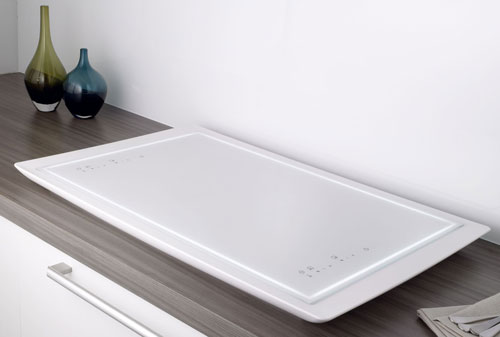
Electrolux E-dish

The photo is obtained from Excite Ism Concierge.


I hate electrical cookers. But if they come in style, I'm tempted.

Electrolux will start selling E-dish (see the picture above), which you can put anywhere in your kitchen as long as it connects to the power socket. That's a revolutionary concept.

And the design is sleek.

But I realize this is not an electric cooker. It is an induction cooker. It requires pans and pots tailored to such cookers...

Friday, July 04, 2008

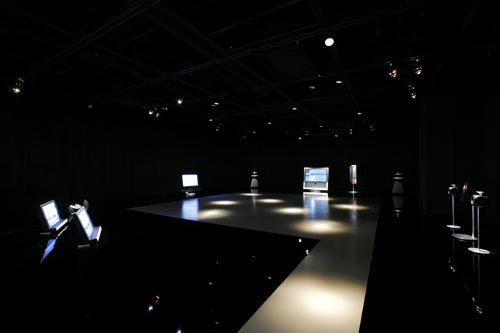
Bang & Olufsen's exbition in Tokyo

The photo is obtained from Excite Ism Concierge


Excite Ism reports Bang & Olufsen's exhibition in Tokyo. The above is the photo of the exhibition entrance. The art director of this exhibition is Tatsuya Matui, a robot designer. The black parts of the floor reflect light, looking like the surface of a lake at night. Beautiful.

Saturday, May 31, 2008

Meguro

Have lunch with a friend at Kioku, a restaurant in the entrance lobby of Hotel Claska on Meguro Street. It's got a nice ambience, perfect for Saturday branch, and the food is good enough (if not excellent).

Meguro Street has attracted many furniture and interior goods stores. Brunch+time stands out among them. It stocks many table boards made of one piece of natural wood (i.e. not engineered wood), reminding me of the beauty of wooden pieces of furniture.

Friday, May 30, 2008

Supermarkets in Tokyo

I follow my mother to buy foods and other daily stuff at supermarkets in the neighborhood. Three things surprise me.

First, the package of vegetables allows you to see in your mobile screen the face photo of farmers who produced them. The package has a QR code on it. Scan the code with your mobile handset, and you'll see the farmers' face on the mobile screen. (QR codes are everywhere in Japan now.)

Second, after passing the till, ice cubes are on offer for free of charge so customers can keep vegetables etc. cold and fresh on the way home.

Finally, Ito Yokado, one of the major supermarket chains in Japan, delivers what you just bought to your home on the same day for just 100 yen (0.61 euro). What's more, for what need to be kept refrigerated, they keep them in a special bag that keeps the inside cool.

Do you want to live in Tokyo by now?

Thursday, May 29, 2008

Emily Kame Kngwarreye vs. Turner Prize Winners

Roppongi has become a place for art lovers. Located within a walking distance are three major art museums in Tokyo. I visit two of them today: The National Art Center Tokyo and The Mori Museum. (The third museum is The Suntory Museum.)

Photo: The lobby hall at the National Art Center Tokyo.

The National Art Center Tokyo exhibits the works by Emily Kame Kngwarreye, an Aborigine painter. The exhibition collects about 100 pieces of her work, spanning her entire career.

The first glance at them puzzles me. All the paintings are very abstract, presenting a very different world. The curator's explanation in a video playing in a separate booth from the gallery helps me realize that her paintings reflect the place where she lived in her entire life: a desert in the middle of Australia. She basically drew what her eyes had always caught. Once I'm used to her ways of expression, I start noticing her mind-blowing sense of color. She mixes different colors in a pleasant way. This aspect of her talent blossoms in Earth Creation. Now that I have had an experience to seeing green leaves and colorful flowers burst into blooming suddenly right after the end of winter in Stockholm, I can appreciate what Emily painted in this work.

Another aspect of her talent, the use of dots to paint a canvass, allows the picture to look three-dimensional. The best to watch her paintings is from a distance. (And this exhibition is laudable in that it allows viewers to do this by using the vast exhibition space fully.) It is like when we see the cityscape from the top floor of a skyscraper as beautiful. Each dot is rather ugly, but when these dots get together and viewed from a distance, they produce a beautiful picture. How did she manage to envision this effect when she was drawing on a canvas on the ground (that's her way of painting)?

Once she established her fame in the contemporary art world by the early 1990s, she changed her style. That was when she was over 80 years old. She stopped using dots. Instead, she focused on line drawing. The exhibition shows her pieces of work during this period, which are honestly speaking not very good. But she made a break-through by painting Big Yam Dreaming with white lines on a black background, that is, by ditching what made her famous: dot painting and the incredible use of colors. That was just one year before her death in 1996.

Even after that, she tried a new approach. In the last series of paintings (drawn just two weeks before her death), she discarded even line drawings. She attempted to create a new world just by her keen sense of color. Would you start doing a new thing when you expected the end of your life in the very near future?

The pictures of her painting are scattered on the web. None of these do her any justice. Her works are best appreciated by watching the original from a distance. If your city invites her exhibition, do visit it. You won't regret it.

-----

After Kngwarreye, contemporary art pieces by Turner Prize winners displayed in the Mori Museum inevitably look small-scaled. Each artist does reveal something new. In Mother and Child, Divided, Damian Hirst, for example, makes me realize the difference in what is inside the body between a cow and a calf. It's not like every part of the body becomes larger when one grows up. In a project House, Rachel Whitered managed to visualize the space inside a house that is going to be demolished, that is, something nobody cares about, by making a concrete cast. In a video entitled Deadpan, Steve McQueen shows what each person cares most about is different. (And I realize one of the video works that I saw in Venice Biennale 2007 (Sophie Whettnall's Shadow Boxing) is basically a copycat of McQueen's work, although I prefer Whettnall's.)

Overall, however, what Turner Prize winners try to convey to viewers appears to be rather trivial in comparison to Kngwarreye's works. Maybe because Turner Prize winners fail to produce beauty.

------

Tokyo is not just a city for great foods and amazing shopping experience anymore. It is now a place to allow the luxurious comparison of totally different strands of great art. Chanel has chosen Tokyo as the second city to exhibit Mobile Art. Tokyo allows its residents to keep up with what's happening in the world.

Tuesday, May 27, 2008

Ginza

During the past one year, the most dramatically transformed area of Tokyo is Ginza.

First off, I visit Marronnier Gate, opened on September 1, 2007. This 12-story shopping and dining complex surprises me in two senses. First, each of the top three floors for dining features different types of cuisine: the 10th floor for European, the 11th for Asian, and the 12th for Japanese. I'm not aware of any other buildings in Tokyo that organize their restaurants in this way, but it makes real sense. You usually feel like eating a particular type of cuisine, so you don't want to browse Japanese, Chinese, and Italian restaurants together around, do you?

Among the Japanese restaurants on the 12th floor, I try Sou, serving vegetable dishes from Kyoto with stylish decor of Japanese minimalism. My choice is "One Soup Three Vegetables", a lunch menu available only on weekdays. The vegetable soup with white miso in Kyoto style is superb. The price is just 1,500 yen (9.3 euro). By Tokyo standards, this is not cheap for lunch. But neither London nor Stockholm manages to serve a lunch dish that can be described as "superb" for this price.

Downstairs, Tokyu Hands occupies five floors from the 5th to the 9th of the Marronier Gate. Tokyu Hands is a well-established chain for homeware and DIY goods, sometimes selling quirky stuff. But it's never associated itself with style. In its newly opened Ginza branch, that's not the case anymore. It signifies the recent change in trend in Tokyo towards a better quality of life.

Walking on Marronier Street to the east from the Marronier Gate, you'll see De Beer's first store in Asia, opened on March 20, 2008. Just have a look at its wavy facade:


A further change to Ginza's landscape is Swarovski's flagship store, the first for the brand, on Chuou Dori (Central Street). Opened on April 1, 2008, Tokujin Yoshioka designed the store interior under the theme of crystal forests.

Ginza has also seen Giorgio Armani, Cartier, Bvlgari, and Dunhill open or renew its flagship store during the past one year, and they are not just another store in this world. They feature good design and something only available in Tokyo.

Nowadays, anything that is hyped or proves to be popular in the West comes to Tokyo. H&M will finally open its first store in Japan, again in Ginza, this September. Channel's much-hyped mobile art exhibition comes to Tokyo at the end of this month, before any European cities (but after Hong Kong). Plus Tokyo offers great and inexpensive eating-out experiences and excellent services even at budget stores, both of which are unthinkable in the West. What is the reason for not living in Tokyo?

Monday, May 26, 2008

A day in Tokyo

Leave my parents' home around midday. Have takoyaki (octopus balls) at Gindako for lunch. Eight balls of takoyaki for 500 yen (3.06 euro). Gindako is a nationwide chain. My hometown branch is located in a part of the railway station building that lunch takeaway stores occupy. Your choice includes Chinese, udon noodle, yakitori (grilled chopped-and-skewered chicken), croquettes, and bento boxes. All cost at most 1200 yen. It is hard to believe that everybody eats sandwiches every lunch on weekdays in the capital of some country in Europe. It'd be hard to believe for people in Stockholm, too, where almost every lunch place serves the same set of foods.

Pass the ticket barrier of the station and walk up to the platform where Juicer Bar sells freshly squeezed fruit juice: mango, melon, banana, etc. Take a 100ml cup of mixed fruit juice for 150 yen (0.92 euro). The store board says, "We will raise our price by 30 yen due to the recent world food price surge."

Take the Sobu line, and a 33-minute ride to the west takes me to Yoyogi station. Use the east exit of the station to walk to Shinjuku Takashimaya Times Square. Buy a bilingual art magazine Art It at Kinokuniya book store. Buy a pair of scissors at Tokyu Hands. The latest trend in scissors in Japan is fluorine-coated ones so that tapes and glue won't stick to scissors.

Go back to Yoyogi station and take Yamanote line. One station to the south is Harajuku. Get off the train and walk down on Omotesando boulevard to the east. Arrive at Tornado Mart where I asked to adjust the length of a pair of trousers that I bought last Wednesday. In addition to picking up the trousers, buy a black, tight, uniquely-designed jacket.

Walk down south to Shibuya. While the north side of Omotesando boulevard is packed with cutting-edge small boutiques for young men with Japanese original brands in stock (as written last Wednesday), the south side sees boutiques for Japanese people dreaming of Europe and America. These stores are horribly boring to me. I can find these stores in London, Stockholm, San Francisco, and other major cities in the West. Those on the north side are hard to find in the West.

Arriving in Shibuya, stop by at Tower Records. Buy a CD of gagaku music. Then stop by at Sakuraya where I browse USB flash drives. Japan produces a wide range of quirky USB flash drives like those shaped like sushi. I'm looking for a stylish one, and find IO Data's ToteBag series.

It's time to go home. Take the Hanzomon line to Kinshicho. Buy three cream puffs at Maple House in the railway station building. Beard's Papa is not the only cream puff available in Japan. Maple House's version has a cinamon flavor. Back at home, I eat it with my parents. All of us like it. And one cream puff costs 150 yen (0.92 euro). This is the kind of things Stockholm never offers me with...

Cheap but decent foods, cutting-edged design clothes, user-friendly stationery, and good-looking electronics items. That's what Tokyo offers. It's a paradise for materialistic people as we Japanese are.

Sunday, May 25, 2008

Kinshicho

My parents' home is located in eastern Tokyo. It takes about one hour (15 minutes by walk to the nearest station and 45 minutes by train) to major districts of Tokyo like Shinjuku and Shibuya. I finally understand why I got exhausted everytime I stayed in Tokyo for a couple of weeks. I'd go to such major districts of Tokyo almost everyday. My travel time was as long as 2 hours every day.

The situation has changed a bit. Kinshicho, another district of Tokyo just 30 minute away from my parents' home, has become a trendy spot during the past couple of years. And I'm quite satisfied by the shopping experience in this area today.

The Kinshicho branch of the Marui department store is not that different from other Marui branches in Shinjuku and Shibuya anymore. I manage to find good-looking pieces of clothes at Rupert (a dark turquoise t-shirt with long sleeves and a zipper neck hole), Michel Klein Homme (a khaki flax jacket with slightly short sleeves), TK (a white t-shirt with Japanese traditional patterns), and Comme Ca Men (a white t-shirt with a black and purple abstract art print).

And I visit Olinas, a recently opened shopping mall in Kinshicho. Quite a few fashionista girls walk into the mall, a scene unthinkable for Kinshicho until a few years ago. The mall is crescent-shaped with a double-height structure (you can see the top ceiling of the building from the ground floor), designed by RTKL. Although women's wear boutiques form the majority of the shops, several interior good stores are also found. There are some cafes I haven't seen before anywhere else in Tokyo. Surely this is a better shopping mall than the Brunswick in London, which just collects all the major, boring high street shopping chains.

Kinshicho beats London.

Saturday, May 24, 2008

Sumo wrestling

Today I stay at home all day because it rains outside.

The professional sumo wrestling tournament is broadcast on TV. Koto-oshu, a Bulgarian sumo wrestler, becomes the champion for this month's tournament. One third of the top 40 sumo wrestlers are now non-Japanese (mostly Mongolians and east Europeans).