Monday, December 31, 2007

Tokyo Midtown

One of the newest additions to Tokyo's landscape (and places for shopping-spree and tasteful eating experiences) is Tokyo Midtown. I have a cup of superb, luxurious matcha green tea which costs nearly 1,000 yen (6.25 euro) at Kyo Hayashiya.

There is a floor of the building wholly devoted to interior goods and furniture, which is unheard before in Tokyo, where people have mainly been preoccupied with foods and clothes. Most of the stores on the floor, however, are pretty boring, especially when I compare them to those in Stockholm. The presentation is of poor quality. Each piece of furniture may be well-designed, but the shop managers don't seem to know how to present them in combination. There are very few surprises and learnings on how to decorate your rooms. If it looks stylish, the store mostly sells very expensive furniture. In terms of interior design, Tokyo is far lagging behind Stockholm.

The design of Tokyo Midtown does not look particularly deep. When I visit Roppongi Hills a 10 minute walk away afterwards, I do feel a difference. The design of Roppongi Hills is much more elaborate, not straightforward at all.

Sunday, December 30, 2007

Shiodome

Tokyo has undergone urban redevelopment projects in many of its areas during the past decade. I think the first was Ebisu Garden Place, followed by Shinjuku Southern Terrace, Ueno station, Shibuya Mark City, Akihabara station and its surrounding area, Roppongi Hills and Tokyo Midtown, and Marunouchi.

Shiodome is another example of this. Unlike other newly-refurbished areas of Tokyo, however, Shiodome feels inorganic because it simply consists of several skyscrapers and is cut off from the surrounding area resulting in the lack of historical and cultural connotations. Visiting the area this time makes me re-consider this impression I have had.

On Christmas Day, I visited one of those Shiodome skyscraper, Caretta Shiodome, to see its Christmas illumination at the entrance to the building. It employs 300,000 light-emitting diode (LED) bulbs, mostly blue, creating an image of ocean waves. The ocean of blue LED light is quite impressive. See the photos I took.

The illumination also features a 10-minute light and music show produced by Hideki Togi, a Japanese gagaku musician, which sucks. Gagaku is a Japanese traditional music for imperial court. Hideki Togi has reinvented it by incorporating pop music. The music played during the show, however, mainly features Western-style sounds with very little of the gagaku elements. Perhaps he is scared of the general public's response. This is very disappointing. If he composed a more traditional piece of music for this illumination, the cross-over of totally Western-inspired Christmas illumination and Japanese noble music would sure be mind-blowing.

After buying matcha castella of Gion Tsujiri tea shop inside Caretta Shiodome, I head for Shinbashi station to go home without expecting anything more. But I discover another set of Christmas illumination in front of the Nittele Tower (another skyscraper in Shiodome which houses the headquarters of Nihon Television, one of the four private nation-wide television channel networks). This one is totally white, creating an image of snow-covered woods. It's actually more beautiful than Caretta Shiodome's blue illumination. See the photos I took.

Obviously, the two skyscrapers in Shiodome compete with each other for the best Christmas illumination. There are some street performances, too, adding a more organic feeling to the Shiodome area.

Today, I go back to Shiodome, this time with Reiko, for a drink. We climb up the Shiodome City Center, yet another skyscraper in the area. On the 41th floor sits Japanesque Bar Gekka. The bar represents what Tokyo is all about: the combination of Japanese tradition, advanced technology, and Western culture taken to the next level by Japanese sensitivity.

It represents Japanese tradition because, first of all, customers need to take off their shoes to enter the bar. Reiko and I sit at a counter without folding our legs. And the bar serves what we call tsumami, small dishes accompanied with alcohol drinks, catering to the Japanese way of drinking. We usually don't just drink. We eat proper food, too, something more than just some snacks.

It represents advanced technology because, thnaks to the skyscraper, a glittering night view of Tokyo, mainly the Ginza area, spreads in front of us. Such a bar is hard to find in Europe where skyscrapers are scarce. (Even if there are, like in London, the owners of skyscrapers do not seem to be interested in making their top floors accessible to the general public.)

It represents "Western culture taken to the next level by Japanese sensitivity." The food the bar serves is deep-fried almond-crumb chicken. Almond is a Western thing, but chicken is deep-fried in Japanese style, which means a much better taste than its Western equivalent. The bar stocks almost all kinds of alcohol drinks: champaign, beer, wine, whisky, brandy, sherry, gin, volka, rum, tequila, and cocktails in addition to Japanese sake and shochu. For each, a wide range of choices are available. A bartender serving us manages to make proper glasses of cocktail. Although he doesn't know a cocktail I liked at Pet Sounds Bar in Stockholm (he says Nothern Europe is at the fore-front in the world of cocktail), the fact that he looks quite dejected by his failure to meet my request suggests that he's really professional.

So it's a pleasant evening. Shiodome rocks!

Friday, December 28, 2007

Ginza after dark


Neon lights in Ginza appear to get brighter and brighter year by year.

Thursday, December 27, 2007

Kagurazaka

Kagurazaka is an area of Tokyo lesser-known to foreign visitors to Japan's capital. It's located within the Yamanote loop, to the north-west of the Imperial Palace. Until the Second World War, the area thrived as a place for geisha. Today we still see the reminiscences of those days: narrow cobbled streets lined with Japanese traditional-style restaurants. In addition, French restaurants are scattered around (partly because there is a French language school nearby), and back streets maintain the atmosphere of Tokyo's residential areas until the 1970s, a rarity in the ever-changing central Tokyo.

Yoo-chan, one of my college mates, and I have lunch at Torijaya Honten. It's a udon-suki restaurant dating back from 50 years ago, facing Kagurazaka Street opposite to Bishamonten Shrine (4-2 Kagurazaka Shinjuku-ku: 03 3260 6661). We take off our shoes and sit down at a table with a gas cooker at the center. (There is a hole below the table so you don't need to let your legs folded.) A waitress brings a large pan topped with chicken, seafoods, quail's eggs, vegetables (17 kinds of food in total), and udon noodle soaked in kelp-and-bonito soup stock. (See a photo by JUN / LDK.) As the pan heats up, foods are getting cooked, and we are ready to start eating. The soup stock is so superb (light-tasted but very rich in taste) we don't need to dip foods into anything. The udon noodle is unusually so thick by Japanese standards (see another photo by JUN / LDK) it never becomes too soft by being soaked in boiling soup until the very end of the meal.

The lunch is very filling and one of the best meals I have had in my life, and we pay only 1,400 yen (about 9 euro) for each of us. This is Tokyo.
Torijaya Hoten's signboard at night

We then stroll around the area, the first time for both of us: Tokyoites often keep going to the same areas of Tokyo, never attempting to explore different areas within the city. We only find restaurants, bars, and cafes in Kagurazaka though almost all of these look stylish in a traditional way (i.e. not showy). Perhaps you should come to this area only when you are hungry and thirsty.

Going up Kagurazaka Street, there is Akagi Shrine, inside which the Akagi Cafe has been open since April of 2006. Although, unlike Christian churches and Islamic mosques, Japanese shrines and temples often have food stalls on their yard, a Western-style cafe inside the shrine is quite unusual.

The Cafe's atmosphere is quite nostalgic: each piece of furniture seems to date back to the early and middle 20th century, placed in a way that the cafe looks stylish as a whole. Revealing to me as I haven't seen such a place before. Each piece is old and uninspiring, but once properly placed they look pleasantly cool.


It's not just the interior, though. A piece of home-made raspberry pound cake and a cup of Toarco Toraja coffee offer me a pleasant feeling. (Toarco Toraja is an Indonesian coffee bean. After the Dutch left Indonesia, the production of beans became stagnant. Then Key Coffee, a Japanese coffee company, got involved in the restoration of coffee prodution in Indonesia, and it names the beans Toarco Toraja.)

It's very unfortunate that the Akagi Cafe will close down in March next year. If you are lucky enough to visit Tokyo before that, do try to visit the Cafe.

On a more personal note, talking to Yoo-chan reminds me of my inclination to only use words that properly reflect my ideas and feelings. Ever since I moved to London five years ago, I was forced to abandon such a habit because my English vocabulary was not wide enough. By the standard I had until five years ago, sentences in this post, for example, are a complete compromise. Especially when it comes to words describing foods and taste, the English language is very poor. Maybe reading great English novels help me develop such vocabulary. But I probably never understand the way the authors of such novels feel about their experiences, deep in my heart, because I'm not a Westerner. As long as I keep writing and speaking in English, compromise is probably inevitable. In a way, it's sad, unacceptable. In another way, that's how people live in a foreign culture.

Wednesday, December 26, 2007

Ura-harajuku


This is a shop in Ura-harajuku (literally meaning the flip side of Harajuku). Looks like a traditional Japanese cafe or sweet store. No, it sells jewellery. But the name of each piece of jewellery is a Japanese word.

Ura-harajuku is probably Tokyo's most edgy area for making you look stylish. It's full of small, independent boutiques, and, interestingly enough, these stores are mostly for young men. When they sell both women's and men's, the ground floor is devoted for men: women should go upstairs. Unlike Marui Men in Shinjuku, which houses tons of men's boutiques in the 7-story building and follows each season's trend more or less (but still sells clothes unseen anywhere else in the world), each shop in Ura-harajuku offers its own style of gear. I manage to find a lot of clothes that I won't be able to find anywhere else in the world.

The area is also famous for hair salons. I have my hair cut at Coup de Vent. The hair stylist not only cuts my hair but also trims my eyebrows. She also massages my head and shoulders. My hair style catches up with young fashion-conscious men in Tokyo, where there are several hair catalogues for men on sale.

One more thing that deserves mention. Ura-harajuku has some kimono stores. Banjiro sells bespoke kimonos with contemporary patterns while Tokyo135 stocks more affordable ready-made and second-hand kimonos. Both of them kindly tell me what kimonos men can wear. Next time I will try to buy my first kimono.

Tuesday, December 25, 2007

Lunch in Tokyo


Either in London or in Stockholm, I find it difficult to have a budget lunch. London offers a wide variety of options which are all sandwiches. Stockholm serves pasta salad in a plastic bowl, in addition to sandwiches. But vegetables are not necessarily fresh, and pasta is soaked in water coming out of salad. (So I don't really understand the concept of pasta salad in Sweden. Why do you need to top salad on pasta?) And both London and Stockholm charges you at least 4.5 euro for such crappy lunch.

Tokyo is great in this regard. Budget lunch options include gyudon (soy-sauce marinated cooked beef topped on steamed rice), udon noodle soup, soba noodle soup, ramen noodle soup (these three noodles are all different), gyoza (Chinese dumplings), magurodon (tuna sashimi topped on steamed rice), curry rice, spaghetti (including Japanese-style: cooked tuna with soy sauce and grated daikon radish), and so forth. These lunch options are available from about 3 euro.

The photo above is the lunch I have in Omotesando. It costs 6.5 euro (including a cup of cappuccino and good service: they ask me whether I'd like to have cappuccino during or after the meal).

Who says Tokyo is the most expensive city in this world?

Tokyo Metro

Every station of Tokyo Metro has a sign board showing which train carriage is the nearest to the staircase or the lift for exit. If there are more than one exit in the station, it also shows which exit is for where and for changing to this line or that line.

Another example of the stark contrast between Tokyo and London, where you often end up a staircase for passangers taking trains rather than for exits.

Shiodome Nihon Television Tower Xmas illumination 2007

Caretta Shiodome Xmas illuminations 2007

Monday, December 24, 2007

Sunday, December 23, 2007

New Chuo Line train carriage

Another view of Tokyo familiar to me has gone. Orange train carriages for the JR Chuo Line have been replaced with new ones. What amazes me about this new shining silver train carriage with orange lines is the electric displays on the side of the carriage (see the photo above). They not only show the destination of the train (white letters on top row) but also the name of the next station (yellow letters on bottom row). As the JR Chuo Line changes the stations it stops depending on whether it's a weekday or a weekend or whether it's during the morning rush hour or not, this is quite helpful for passengers.

Light-years away from the train carriages running in London Underground, for which passengers taking Disrict, Circle, Hammersmith & City lines (all of which confusingly run on the same rail track) ask each other which station the train goes to.

Audi Forum Tokyo


Audi's car show room in between Harajuku and Shibuya areas. There is a cafe (free of charge) on the second floor.

Contrast this to the Rikugi-en Garden below. This is Tokyo, the coexistence of super modernity and uniquely Japanese tradition.

Saturday, December 22, 2007

Rikugi-en Garden

Rikugi-en is a Japanese garden dating back from the year of 1702. People say it is one of the two most beautiful in Tokyo (the other is Koishikawa Koraku-en). The best seasons to visit the garden are either spring (with cherry blossoms blooming) or autumn (with leaves turning red and yellow). In fact, I don't really enjoy it under cold winter weather with most leaves having fallen. But I manage to take some nice photos:


See japan-guide.com for how to get there. It's located off the beaten track for foreign tourists in Tokyo.

Friday, December 21, 2007

Tokyo December 2007

I stay at my parents' home in Tokyo from 21 December 2007 to 3 January 2008. Initially, I miss Stockholm to my surprise, perhaps because Tokyo is not anymore what I remember as my hometown. The city changes so quickly the places I'd frequent look different today. Going back to Tokyo is not anymore equivalent of going home. It is simply a tourism in which I enjoy shopping and experience culture shocks.

Some photos and blog entries will be added soon.

Saturday, December 08, 2007

More new things in Tokyo

Two more new places to visit in Tokyo:

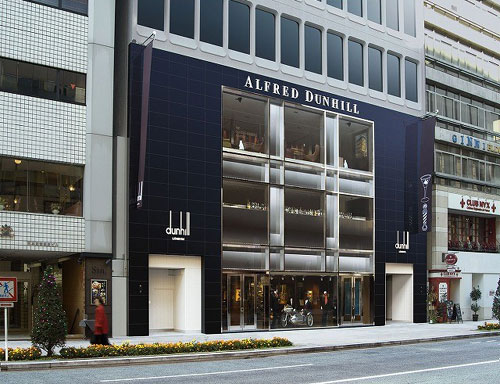
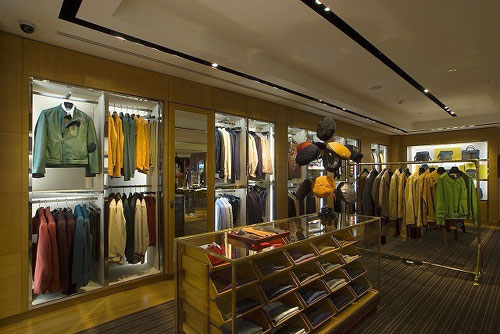
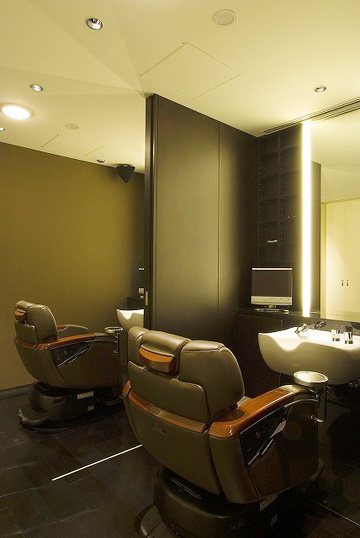
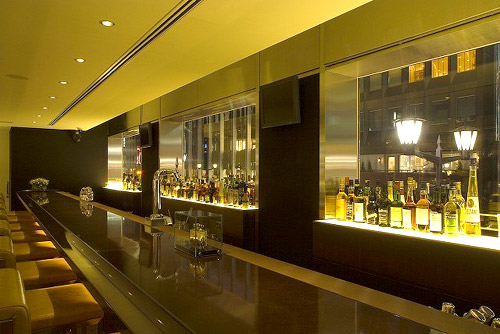
Dunhill opened a new flagship store called "Home" in Ginza on 1 December. It also plans to open the same concept store in London and Shanghai, but Tokyo's store was chosen as the first to open. The store houses not only Dunhill men's boutique but also a barber and a bar lounge The Aquarium, which serves lunch and afternoon tea as well (open from 11 to 24 Mon to Sat, 11 to 22 on Sun). (All the photos linked are from Excite Ism's article on December 6, 2007.)

In Akihabara, Akiba Guild, a casino with female dealers in French maid costume, was opened last September. "Maid dealders" are actually professional as the owner of Akiba Guild, a professional casion dealer, trains them. As gambling is prohibited in Japan, you cannot earn money at Akiba Guild, but you can keep coins you earned for the next visits. And, most importantly for guys in Akihabara, you can enjoy conversations with a maid who is the casino dealer, a lot more frequently than at maid cafes. And these maid dealers all run a blog that's linked from the store website. (Hat tip for a Nikkei BizPlus article by Takuro Morinaga on November 27, 2007.)

Saturday, December 01, 2007

Oxygen capsules

I cannot stop finding weird things in Japan. This time, an oxygen capsule (also known as Beckham capsule because David Beckham used it to heel his injury just before the 2002 World Cup).

By paying 5,000 yen (slightly more than 30 euro) for an hour, you can indulge yourself in a capsule full of oxygen.

Brisbane Times reports this last September.

Here are some images obtained by Google Japan search.

Tokyo's still happening.

After more than 5 years of living in Europe, learning what's happening in Tokyo is mesmerising. If you plan to visit Tokyo, make sure that your travel guidebook is the latest one. As far as I know, the year of 2007 saw the following new additions to the already overwhelming range of places to visit.

In Roppongi, Tokyo Midtown, a new shopping complex with office, residential, and art/design gallery spaces, was opened on 30 March.

In Yurakucho, a new shopping complex called Itocia was opened on 12 October. Its main attraction is the newest branch of Marui department store chain, which Monocle magazine sees as one of the five retail giants around the world that "should act as benchmarks for other floundering businesses."

In Omotesando, another new shopping complex called Gyre was opened on 2 November, housing Bvlgari and Channel among others.

In Ginza, Bvlgari opened its largest store in the world on 30 November, following Armani, which itself opened the Ginza Tower on 7 November (see an Extite Women Garbo article in Japanese for some photos).

In Shiodome, the entrance plaza of Caretta Shiodome, yet another shopping complex celebrating its 5th anniversary, started a Christmas illumination using 300,000 blue LEDs to create an image of an ocean yesterday. Lights are illuminated from 5 to 11:30 pm until 25 December. Every 30 minutes from 5:30 to 11 pm, gagaku music (Japanese traditional music) is played for 10 minutes.

Maybe you are now beginning to understand the Japanese high-maintenance, materialistic consumers.

Wednesday, November 28, 2007

Q & A

A reader of this blog posted the following question to me:

A question for a cosmopolitan Japanese, connoisseur and graduated in the art of living: where is that, in this city called London, I can order for delivery Japanese and oriental flowers?
I'm sorry I don't know the answer. You may want to visit the Japan Centre on Piccadilly and ask its shop assistants. They may know something.

Tuesday, November 27, 2007

The Latest Research Findings on Corruption

Let me put on a hat as a development economist today.

The November issue of the Quarterly Journal of Economics (or QJE for short), one of the top 5 academic journals in economics, is released today. It features two papers in the field of development economics.

One paper, written by Marianne Bertrand, Simeon Djankov, Rema Hanna, and Sendhil Mullainathan, analyzes corruption involved in the acquisition of driver's licenses in India. They find the following facts in a convincing way (there are other findings in the paper, but these are less convincing):

1. If a man in Delhi is more willing to obtain a license quickly, he will be more likely to obtain one without taking the licensing exam.

2. Such a man pays about 50 percent more fees over and above the official fee for licensing.

3. But he is no more likely to bribe bureaucrats at the transport office.

4. Instead he is more likely to hire an "agent", a professional who helps individuals obtain a license in return for a fee. Presumably, these "agents" pay bribes to bureaucrats on behalf of license applicants.

5. These agents can procure licenses irrespective of the applicant's driving ability. They don't even charge a higher fee for applicants who can't drive.

6. These agents are, however, less likely to procure licenses for applicants who don't have documents required for application (proof of age and area of residence).

Maybe these findings are obvious to Indians or people from developing countries with rampant corruption. For development economists, however, this is a "finding", especially the presence of "agents". We always believed that when corruption occurs, citizens directly pay bribes to bureaucrats. That's not the case, at least for driver's license applications in India.

Another lesson from this paper is that corruption is socially harmful. Some economists in the past argued that corruption is good because it speeds up the lengthy bureaucratic process. But the study shows that corruption increases the number of people with a driver's license who actually cannot drive.

Finally, finding 6 suggests that corruption to bend official rules is more difficult for rules that are easy for higher-up government officials to check.

For the other development economics paper published in the QJE this month, please wait.

Sunday, November 25, 2007

Japan and its consumption culture

Last week the publication of Tokyo Michelin Guide hit the news headline. A Swedish colleague of mine was surprised by the total number of stars awarded to Tokyo restaurants which exceeds any other city in the world (including Paris).

What I was surprised is, however, the lack of the Michelin Guide for Tokyo until now. It well reflects the Westerners' ignorance of the quality of services in Tokyo, and in Japan more generally.

The year of 2007 already saw a change in this: the launch of Monocle magazine, the magazine I keep talking about since day one. Every monthly issue introduces the reader in the West to Japanese top quality players in the service and consumption goods industry, from hotels and airlines to cosmetics, foods, and bags. And the magazine recognizes Tokyo and Kyoto as among the 20 most livable cities in the world.

But it's not enough. The world isn't fully aware of how demanding Japanese consumers are and how great, as a response, is the services provided by companies, both domestic and foreign, in Japan.

What I recently discovered is a stark difference in HP's website between Japan and UK. I was trying to find the best HP printer for me. But electronics shops in Stockholm are stressfully unhelpful because each shop stocks a different set of printers. The comparison of all the available products in the market takes a lot of walk. Also, each shop is pretty much under-staffed. It's difficult to seek assistance, or it takes a lot of time by waiting to be served. So I did search on the web.

As the Swedish website is, as always, hieroglyphic to me, I turn to the UK one. But the website doesn't help me choose which one suits my need. I then access to the US website. It looks like a search result on Amazon.com, which means that it's not easy for me to spot the best printer.

So I visit the Japanese one. And it is amazing. When I see the list of HP printers, it's almost immediate to learn which functions are available for which printer. Each function takes up one square in a 3 by 5 matrix shown next to the printer image. If a printer lacks in a particular function, the square for that function is left blank. As the position of each function in the matrix is fixed for all printers, just a glance at the list tells you the difference among printers. So I immediately learn which printer is what I'm looking for. Compare this to the British version in which each printer's functions are listed in the bullet-point style.

Usually, this method of searching the best product in the market doesn't work because what's available in Japan is often unavailable in Europe. This is because the range of products in Europe is smaller or because the European electronics market lags behind the Japanese one by 6 to 12 months. Thankfully, this time the best printer in Japan was available in Stockholm.

Since I'm used to this Japanese-style product catalogue during the 24 years of my life in Tokyo, shopping electronics products in London was, and in Stockholm is, (and, I believe, in other European countries will be) such a pain in the neck.

I'm not sure whether this difference in consumption culture between Japan and the West (or at least UK and Sweden) comes from the difference in awareness (ie. people in Europe have never imagined that such a level of service quality is feasible) or the cultural difference at a deeper level (ie. Japanese people are materialistic while Europeans derive satisfaction from invisible things---travelling abroad, staying with family members, etc.).

But I'm sure that daily life in Japan, such as things described in this post, should be intriguing to Westerners. This blog keeps trying to spread the word on what's standard in Japan but not in the rest of the world (the post below is an example).