Sunday, August 21, 2011

Akio Hirata versus Nendo at Spiral Garden


Back in June, the Spiral Garden in Omotesando of Tokyo featured a retrospective exhibition of hats designed by Akio Hirata. Hirata, aged 86, has been the top hat designer during the last few decades. This retrospective exhibition, however, turned out to be an unusual one, thanks to Ooki Sato, a leading designer under the alias of Nendo, in charge of exhibition design. It also attracted a lot of attention. The original 12-day exhibition period was extended for one week. See this page for the photos of exhibition.


About a month on, Excite Ism, probably one of the best online magazines in the field of design in Japan, published the interview of both Hirata and Nendo. It reveals behind-the-scene episodes of this exhibition, which is intellectually stimulating in terms of design process.

The basic idea of exhibition is to display Hirata's hats among milliards of white, ordinary, mass-produced hats so that Hirata's originality will be enhanced in the eyes of viewers. It is true that Hirata's hats are very original. It makes you realize that the shape of a hat can be so flexible even though the purpose of a hat is usually thought to constrain its shape. Originality will be enhanced if it's surrounded by ordinariness.

Another key word to describe Hirata's hats, says Nendo, is freedom. Not a single hat looks similar. Therefore, it is inappropriate to show his hats in a standard, one-dimensional way of exhibition. Viewers should freely walk around and should feel the way they feel about these hats, rather than the way the curator describes them.

So what Nendo came up with is a space with white, mass-produced hats floating in the air rather randomly as if these white hats were clouds in the air. Although the interview doesn't mention this, I imagine those mass-produced hats should have been nothing else but white. White is the color of nothing, the farthest end of the spectrum from Hirata's originality. Now, these white hats should be hung in the air, not on the ground or on the raised platform, because that's how a hat is worn. A hat is raised above the ground but hung in the air by the person who wears it. When these white hats are hung in the air in a way of freedom, it must have been a logical progression to see them as clouds. This analogy gives an extra meaning to the way viewers see these hats by random walk: straying amidst floating clouds, which is a day dream or a fantasia. And each of Hirata's hats is a fantasia.

The interview also reveals that Nendo's initial idea was actually modified and enhanced by Hirata, who slightly changed the design of these white hats. Which is not Nendo's intention. However, once these white hats came to life under the supervision of Hirata as the professional hat designer, the space itself also came to life. Once each white hat became beautiful, says Nendo, the whole space also became beautiful. This episode reveals that good design comes out of interactions between designers, not solely from one individual designer's own idea.

Another important element that led to the success of this exhibition is the material used for those white hats. Nendo chose Smash, which is "a unique non-woven polyester fabric developed by textile company Asahi Kasei" (in the words of a Wallpaper magazine article). Since Hirata often uses natural fabric, Nendo says, the latest chemical fabric would make a great contrast. But it turns out that Smash creates a nuanced light reflection just like the real clouds.

The gallery space is also unique in the sense that it's got a high ceiling and there is a spiral staircase that surrounds a spacious circular exhibition space at the rear. Thanks to this structure, viewers can observe the cloud of white hats from above as well as from below, allowing them to appreciate Hirata's hats even more because Hirata's design changes its appearance depending on from which angle you look at it.

Nendo's design concept of creating an exhibition space in stark contrast to Hirata's hats, Hirata's professionalism as a hat designer, the unique structure of the exhibition space, and the characteristics of the material used (Smash) all interact with each other, often unintentionally, to enhance the attractiveness of Hirata's hats to full extent.

I believe that good design is the one with solid logical backing. This exhibition is an example where such solid logical backing was created by unintentional interactions of designers, although such "unintentionality" probably didn't materialize without Nendo and Hirata's consistent approach to design.


Tuesday, August 16, 2011

Chinese wife diary


This is the logo for a comic book written by a Japanese otaku man of age 40 who got married to a 20-something cute Chinese girl. The comic is about this Chinese wife who, by speaking broken Japanese (which makes her even cuter in the Japanese men's mind), makes the author (and the reader) notice the daily-life difference between Japan and China and what contemporary China feels like. Just releases last week, it has become the top selling comic book at the Amazon.co.jp online book store. The book is a collection of blog posts by the author, and so you can enjoy the cartoons here (not in China, though, as the hosting blog site is blocked by the Chinese government).

The logo, designed by manga comic book editor-designer Hideki Satomi, is praised by the author Junich Inoue as emanating the lovey-dovey feeling.

Why? What makes this logo lovey-dovey?

First of all, the font. It looks like the kind of letters young Japanese girls (maybe Chinese girls as well?) often write. The first two and the last two kanji letters do not enclose any space, suggesting something loose and sentimental.

Second, the five yellow stars (which must be those five stars in the Chinese flag), one red circle (which must come from the Japanese flag), a crescent (which may suggest sleeping at night together), and a heart that follows the kanji letter whose meaning is a wife) are all scattered around, to symbolize happiness as a result of sense, not of reason.

And finally, the central kanji letter whose meaning is a wife is slightly bigger than the other four, indicating that the husband has a slight inclination to show off how cute his wife is.

In addition, this kanji letter in the center is the combination of the letter signifying a woman (the left half) and the other meaning a home (the right half). By scaling this letter up a little bit, we feel the happiness of the guy who has got a woman at his home.

The color of red is used maybe because this is the color shared by both national flags of China and Japan, bearing some analogy to the international marriage or simply because the color of China to most Japanese people is simply red (not because they are communist but we traditionally associate China with red).

Monday, August 15, 2011

Why Apple?

If I remember correctly, their first sensation was the blue first-generation iMac. By now, almost every commercial image with a desktop computer (either in an advertisement or in a shop) comes with an iMac, not a Dell or a HP. Then the iPod, whose design has become the standard in the portable digital music player industry, and the iPhone, whose design has become the standard in the smart phone market, and most recently the iPad, whose design is quickly becoming the standard in the electronic book reader industry.

I usually go for what everyone else does not have. By now, however, my desktop PC is an iMac (both at home and in office); my laptop a MacBook Air; my portable digital music player an iPod Classic; my mobile phone an iPhone 4 White; and I'm now thinking of buying an iPad 2 after learning that Amazon's Kindle doesn't really satisfy my needs. And the reason is there's something irresistible about Apple's product design.

I always wonder why Apple always manages to come up with what can be called the universal design. All the other manufacturing companies end up copycatting Apple's design and end up with inferior design to Apple's (the only possible exception is Naoto Fukazawa's Infobar). I'm not an expert in industrial design. In particular, I have no knowledge of electronics. So it is impossible to answer this question in a fundamental way. But that doesn't discourage me from thinking about this puzzle.

One of the keys seems to be thinness. Apple makes a lot of engineering effort to make products thinner than those produced by competitors. And thinness appeals to us as consumers, perhaps because almost every electronics product wasn't thin before. What's attractive as an image often coincides with what's not been available so far.

But this explanation seems only part of the whole story. It's probably also about simplicity or simple-looking appearance. Electronic gadgets tend to have multiple functions, which leads to too many bottoms on their surface. But perhaps not a single consumer will use them all. There is a gap between how consumers use the product and what the product looks like. Apple successfully narrows this gap. It's perhaps nothing surprising that Naoto Fukazawa manages to come up with a smart phone design that goes on par with iPhone, because that's exactly his design philosophy: narrowing the gap between how consumers use the product and what the product looks like.

(To be continued.)

Friday, August 05, 2011

How was flash memory invented?

Fujio Masuoka, a former is the inventor of flash memory, the data storage chip used worldwide in mobile phones, digital cameras, and MP3 players. The August 1st evening issue of Asahi Shinbun (a Japanese newspaper) features his interview in which he reveals how he invented flash memory.

When he joined Toshiba, he first worked at the research and development department. He invented a high-performance memory chip, but it didn't sell at all. He then asked for the transfer to the sales and marketing department in order to sell the chip on his own.

He flied to the United States and visited many computer companies. But he failed and got transferred back to the R&D department within a year.

But this experience let him learn one thing. American companies repeatedly told him, "We don't need a high-performance chip. We just need the minimum level of quality. Don't you have a chip that's much cheaper?"

This led him to come up with an idea to design a chip that "must be erased in fairly large blocks before these can be rewritten with new data" (from Wikipedia on flash memory), which is clearly less functional but reduces the cost of production by more than 75 percent.

What I find interesting about this episode is that it was Americans' (or Westerners' in general, I would say, in comparison to Japanese) mentality that allowed him to invent flash memory. Japanese people tend to pursue the best quality products while Westerners (Americans in particular, I guess) are often satisfied with something that is just functional enough for daily use. If he sticks to this Japanese mentality, he wouldn't have been able to invent flash memory.

Thursday, August 04, 2011

Some discoveries in Stockholm

I've discovered a few things in Stockholm recently: one excellent budget eatery, one stylish and cosy outdoor bar, and one cool store for babies and children.

The excellent budget eatery is Serrano. This is a proper Mexican lunch place. They stuff food ingredients into burritos and quesadilla after you order. They come with baby leaf salad. An extra 10 krona buys you a cup of mixed tropical fruit juice. My fajita burrito makes me smile (which is rare when I eat lunch in Stockholm). Both of my two friends eating together also say they like the food. In the US, this style of Mexican lunch place is extremely popular. Finally, Stockholm has one. (Forget the ubiquitous Taco Bar. It's just no contest.) Plus, it opens until 8 or 9 pm (which is very unusual for this kind of budget restaurant in Stockholm). It's located near Central Station and inside the Liljeholmen Torget shopping mall.

The stylish and cosy outdoor bar is Zeeside (see also an article by the Spotted By Locals blog). It's located on the shore of the newly developed neighborhood of Henriksdalshamnen. It can be approached by a boat from Luma in Hammerby sjöstad or from the southeastern shore of Södermalm. The vibe is just awesome with a great view of the water sandwiched by Södermalm and Hammerby sjöstad, the white bar counter evoking the sense of being on a beach, and white, orange, and pink design chairs (which are not only good-looking but also comfortable). There's no cheesy music in the background. But most importantly, the bar foods are fantastic. My tuna salad (with avocado, watermelon, pumpkin, etc.) is something that doesn't even remotely resemble the foods served elsewhere in Stockholm, in terms of the freshness of the ingredients and the creativity of choosing what to mix in a single plate. Both of my two former New Yorker friends eating together are also impressed by their delicately-made burgers. On a long bright evening of Stockholm's summer, this bar just allows you to exploit the true potential of the Swedish capital. You can't really find something similar to this in other cities in the world.

Finally, the cool shop for babies is Sprall, where I bought a gift for the baby girl of my friend in Tokyo. The design of baby bottles and bibs is cute and Scandinavian. But this mushroom rubber doll really beats everything else. When a baby grab this doll, it cries. And the way it unfolds after a baby crushes it is kind of artistic. Its branches are located near Östermalmstorg and inside the PUB department store on Hötorget.

I don't know when Sprall was opened, but Serrano and Zeeside were opened within the past one year. Increasingly, Stockholm sees more and more cool places popping up. When I moved to this city four years ago, it wasn't like this. Most of my favorite places in Stockholm weren't there at that time.

Thursday, July 07, 2011

How to survive Stockholm's summer

Although it is much easier to live a life than during the cold, long winter, Stockholm's summer still requires a bit of effort for me to survive.

First, I need to make sure the darkness while I'm sleeping. Complete darkness during the night lasts only a few hours. I need a thick curtain in my bedroom (which is rather hard to find in a shop because Swedes prefer letting in light to inside the house/apartment as much as possible) or need to wear an eye mask. Otherwise, the early morning sunshine around 4'o clock wakes me up (and that's why I'm blogging now at 4 am).

Second, I need to always check whether my favorite shops, cafes, restaurants, and bars are open before going out. Many, especially decent and non-touristy, places in Stockholm shut down during the summer because they go on holidays for a month or so. Stockholm's best contemporary art gallery Magasin 3 is closed during the entire summer (see this post). My favorite delicatessen Hantverkargatan 14 Specerier was luckily open yesterday, but they told me they will close from next week until 1st August.

Third, I need to make sure I bring a jacket when I go out. With the sunlight, the summer in Stockholm is pleasantly hot. That is something much better than living in Tokyo. But in the shade or when it gets cloudy, it becomes rather chilly. I caught cold the day before yesterday because I forgot wearing something on top of a t-shirt.

Finally, as the metro trains run less frequently (many Swedes disappear from the city to go abroad to enjoy the real hot summer or to stay at their summer house in the countryside to enjoy an inconvenient but simple life (often without electricity), I need to go out earlier than usual so that I will arrive at the destination in time.

Otherwise, it is a pleasant period to stay in the city as long as you manage to have a place to live, about which I will blog next time.

Thursday, June 02, 2011

A `Smart' Smart Phone that is not iPhone


Buying an iPhone is like following the crowd. But other smart phones are not cool design-wise: they are all poorly copy-catting the appearance of iPhone. Those who want to be different face a particularly difficult dilemma when it comes to having a smart phone.

This is soon no longer true if you live in Japan. Check this out.

(But I don't live in Japan. I guess I go for iPhone White...)

Thursday, May 19, 2011

Work permit extension

As my work permit will expire at the end of August, I posted my application for its extension today. The Migrationsverket (Sweden's immigration office) apparently wants to pick a fight with foreign researchers. In the application form for foreign visiting researchers, one field to fill in is entitled:

Permanent address in Sweden

I moved in April of 2009, June of 2010, and September of 2010. I'm moving next month, at the end of July, and next May. What is my permanent address in Sweden?

(If you don't understand why I --- and most foreigners in Sweden --- have moved, and will move, so often in Sweden, see this post.)

Sunday, May 08, 2011

Alaska & Seba - Back from Eternity


A lovely liquid funk tune from the year of 2006. A high-quality MP3 file (or a WAV file) can be purchased at Beatport.

Tuesday, May 03, 2011

Hälsingborg

It seems not well-known (yet), but Hälsingborg is perhaps one of the best middle-range restaurants in Stockholm. Try their "Forest" three-course dinner set (the damage: 465 kronor). The starter makes use of umami of mushroom to its full extent (which is quite rare in the Swedish dining scene; they don't understand the fifth taste of umami). The main course is le gibier of wild boar. And the dessert is a well-done chocolate mousse (I love it even though I usually don't like the taste of chocolate).

The restaurant is located very close to the Arlanda Express train platform of Central Station. If you are a visitor to Stockholm and look for the last-minute dinner before heading to the Arlanda Airport, this is a place to go.

Saturday, April 30, 2011

The Prototype - Cascade (Cutline remix)

Gotta let this get known to many people. Here's some dose of drumstep. The original is already big. But this remix is even bigger.


Added on 5 June: This tune is now available at Beatport as part of the compilation album.

Thursday, April 28, 2011

My 22.5-hour "Easter" holiday

As I worked everyday during the four days of the Easter holiday, I think I deserve to do the following in the middle of a week.

Wed 27 April

15:30 Leave office early, heading to Cityterminalen (Stockholm Central Bus Terminal)

16:00 After struggling with the ticket machine that doesn't easily accept my credit card, manage to hop on a coach to Skavsta Airport just in time.

17:30 After more than a hour of sleep, the coach finally arrives at Airport. Queue in front of the Ryanair check-in counter even though I don't have any luggage to check-in. Non-European citizens are required to have the boarding card stamped by the Ryanair staff before going to the security check point.

17:40 Have an early dinner of Ceaser's salad that I took away from Hantverkargatan 14 Specerie. Restaurants at Stockholm airports are unbearable.

18:35 A Ryanair flight to London Gatwick takes off on time. During the two hour journey, read the latest issue of Monocle magazine.

20:00 The flight arrives in Gatwick on time with fanfare (you know what I mean if you've flied with Ryanair).

20:20 After struggling with the ticket machine that doesn't accept my UK bank card, just miss Gatwick Express to London Victoria.

20:30 With a takeaway cup of Caffe Nero's caffe latte, get on board to the next Gatwick Express train.

20:35 The train departs.

21:05 The train arrives at London Victoria station.

21:10 Top-up the Oyster card and head to Oxford Circus by tube.

21:30 Arrive at my friend's 30th birthday party at Aqua Nueva Spanish restaurant. Feel overwhelmed by the atmosphere of the restaurant which my London friend says is nothing special. That is the moment I realize I've become a country-bumpkin by living in Stockholm for more than three years.

22:00 Cannot really keep up with the speed of the conversation by Londoners, realizing that I've been spoiled by Swedish people's reserved way of communication.

23:45 Leave the restaurant and head to London Bridge by tube.

Thu 28 April

00:05 Arrive at Cable nightclub, chosen as the Best Club of 2011 by Time Out magazine. Told that they don't accept a credit card. That is the moment I realize I've been spoiled by Swedish ubiquitous acceptance of credit cards.

00:15 After walking back and forth to the nearest cash point, finally get into the nightclub. The legendary drum & bass producer LTJ Bukem is on the deck at a club night named Swerve, featuring smooth drum & bass aka liquid funk.

01:00 After getting used to a London nightclub atmosphere that I totally forgot about and finishing the purification of my body with the sound of drum & bass, start dancing. Bukem's DJ play is not my kind of taste, but some tunes just make me dance.

01:55 Fabio takes over. This is the moment that I am after by flying all the way to London. And his DJ play never disappoints me. Smooth and sexy with occasional funky or reggae-ish smasher tunes, one of which just makes me dance crazy while other people seem put off by complicated rhythms.

03:15 The Swerve party still goes on after the scheduled end time of 3 am. Don't want to leave, but have to in order to catch a coach to Stansted Airport.

03:20 Get on a night bus that is supposed to go to the coach stop, which actually doesn't.

03:35 Get off the bus and hail a cab and ask if the driver knows where the coach stop is. He says, "Have you never used a cab?" Yes, London cab drivers are the only service that England can be proud of to the whole world. Nowhere in the world can you find such a reliable taxi.

03:45 Just five minutes before the departure time, arrive at the coach stop. Get on the coach. Put ear plugs and eye masks. Immediately fall asleep.

04:40 Arrive at Stansted Airport. Queue in front of the Ryanair check-in counter even though I don't have any luggage to check-in. Non-European citizens are required to have the boarding card stamped by the Ryanair staff before going to the security check point.

05:25 Buy a box of smoked salmon and crayfish salad and a bottle of freshly squeezed orange juice at Pret in the waiting lounge after passing the security check point.

05:35 Arrive at the boarding gate for the Ryanair flight to Stockholm Skavsta. Start eating my breakfast while passengers start boarding (which means the queue just moves from one gate to another gate).

05:40 Finish breakfast. Jump the queue with the Priority Q.

06:05 The flight departs on time. With ear plugs and eye masks, fall asleep immediately.

09:15 The flight arrives at Stockholm Skavsta on time with fanfare.

09:20 Get on the airport coach to central Stockholm. Put ear plugs and eye masks and fall asleep immediately.

11:00 Arrive at central Stockholm.

11:15 On the way home, stop by at Mellqvist Kaffebar to have an early lunch and whole coffee beans. Reconfirm that they serve the best coffee in Stockholm. Toasted sandwiches are also good.

12:00 Arrive at home. Take a shower.

12:30 Check my work email. Reply if necessary.

13:30 Leave home.

14:00 Arrive back in office.

Saturday, April 23, 2011

Acid Black Cherry "Koi Hitoyo"

This is a cover version of the song that I liked when I was 12 years old. The melody and the lyrics still move my emotion. The original is too cheesy to listen due to its poor accompaniment. So I prefer this version though this promo is cheesy...

Friday, April 22, 2011

The Future of Credit Unions

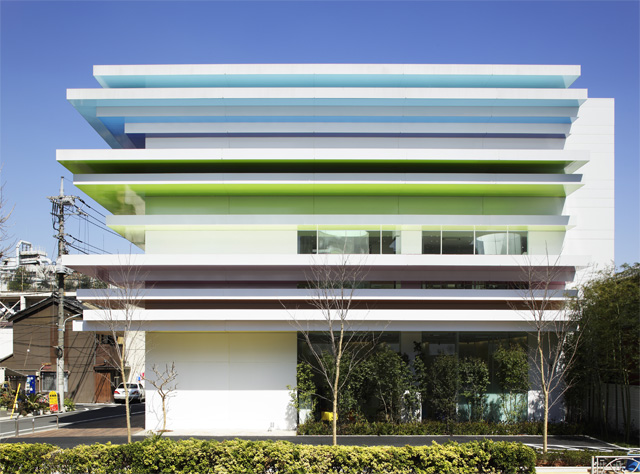
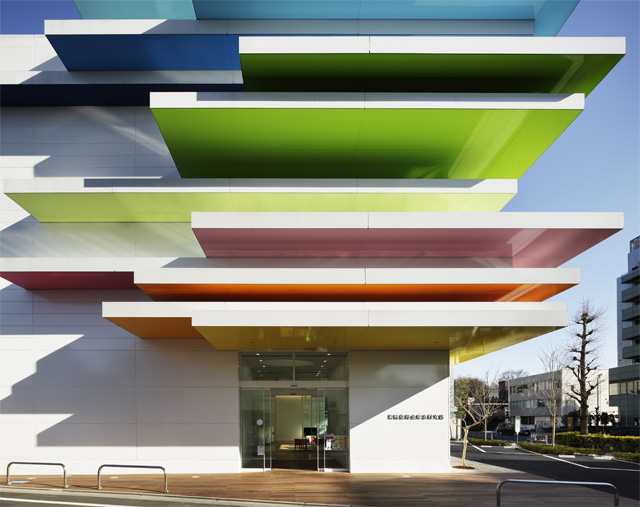
This is mind-blowing. Can you imagine that this building is a credit union branch?

The Sugamo Shinkin Bank's Shimura branch in a suburb of Tokyo, designed by Emmanuel Moureaux and opened last month, perhaps represents the future of credit union branches.


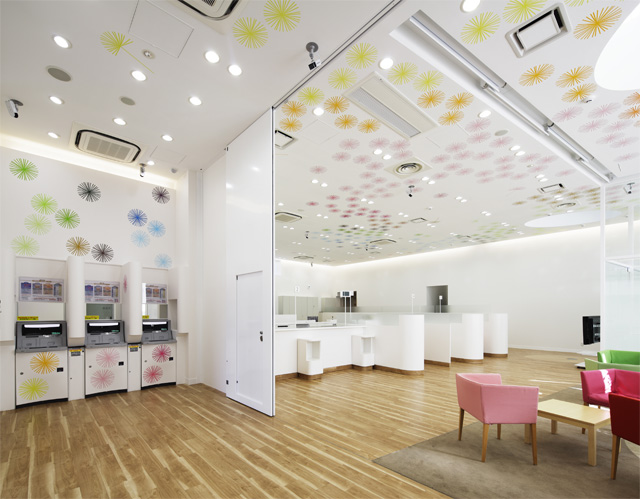
Even the interior of the branch is unexpected for a credit union.

Notice ATM machines on the left

Some of the other branches of Sugamo Shinkin Bank are also designed by this architect, judging from her own website.

(The photos in this post are all linked from Excite Ism.)

Thursday, April 21, 2011

Alicia Keys "Unthinkable" (Lenzman dnb remix)

  Alicia Keys - UnThinkable (Lenzman Drum'n'Bass) by Crisu Pissu

This beautiful remix of Alicia Keys will probably never ever be released... And I must say this remix is better than the original.

Added, 28 May 2011: You can download a 320kbps MP3 file of this track here.

Sunday, April 17, 2011

Magasin 3

Part III of my "Rediscover Stockholm Spring 2011" campaign targets at Magasin 3, Stockholm's reputedly best contemporary art gallery. I always wanted to visit this place, but every time I had an opportunity, Magasin 3 was closed (like this) or I caught cold due to cold winter. Finally I manage to arrive today.

I planned to have lunch at a cafe nominated for Gulddraken 2011 award nearby which turns out to be closed over the weekend. Yes, it's Stockholm.

The entrance of Magasin 3 is perplexing at first glance:


It turns out both of these two doors are the lifts which take you to the first floor on which Magasin 3 gallery spaces are located. And the left lift is a big one, looking like the one for lifting stuff, not people. This is a nice prelude to the world of contemporary art.

The first thing I do is to have lunch. Cafes and restaurants in museums and galleries are not particularly impressive in this (self-claimed) capital city of Scandinavia. And so I avoid having coffee. But a baguette sandwich and a Sicilian lemonade imported from southwest England are both pretty good. Another pleasant surprise.

This weekend Magasin 3 hosts a contemporary dance performance. I imagined it would be performed in the middle of art gallery with art works in the background. No. It takes place in an empty gallery space, which is a bit disappointing. But the dance itself is of high quality. With no music in the background, two female dancers, one of them looking boyish, the other wearing a rather nerdy sweatshirt (even though she looks very beautiful), interact with each other by body movements as if they were one person and his/her own self, trying to identify with each other. After lots of trial and error for about 10 minutes, they finally get connected. I've never watched contemporary dance as seriously as I do today. But I like it.

The exhibition features the best pieces of work collected by Magasin 3 and its associated partners throughout Europe in the past decade or so. The way the curator puts these pieces together in the gallery space is sometimes nerve-disturbing, which is great as the role of a gallery is to add value to art works with the way they display. After being exposed to contemporary art during my five years of life in London, I think I have more discerning senses in contemporary art than the average person. And I can tell you many works are pretty good. My favorite is a video installation which shows the artist obstructing a queue of several lorries from moving forward at night for about 10 minutes (Person Obstructing A Line Of Containers, by Santiago Sierra). Lorry drivers, of course, get frustrated, honking a horn repeatedly and flashing the light, which becomes a kind of sound and visual art. A giant heap of black confetti (Sans titre (Le Terril), by Stéphane Thidet) creates a sense of uneasiness, because it looks like a heap of coal, suggesting something heavy, but each piece of the heap is a very tiny piece of paper, unnerving your commonsense. Another video installation showing street demonstrators in Albania carrying mirrors instead of protest banners (The Landscape Is Changing, by Mircea Cantor) also distorts your commonsense as you start wondering what these demonstrators try to demonstrate. Do they protest against what the city looks like (which mirrors reflect) or do they actually support what the mirrors reflect?

But other works are more disturbing. One video installation (Barbed Hola, by Sigalit Landau) shows the artist herself, naked and standing on an Israeli beach, playing a hola-hoop with the barbed wired hoop... Another video installation (History of the Main Complain, by William Kentridge) is a black-and-white (and red) animation made of a series of hand-drawing cartoons, showing a person is beaten up or hit by a car. An animal-looking sculpture (Animal, by Peter Fischli & David Weiss) has an ass hole (literally) through which you can peak into this animal's stomach (which is completely empty), and this behavior itself starts making you feel uneasy (Why am I looking into an ass hole only to find nothing?).

You can see the images of all the works in the exhibition, including those mentioned above.

Overall, the exhibition is of great quality. But I got mentally tired when I got home. There is a tendency for contemporary art exhibition in Stockholm to get gloomy, perhaps because ordinary people in this country are more or less happy.

The building that houses Magasin 3

Saturday, April 16, 2011

DJ Fresh - Future Jungle EP

DJ Fresh has been a very productive and successful producer of drum & bass music in the past decade. Such an artist could have become conservative, sticking to his own style that is known to be successful. However, Fresh keeps reinventing himself, and his latest release, Future Jungle EP, pushes the frontier of drum & bass even further. In particular, the tracks entitled Ice Cream and Arkanoid are the new kind of sound that cross-breads jungle and dubstep and lets it grow under the parenthood of the early 1990s rave music. Listen to the official teaser:

  Fresh - Ice Cream - Future Jungle EP by RAM Records

  Fresh - Arkanoid - Future Jungle EP by RAM Records

If you love this sound, click here to purchase the EP (or each single track) as high-quality MP3 files at Beatport. (Beatport is my favorite music download site for club music.) It's on sale at iTune, too.

Monday, April 11, 2011

Outlook Festival 2011

This bass music festival in Croatia on 1-4 September seems like a bomb. They focus on club music that features the bass sound: reggae, dub, drum & bass, dubstep, hiphop and the like. It's held on the beach. And the festival takes place in a country that's exotic enough to most of us. I might be going.

Saturday, April 09, 2011

Snickarbacken 7

As the second instalment of my Rediscovering Stockholm in Spring 2011 campaign (the first one was the Sven-Harry's art museum), I visited Snickarbacken 7, another new addition to Stockholm.

Entrance

It is a concept store that houses a shop selling clothes, furniture, and other items, an art gallery, and a cafe, occupying a high-ceiling ground floor of the 19th century building with church-like vaults in Gothic style.

Frankly speaking, the exhibition at the art gallery (Galleriet S7) was disappointing. It occupies the best part of the space, the church-like vaults, but the narrow, long shape of the gallery space appears to backfire; you cannot appreciate the work from a distance. A video installation which keeps showing two hands without any movement at all was set up at the rear of the vault space, which can be seen from a distance (and indeed from the entrance). But this video installation doesn't seem to benefit from such a long-distance viewing.

The store appeared interesting. On the shelf is the kind of stuff I usually don't see in other retail shops in Stockholm. (But as a foreigner who needs to move to a new apartment at least once in every year due to the notorious rent control, I don't feel like buying a new piece of furniture.)

The vaults
The cafe (Kaffeverket) is probably the best attraction of Snickarbacken 7. I enjoyed apple-ginger juice with mint leaves. A cup of cafe macchiato was not too bad, which is a rarity in Stockholm. A toasted sandwich of jamon serrano, manchego, and paprika paste sauce on levain bread was okay, though . With nice background music in good quality of sound, the stone floor intentionally left rough, and the vaults on the roof, the atmosphere is cozy. Perhaps due to its location (slightly off the main shopping area), it's not packed around noon on Saturday. Another plus in a city with all the good cafes being particularly busy over the weekend.

Sunday, April 03, 2011

Lars Kleen at Sven-Harrys Art Museum

I visited the Sven-Harrys Art Museum, the latest addition to Stockholm's landscape. From outside the museum building looks a bit tacky with its golden panels. Once I get inside, however, the atmosphere is more modest and minimalistic. White walls are typical of art museums these days, but the wooden, rather than concrete, floors reflect a sense of Scandinavian roots.

The museum's opening exhibition features a Swedish artist named Lars Kleen. There are two massive sculptures on display on the ground floor, which at first glance look like an industrial architecture using disused materials like metal bars, wires, ropes, veneer boards. A fad in contemporary art these days is the recycling. So far nothing surprising.

When a museum clerk slightly pushed the second gigantic structure with his leg, I saw the structure swinging. I realized what I see is no "nothing surprising". I started investigating how the sculpture is assembled. A few minute's study revealed that 75 percent of this massive structure is actually hanging by just four ropes from the central part.

Displayed on the way upstairs are two miniature sculptures, both of which again consist of one part suspended by another part. I started feeling some sort of dangerous dependency.

And the last sculpture on the upstairs floor is this:

(The photo is taken from vastrasicklao.se.)

I sat down on the bench and looked this up for a while. It looks impossible. The center of gravity of this structure looks so high. It's not hanged from anywhere. It's just standing. And the thin legs of the house-looking structure, which seems to me a sort of Shinmei-zukuri (Japan's oldest architectural style used for shinto shrine such as Ise Jingu), touch the lower part with tiny pieces of wood in between. How can this be supported?

And for no reason (or perhaps for obvious reasons) I started thinking about the massive earthquake and tsunami that destroyed many coastal towns and nuclear power plants in Japan three weeks ago. I started seeing Japan in this structure. For whatever trick it may be, something unthinkable is realized with human creativity. But its basis looks so fragile. If the 20-meter tsunami wave hits this structure, it will break down for sure, no matter how ingenious the way to construct it is. And what's worse, we don't know why this is possible, just like we don't really know what radioactive radiation really does to human health. Without knowing its exact mechanism, our life heavily relies on it. The electricity to Tokyo this coming summer will be expected to be severely under supplied.

I wondered if I should ask why this structure actually is standing. Perhaps leaving it unknown is the whole point of this art. But I couldn't resist. The museum clerk told me it's a sheer act of balance. Still I cannot really believe it.

I imagined what if the artist used brand-new materials to make this, instead of recycled ones. I would feel just impressed and perhaps praise the skill of the artist and human creativity in general. The use of rubbish to construct this act of balance is probably crucial here. The museum clerk said some visitors, especially men, felt like doing something similar by themselves, by collecting rubbish. (That's quite Swedish a way of reaction, by the way.) This episode even makes it scary. People think, "Well, I can do it."

It's a well-thought-out installation. I tip my hat to the artist and the museum curators who pick his works as the opening exhibition.

I now have one more favorite place in Stockholm.