Showing posts with label Tokyo. Show all posts

Sunday, December 25, 2011

The Monocle Cafe

Every half a year, Tokyo sees something new. The latter half of the year 2011 saw the opening of Hankyu Men's Tokyo, a department store specializing in men's fashion, in Yurakucho (the area right next to Ginza). Although it may sound unusual to people outside Tokyo, the whole department store building dedicated to men's fashion is nothing new in Tokyo: Marui Men for youngsters and Isetan Men's for grown-ups have been around in Shinjuku for ages by now.

What's really new about this department store is a cafe on the lower ground floor: The Monocle Cafe. Monocle is a magazine that has been advocating for the ideal urban environment which, of course, includes cafes. Perhaps unusual for such a magazine, the editor Tyler Brule has decided to open the magazine's own cafe in Tokyo.

Omotesando Koffee, one of the best coffee houses in Tokyo, is in charge of coffee served. The food menu includes katsu (Japanese pork schnitzel) sandwiches, which consist of a succulent pork fillet, crispy deep-fried breadcrumb, thick tonkatsu sauce, and slices of toasted smooth-textured bread. It's probably one of the best katsu sandwiches served in Tokyo.

But the Monocle Cafe is not only about coffee and foods. The wooden interior design, implemented by Maruni, a Japanese wooden furniture manufacturer in business for more than 80 years, creates a heartwarming atmosphere. Especially, their Hiroshima lounge chairs, designed by Naoto Fukazawa, the leading Japanese product designer, have such a smooth, beautiful surface of the back rest that is comfortable both to lean against and to watch when the chair is not occupied.

Last but not least, the cafe staff is super customer-friendly, even by judging from very demanding Japanese standards of service quality. When the kitchen ends up serving a different food than the one I order, they don't just apologize but first throw away my cup of espresso to replace it with the one just brewed in time for my food served. Then they deliver everything to my table (by default, customers order coffee and foods at the counter and take them themselves to their table). When I realize I need some sugar for my espresso, the waiter standing nearby just notices it and brings a sugar container to my table. This kind of services can be overwhelming to customers, but the Monocle Cafe staff know how friendly services do not feel too much.

Also great about this cafe is that customers can read a sample Monocle magazine and that some of the tables offer electric sockets.

When you visit Ginza, do stop by at this cafe. You won't get disappointed.

Added on 8 January
On the second visit, I had Monocle curry (curry with rice in Japanese style) and yuzu squash (Japanese citrus sparkling juice). For foreign visitors, these must be interesting. But for Japanese people, they are nothing special. And today's staff was less professional. Another problem is the cafe's WiFi access. You first have to email a blank message to obtain the password to get access. For foreign visitors like me who have no 3G internet access, this is super useless. Having said that, it's still worth visiting for cozy interiors, katsu sandwiches, and Omotesando Koffee's coffee kashi.

Friday, December 23, 2011

Omotesando Koffee

If I'm asked to recommend the best coffee shop in Tokyo, I immediately mention Omotesando Koffee because it combines the Japanese tradition and the 21st century design philosophy at its best.

The traditional side is represented by the house that houses the shop. It's a small, old-style residential house. Facing the alley is an old-style wooden gate with a roof. Inside the gate spreads a small garden surrounded by a concrete block wall (typical of the mid-20th century Japanese urban landscape) and a wooden house. A narrow flower bed along the wall accommodates non-conspicuous flowers and grass plants.

Inside the house sits a cubic kiosk within which the shop owner brews and serves coffee to customers over the counter. The design of the shop is all based on the cubic shape. The signage at the entrance on the alley is a black metal square ring on a stand. The white paper menu on the counter divides its surface into multiple squares each of which lists one particular coffee (espresso, macchiato, cappuccino, etc.). Each component of the kiosk is also a cube, since it's meant to be mobile: the house is planned to be demolished soon (though the house owner just decided to postpone the plan). Finally, the koffee kashi, the original baked custard designed to stimulate your appetite for coffee, is cube-shaped. All this consistent design philosophy, along with the interior of a Japanese old residential house, creates a tranquil atmosphere, tranquil enough to focus your five senses to the present moment of tasting coffee.

There's no seat or table inside. The shop is more of an Italian bar where people just hop in and quickly gulp a cup of espresso. It is in the middle of a quiet residential area three blocks away from the busy Omotesando boulevard. A little bit difficult to spot, but it is worth visiting as nowhere else can offer such an experience.

If you need a second opinion, I would mention that Monocle magazine editors love this place so much that when they opened their own cafe on the basement of Hankyu Men's department store in Ginza last autumn, they asked Omotesando Koffee to train their barristers and decided to serve its coffee and koffee kashi at the cafe.

Friday, April 22, 2011

The Future of Credit Unions

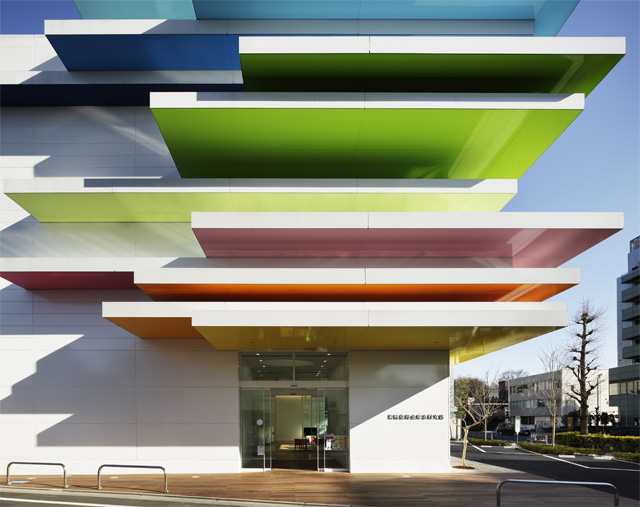
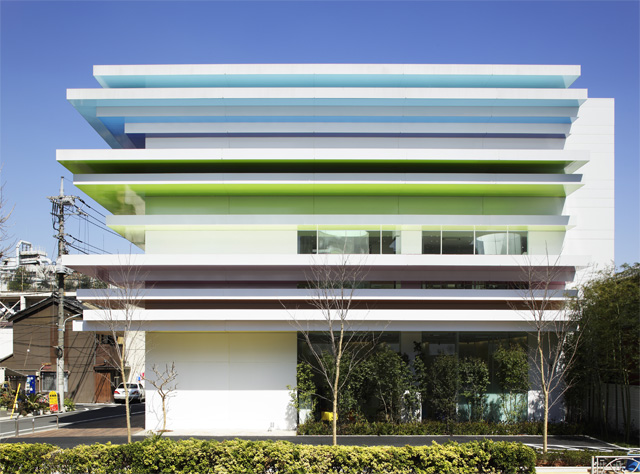
This is mind-blowing. Can you imagine that this building is a credit union branch?

The Sugamo Shinkin Bank's Shimura branch in a suburb of Tokyo, designed by Emmanuel Moureaux and opened last month, perhaps represents the future of credit union branches.


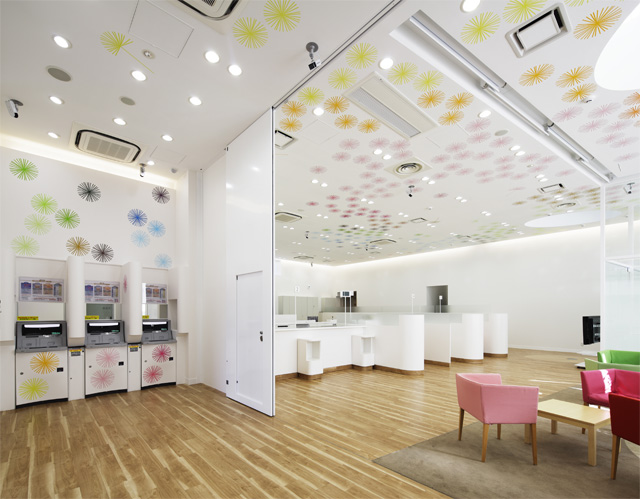
Even the interior of the branch is unexpected for a credit union.

Notice ATM machines on the left

Some of the other branches of Sugamo Shinkin Bank are also designed by this architect, judging from her own website.

(The photos in this post are all linked from Excite Ism.)

Thursday, December 30, 2010

Tuesday, May 18, 2010

Finding an apartment in Tokyo back in 2001

I found a blog post (by an American?) on finding an apartment in Tokyo in 2001. It seems foreigners find it difficult to rent an apartment in Tokyo. But they have a chance to view various apartments, if it takes a month to find a place to move in. I don't even have a chance to view many apartments...

Sunday, December 27, 2009

Verner Panton


(The photo taken from Excite Ism)

I didn't know who Verner Panton was. But this Danish interior designer is apparently one of the must-know persons in the history of design, and the picture above (used in the flyer for the exhibition held at Tokyo Opera City Art Gallery until today) is intriguing enough for me to decide to visit the Gallery just one hour before the closing time.

Skipping the first section on the biography of Verner Panton and his early works on display (which I think is a bit boring way of introducing the whole exhibition), the corn chairs and other geometrically-shaped chairs catch my eyes:
(The photo taken from Excite Ism)

Using the inverted circular cone as a chair is the idea Panton came up with back in 1958. It is actually a functional idea. A circular cone has a flat surface that can be used as a seat and the cone part can be used as a support for the chair.

This obsession with a chair that doesn't have a standard form culminates into the Panton Chair (the photo to the right, taken from Wikipedia):

This chair is familiar to me because I often have lunch by sitting on this chair at the cafe in my Stockholm workplace. The exhibition tells visitors that Panton invented the concept in 1965. Technology at that time did not allow the concept to materialize in the commercially viable form. Only in the early 1990s, plastic materials became sturdy enough to realize this chair shape durable for a long time. Usually, people whose idea is too advanced are only cherished in history. In the case of Panton, we can appreciate his idea in real time, for example, at the cafe in my workplace.

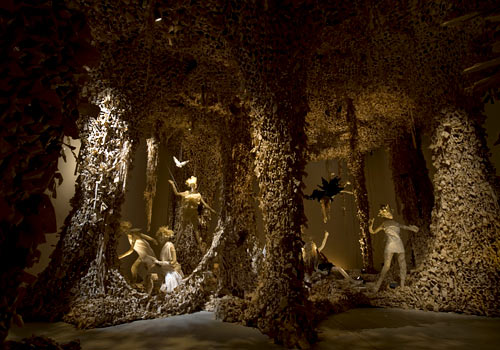
What really blows my mind, however, is his talent in space design. The exhibition replicates two installations he produced back in 1970. The first is Phantasy Landscape, shown in the picture at the top of this blog entry which does not really tell what this is about. It's a cave-like structure made of foam rubber. Visitors can sit down, lie down, and even sleep. What strikes me is that this space makes people look happy. When I enter into this cave, quite a few people are sitting, chatting, and sleeping. The crowd usually looks a bit annoying and can be intimidating. Here in this cave these people look beautiful. This is an installation that comes to fruition when it interacts with people, a very popular idea for today's art installation. But Panton did this almost 40 years ago.

The second mind-blower is 3-D Carpet "Wave". A huge red carpet that has wave-like humps, which can be used as a chair, a sofa, or a pillow. Visitors sit down and lie down on their back on this carpet to watch a film on Verner Panton on the wall screen. The view of this installation is again a very pleasant experience. People apparently enjoy it. You feel it by looking at their faces. And I myself enjoy chilling on a wave-hump.

Some nightclubs and bars should adopt these two spaces designed by Panton. Actually, some of the other spaces produced by Panton appear to have influenced the design of some nightclubs and bars today. The decor of Cocoon in Frankfurt and Zouk in Singapore, I believe, has some traces of his design, if not intentional.

On the way home, I read a giveaway leaflet for this exhibition. I learn the following behind-the-curtain episode. Directed by the Vitra Design Museum in Germany, the exhibition has been on the world tour since 2000. However, the Tokyo version is curated quite differently from the earlier exhibitions in other countries. While Panton's works were on display chronologically and often in the same room in those earlier exhibitions, Ichiro Katami and Uichi Yamamoto, the directors for the Tokyo exhibition, thought such a way of exhibition wouldn't be effective enough to deliver Panton's pursuit of fantasy space to visitors. Consequently, at Tokyo Opera City Art Gallery, they split the exhibition space into several separated booths each of which represents different philosophies Panton embodied into his works. Plus, the 3-D Carpet replica was made specially for this Tokyo exhibition. In other words, people in other countries who visited this exhibition were unable to experience that happy atmosphere.

Another reason to believe that Tokyo is the world's most interesting city.

Saturday, July 25, 2009

Tokyo Subway Map for your iPod


I just discovered Gizmobies. It's a stylish protector skin for iPod, iPhone, Blackberry, and Nintendo DS. This is what I wanted for my iPod Classic. And my hesitation to buy an iPhone due to its rather ugly design will go away with Gizmobies.

It originates from America, and its Japanese store has the "Japan-only" patterns. I hope Scandinavian designers will soon join the bandwagon. They should do a better job.

And what's surprising to me is that one of the patterns available in US is the Tokyo Subway Map (see above). This is a cultural shock to me.

London's tube map is a design icon.


On the other hand, I always thought Tokyo's counterpart was ugly.


But for Americans, Tokyo is cool, and so its subway map is also cool, as it seems.

Saturday, September 20, 2008

A boutique designed by Zaha Hadid


Yet another must-visit was opened in Tokyo: Neil Barrett's flagship store designed by Zaha Hadid.

Address: 3-17-6 Minami-Aoyama Minato-ku Tokyo

The photos on the right are obtained from Excite Ism Concierge (18 September, 2008).

Saturday, May 31, 2008

Meguro

Have lunch with a friend at Kioku, a restaurant in the entrance lobby of Hotel Claska on Meguro Street. It's got a nice ambience, perfect for Saturday branch, and the food is good enough (if not excellent).

Meguro Street has attracted many furniture and interior goods stores. Brunch+time stands out among them. It stocks many table boards made of one piece of natural wood (i.e. not engineered wood), reminding me of the beauty of wooden pieces of furniture.

Friday, May 30, 2008

Supermarkets in Tokyo

I follow my mother to buy foods and other daily stuff at supermarkets in the neighborhood. Three things surprise me.

First, the package of vegetables allows you to see in your mobile screen the face photo of farmers who produced them. The package has a QR code on it. Scan the code with your mobile handset, and you'll see the farmers' face on the mobile screen. (QR codes are everywhere in Japan now.)

Second, after passing the till, ice cubes are on offer for free of charge so customers can keep vegetables etc. cold and fresh on the way home.

Finally, Ito Yokado, one of the major supermarket chains in Japan, delivers what you just bought to your home on the same day for just 100 yen (0.61 euro). What's more, for what need to be kept refrigerated, they keep them in a special bag that keeps the inside cool.

Do you want to live in Tokyo by now?

Thursday, May 29, 2008

Emily Kame Kngwarreye vs. Turner Prize Winners

Roppongi has become a place for art lovers. Located within a walking distance are three major art museums in Tokyo. I visit two of them today: The National Art Center Tokyo and The Mori Museum. (The third museum is The Suntory Museum.)

Photo: The lobby hall at the National Art Center Tokyo.

The National Art Center Tokyo exhibits the works by Emily Kame Kngwarreye, an Aborigine painter. The exhibition collects about 100 pieces of her work, spanning her entire career.

The first glance at them puzzles me. All the paintings are very abstract, presenting a very different world. The curator's explanation in a video playing in a separate booth from the gallery helps me realize that her paintings reflect the place where she lived in her entire life: a desert in the middle of Australia. She basically drew what her eyes had always caught. Once I'm used to her ways of expression, I start noticing her mind-blowing sense of color. She mixes different colors in a pleasant way. This aspect of her talent blossoms in Earth Creation. Now that I have had an experience to seeing green leaves and colorful flowers burst into blooming suddenly right after the end of winter in Stockholm, I can appreciate what Emily painted in this work.

Another aspect of her talent, the use of dots to paint a canvass, allows the picture to look three-dimensional. The best to watch her paintings is from a distance. (And this exhibition is laudable in that it allows viewers to do this by using the vast exhibition space fully.) It is like when we see the cityscape from the top floor of a skyscraper as beautiful. Each dot is rather ugly, but when these dots get together and viewed from a distance, they produce a beautiful picture. How did she manage to envision this effect when she was drawing on a canvas on the ground (that's her way of painting)?

Once she established her fame in the contemporary art world by the early 1990s, she changed her style. That was when she was over 80 years old. She stopped using dots. Instead, she focused on line drawing. The exhibition shows her pieces of work during this period, which are honestly speaking not very good. But she made a break-through by painting Big Yam Dreaming with white lines on a black background, that is, by ditching what made her famous: dot painting and the incredible use of colors. That was just one year before her death in 1996.

Even after that, she tried a new approach. In the last series of paintings (drawn just two weeks before her death), she discarded even line drawings. She attempted to create a new world just by her keen sense of color. Would you start doing a new thing when you expected the end of your life in the very near future?

The pictures of her painting are scattered on the web. None of these do her any justice. Her works are best appreciated by watching the original from a distance. If your city invites her exhibition, do visit it. You won't regret it.

-----

After Kngwarreye, contemporary art pieces by Turner Prize winners displayed in the Mori Museum inevitably look small-scaled. Each artist does reveal something new. In Mother and Child, Divided, Damian Hirst, for example, makes me realize the difference in what is inside the body between a cow and a calf. It's not like every part of the body becomes larger when one grows up. In a project House, Rachel Whitered managed to visualize the space inside a house that is going to be demolished, that is, something nobody cares about, by making a concrete cast. In a video entitled Deadpan, Steve McQueen shows what each person cares most about is different. (And I realize one of the video works that I saw in Venice Biennale 2007 (Sophie Whettnall's Shadow Boxing) is basically a copycat of McQueen's work, although I prefer Whettnall's.)

Overall, however, what Turner Prize winners try to convey to viewers appears to be rather trivial in comparison to Kngwarreye's works. Maybe because Turner Prize winners fail to produce beauty.

------

Tokyo is not just a city for great foods and amazing shopping experience anymore. It is now a place to allow the luxurious comparison of totally different strands of great art. Chanel has chosen Tokyo as the second city to exhibit Mobile Art. Tokyo allows its residents to keep up with what's happening in the world.

Tuesday, May 27, 2008

Ginza

During the past one year, the most dramatically transformed area of Tokyo is Ginza.

First off, I visit Marronnier Gate, opened on September 1, 2007. This 12-story shopping and dining complex surprises me in two senses. First, each of the top three floors for dining features different types of cuisine: the 10th floor for European, the 11th for Asian, and the 12th for Japanese. I'm not aware of any other buildings in Tokyo that organize their restaurants in this way, but it makes real sense. You usually feel like eating a particular type of cuisine, so you don't want to browse Japanese, Chinese, and Italian restaurants together around, do you?

Among the Japanese restaurants on the 12th floor, I try Sou, serving vegetable dishes from Kyoto with stylish decor of Japanese minimalism. My choice is "One Soup Three Vegetables", a lunch menu available only on weekdays. The vegetable soup with white miso in Kyoto style is superb. The price is just 1,500 yen (9.3 euro). By Tokyo standards, this is not cheap for lunch. But neither London nor Stockholm manages to serve a lunch dish that can be described as "superb" for this price.

Downstairs, Tokyu Hands occupies five floors from the 5th to the 9th of the Marronier Gate. Tokyu Hands is a well-established chain for homeware and DIY goods, sometimes selling quirky stuff. But it's never associated itself with style. In its newly opened Ginza branch, that's not the case anymore. It signifies the recent change in trend in Tokyo towards a better quality of life.

Walking on Marronier Street to the east from the Marronier Gate, you'll see De Beer's first store in Asia, opened on March 20, 2008. Just have a look at its wavy facade:


A further change to Ginza's landscape is Swarovski's flagship store, the first for the brand, on Chuou Dori (Central Street). Opened on April 1, 2008, Tokujin Yoshioka designed the store interior under the theme of crystal forests.

Ginza has also seen Giorgio Armani, Cartier, Bvlgari, and Dunhill open or renew its flagship store during the past one year, and they are not just another store in this world. They feature good design and something only available in Tokyo.

Nowadays, anything that is hyped or proves to be popular in the West comes to Tokyo. H&M will finally open its first store in Japan, again in Ginza, this September. Channel's much-hyped mobile art exhibition comes to Tokyo at the end of this month, before any European cities (but after Hong Kong). Plus Tokyo offers great and inexpensive eating-out experiences and excellent services even at budget stores, both of which are unthinkable in the West. What is the reason for not living in Tokyo?

Monday, May 26, 2008

A day in Tokyo

Leave my parents' home around midday. Have takoyaki (octopus balls) at Gindako for lunch. Eight balls of takoyaki for 500 yen (3.06 euro). Gindako is a nationwide chain. My hometown branch is located in a part of the railway station building that lunch takeaway stores occupy. Your choice includes Chinese, udon noodle, yakitori (grilled chopped-and-skewered chicken), croquettes, and bento boxes. All cost at most 1200 yen. It is hard to believe that everybody eats sandwiches every lunch on weekdays in the capital of some country in Europe. It'd be hard to believe for people in Stockholm, too, where almost every lunch place serves the same set of foods.

Pass the ticket barrier of the station and walk up to the platform where Juicer Bar sells freshly squeezed fruit juice: mango, melon, banana, etc. Take a 100ml cup of mixed fruit juice for 150 yen (0.92 euro). The store board says, "We will raise our price by 30 yen due to the recent world food price surge."

Take the Sobu line, and a 33-minute ride to the west takes me to Yoyogi station. Use the east exit of the station to walk to Shinjuku Takashimaya Times Square. Buy a bilingual art magazine Art It at Kinokuniya book store. Buy a pair of scissors at Tokyu Hands. The latest trend in scissors in Japan is fluorine-coated ones so that tapes and glue won't stick to scissors.

Go back to Yoyogi station and take Yamanote line. One station to the south is Harajuku. Get off the train and walk down on Omotesando boulevard to the east. Arrive at Tornado Mart where I asked to adjust the length of a pair of trousers that I bought last Wednesday. In addition to picking up the trousers, buy a black, tight, uniquely-designed jacket.

Walk down south to Shibuya. While the north side of Omotesando boulevard is packed with cutting-edge small boutiques for young men with Japanese original brands in stock (as written last Wednesday), the south side sees boutiques for Japanese people dreaming of Europe and America. These stores are horribly boring to me. I can find these stores in London, Stockholm, San Francisco, and other major cities in the West. Those on the north side are hard to find in the West.

Arriving in Shibuya, stop by at Tower Records. Buy a CD of gagaku music. Then stop by at Sakuraya where I browse USB flash drives. Japan produces a wide range of quirky USB flash drives like those shaped like sushi. I'm looking for a stylish one, and find IO Data's ToteBag series.

It's time to go home. Take the Hanzomon line to Kinshicho. Buy three cream puffs at Maple House in the railway station building. Beard's Papa is not the only cream puff available in Japan. Maple House's version has a cinamon flavor. Back at home, I eat it with my parents. All of us like it. And one cream puff costs 150 yen (0.92 euro). This is the kind of things Stockholm never offers me with...

Cheap but decent foods, cutting-edged design clothes, user-friendly stationery, and good-looking electronics items. That's what Tokyo offers. It's a paradise for materialistic people as we Japanese are.

Sunday, May 25, 2008

Kinshicho

My parents' home is located in eastern Tokyo. It takes about one hour (15 minutes by walk to the nearest station and 45 minutes by train) to major districts of Tokyo like Shinjuku and Shibuya. I finally understand why I got exhausted everytime I stayed in Tokyo for a couple of weeks. I'd go to such major districts of Tokyo almost everyday. My travel time was as long as 2 hours every day.

The situation has changed a bit. Kinshicho, another district of Tokyo just 30 minute away from my parents' home, has become a trendy spot during the past couple of years. And I'm quite satisfied by the shopping experience in this area today.

The Kinshicho branch of the Marui department store is not that different from other Marui branches in Shinjuku and Shibuya anymore. I manage to find good-looking pieces of clothes at Rupert (a dark turquoise t-shirt with long sleeves and a zipper neck hole), Michel Klein Homme (a khaki flax jacket with slightly short sleeves), TK (a white t-shirt with Japanese traditional patterns), and Comme Ca Men (a white t-shirt with a black and purple abstract art print).

And I visit Olinas, a recently opened shopping mall in Kinshicho. Quite a few fashionista girls walk into the mall, a scene unthinkable for Kinshicho until a few years ago. The mall is crescent-shaped with a double-height structure (you can see the top ceiling of the building from the ground floor), designed by RTKL. Although women's wear boutiques form the majority of the shops, several interior good stores are also found. There are some cafes I haven't seen before anywhere else in Tokyo. Surely this is a better shopping mall than the Brunswick in London, which just collects all the major, boring high street shopping chains.

Kinshicho beats London.

Friday, May 23, 2008

Tokyo Dining Scene

Have dinner with Reiko, a friend of mine living in Tokyo. When we decide where to eat, she suggests the following: motsunabe, jingisukan, free-range chicken from Miyazaki prefecture (southern Japan), Okinawa cuisine (Okinawa is one of the southernmost islands of Japan), dojo (oriental weather loath), lamb shabu-shabu, game barbecue, shamo, oden, macrobiotec diet, and so forth. Can you believe such a wide variety of options available in Tokyo? People in Stockholm, where good dinner is almost always in French style, certainly wouldn't. Bear in mind that what Michelin Guide Tokyo revealed is just the tip of iceberg.

I pick game barbecue. Known as gibier in Japan, it has recently become popular in Tokyo because game meat contains less fat than standard meat. Fat-conscious Japanese girls love such food. Reiko takes me to a gibier restaurant named "Matagi ga machi he oritekita" (meaning that matagi has come down to the city; even by Japanese standards, it's unusual that a sentence is the name of a restaurant...) in Nakameguro, an area of Tokyo which has become trendy during the last five years.

The restaurant has a minimalist, stylish decor with aluminum pipes hanging from the ceiling above tables. Shichirin on which game meat is barbecued is placed under the pipe so the smoke goes out of the restaurant through the pipe. Tokyo and Seoul have many restaurants like this, but for the first time I see a restaurant that places such indoor barbecue pipes in a stylish way.

We have pheasant, boer, and moon bear. I never thought I would eat moon bear. Pheasant, boer, and moon bear taste like chicken, pork, and beef, respectively, but the texture is more consistent to the extent that it is still easy to bite. Meat is served with yuzu pepper, a spice that has recently become very popular in Japan. It goes quite well with barbecued meat.

Including half a bottle of Chilean red wine, two plates of vegetable, and homemade salted pork, we pay 9,000 yen (55.21 euro) in total. Given what we eat (i.e. something unusual to eat), do you still think Tokyo is the most expensive city?

Thursday, May 22, 2008

Tokyo National Museum

Ueno is a unique area of Tokyo. To the north-east of Ueno railway station, a number of museums are surrounded by trees and grass. To the south-east spreads Ameyoko, very Asian market streets full of food and clothes shops.

One of the museums in this area is Tokyo National Museum. The museum consists of four buildings, one of which is the Gallery of Horyu-ji Treasures designed by Yoshio Taniguchi before(?) he became famous for his redesigning of the MoMa in New York. I'm struck by his modernist approach to architecture. These days, new buildings almost always feature some curvature in them. Taniguchi's design escapes from it. Although foreigners (Wallpaper* City Guide, an FT columnist) praise this building, I'm not particularly impressed. But that's probably his aim: a building that does not obstruct or intrude into your mind just like kaiseki cuisine, which is actually quite difficult to achieve.
The exhibition inside is a bit disappointing. The explanation for each set of items on display is rather confusing. But some pieces of art are impressive.

Gallery 2 houses nearly 30 gilt bronze statues of sexy Guan-yin (Avalokitesvara in the female form). Local warlords in Japan back in the 7th century possess and worship these statues (about 50cm tall). 1400 years on, some Japanese people today possess figures of anime characters. Our preference does not seem to change much over the long history of Japan. :)

Another impressive piece is Kaikikyo (in gallery 5). This is a mirror given to Horyu-ji temple by Empress Komyo in 736. It depicts a sea with four islands at the edge in a 90 degree interval. The center is the sky while the edge is the ground. Within waves of sea and islands, animals and human beings are inserted. This is a piece of art back in the 8th century of Japan. It's beautiful. Its pictures on the web do not do justice to its beauty. You have to look at it with your own eyes.

The Museum Shop is unexpectedly good. Various items featuring pieces of Art in the museum are on sale. Dancing People catches my eyes. These figures (called haniwa) are made of clay and buried in the tomb of important figures back in the 6th century. I buy a keyholder of this pair of haniwa.

Then I go to the gallery where the Dancing People is on display. On the way is a gallery of Japanese art in the early 20th century. The gallery is spacious without too many objects so viewers can watch pictures from a distance. There are quite a few good and interesting pictures drawn by artists like Yokoyama Taikan. These guys take the Japanese drawings to a next level by incorporating Western ways of painting. One of Yokoyama's paintings draws Buddha preaching his followers in two hanging scrolls side by side. Buddha is in the the left scroll, and all the followers in the right, suggesting the difference in the level of enlightenment between the two. Although the way these figures are drawn is quite traditional Japanese, Yokoyama uses very vivid color of green, unusual for traditional Japanese paintings, to paint tree leaves above Buddha and the followers. The mixture of previously incompatible things, and the use of canvas (scrolls in this case) to suggest something more than what the picture itself tells, is very much like today's contemporary art.
Wednesday, May 21, 2008

Omotesando & Ura-harajuku

The only time I buy clothes is when I visit Tokyo, the world's most friendly city to anti-brand male fashionistas (i.e. fashion-conscious men who don't want to wear Paul Smith, Dior Homme, Giorgio Armani, etc.).

Ura-harajuku, off Omotesando boulevard, is the place to go for such men. Small alleyways are lined with myriads of small-scale boutiques for men (amazingly, there are more shops for men than for women). Various styles are on offer, and they are often creative.

What attract me this time are: a draped long-sleeved t-shirt with two strings hanging from both sides of the crow neck at Jackrose Luv Maison; yukata with contemporary patterns at Tokyo 135; a silver long-sleeved t-shirt at World Exe; and a bell-bottomed pair of trousers at Tornado Mart.

I also stop by at Omotesando Hills. As before, the ad campaign undermines the beauty of the inside of the building designed by Tadao Ando. In the photo below, the ad part is cut off from the frame although this is not the best way of framing the interiors of Omotesando Hills.

But I now learn there are some interesting stores which I can recommend.

Hida Omotesando (floor b2) displays expensive, but elegant wooden furniture made of Japanese cedar from Hida region (in the middle of Japan) designed by Enzo Mari. The grain of cedar makes these pieces of furniture look very unique and beautiful. The collaboration between Japanese traditional furniture makers (which have excellent skills of processing raw materials) and European designers like this one is an emerging trend in Japanese interior design.

Another interesting shop in Omotesando Hills is Kisara (floor b2), selling Japanese traditional textile and other handicrafts presented in a contemporary fashion.

Omotesando Saryo, a cafe at the main entrance of Omotesando Hills, serves Western sweets, pastry, and sandwiches with the decor inspired by Japanese tradition. For 1250 yen (7.67 euro), a croissant sandwich, a small bowl of salad, and yuzu (a kind of citrus only available in Japan) smoothie fill my stomach. The kind of cafes Stockholm never offers me with...

Monday, May 19, 2008

Tokyo Midtown revisited

For the second time I visit Tokyo Midtown. I now come to like its decor. It's not conspicuous, but getting used to it reveals its aesthetics. See these pictures:


And Tokyo Midtown is not just about its appearance:

Edo-kirian

It's near 2pm when I arrive at Tokyo Midtown. I haven't had lunch yet. Among several Japanese restaurants inside the Midtown, Edo-kirian becomes my lunch place today. It's a soba noodle place. The price is very reasonable. For 1080 yen (6.66 euro), I have ebi kakiage seiro (cold soba noodle served on a bamboo steamer with shrimp and sliced vegetable tempura). I'm not particularly a fan of soba noodle, but I'm impressed by the consistent texture of the soba noodle at this place. They also serve soba-yu (hot water used for boiling soba noodle). We drink this after eating soba noodle.

Hinokicho Park

With the full stomach, I take a walk to Hinokicho Park. It is a Japanese style garden, but the garden was just constructed along with the creation of Tokyo Midtown. So it only gives me a superficial impression. Having said that, sitting on a wood bench under the roof of azumaya (a wooden hut meant for garden visitors to take a rest), watching a spacious pond with Tokyo Midtown's contemporary high-rise buildings behind, and listening to the sound of streaming water in the garden makes me relax in the middle of the bustle of megalopolis Tokyo.

Next to Hinokicho Park lies Midtown Garden, which features avant-garde swings and slides for children.
Walking on a slowly curved footpath leads to the low-rise concrete building of 21_21_Design_Sight, designed by Tadao Ando. The curvature of the footpath is well-designed so the horizontal spanning of Ando's building is fully appreciated.

21_21_Design_Sight

The current exhibition at 21_21_Design_Sight is "XXIst Century Man" curated by Issey Miyake. No photo is allowed at this gallery, but Excite Ism, a Japanese web magazine on design, takes picture of most works on display. Below I link these pictures from the title of each work (except for Tim Hawkinson's Dragon, whose picture comes from The Huffington Post.

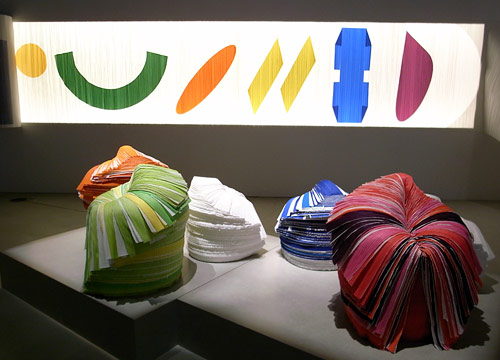
There are several key words popping up in my mind while exploring this exhibition. First, recycling. Issey Miyake's "Myth of the 21st Century" uses pieces of paper used during designing clothes. "Cabbage Chair" by nendo utilizes used pleated paper. Koutarou Sekiguchi's "It's a departure at a bright night." is made of only newspaper and duct tape. "Dunan Endeavor" by Yazou Hokama also recycles paper used as a container for industrial material.

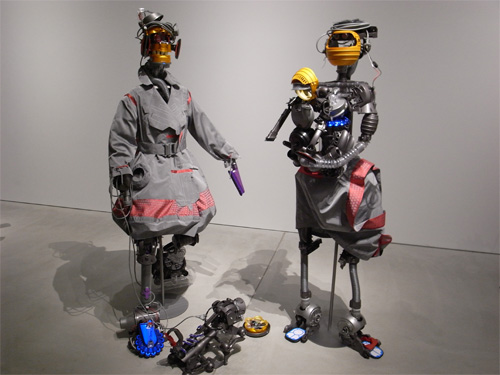
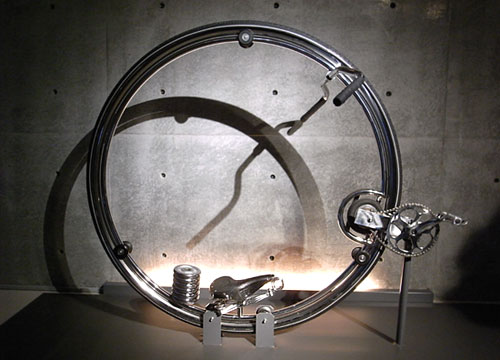
Next, what can be called the 21st century version of antimodernism. Ron Arad's "PizzaKobra" reveals a beautiful snake as a result of pursuing the state-of-the-art technology. "The Wind" by Issey Miyake Creative Room transforms parts of Dyson cleaners into human beings who wear the clothes inspired by parts of Dyson cleaners. Ben Wilson's "Monocycle" puts a driver inside the large single wheel, rather than on the top of it.

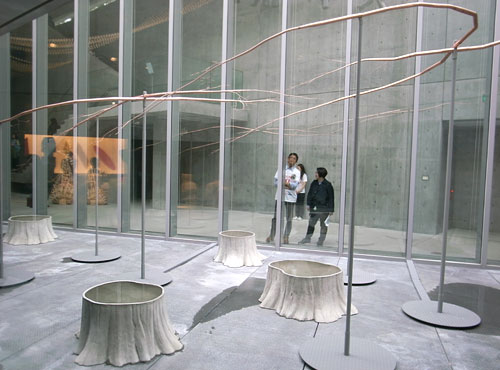
Third, the creation out of nothing. "Dragon" by Tim Hawkinson is not really a picture of a dragon if you look at it closely, but if you look at it from a distant, it's nothing else than a dragon. "Beginning of Time" by Yasuhiro Suzuki consists of two bronze branches which produce water out of nothing (because we do not see water vapour in the air: bronze induces dew condensation).

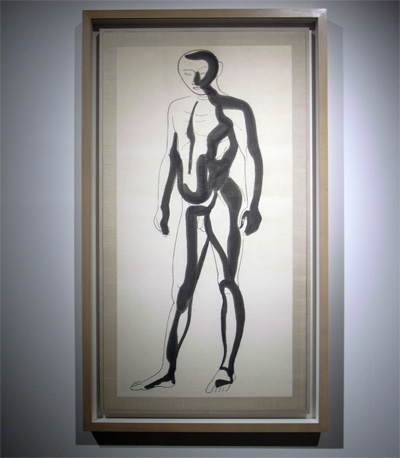
Finally, a human body. Isam Noguchi depicts "Standing Nude Youth" in ink brush painting. Stickman creates "Dui Seid" with wood branches as bones and blood vessels.

What should we take from these? Issey Miyake writes, "It is only through the miracles of creativity and imagination that this Earth will see dreams realized..." With environmental issues more serious than ever, we need to be more aware of ourselves as human beings in relation to the nature and what modernism brings to us. And only creation beyond most people's imagination can achieve it. That's my take.

It is a very well-curated exhibition. It would be perfect if visitors couldn't see Koutarou Sekiguchi's "It's a departure at a bright night." until the very end. Due to the space limitation, I suppose, this dream-incubating work of art has to be placed in an area where visitors go downstairs to start a visit. The sight of Sekiguchi's work at the beginning undermines the role of this work as a burst of hope after deep consideration.

Koots Green Tea

After being slightly tired from appreciating art and design, a Japanese tea cafe with an interesting concept refreshes my mind. Koots Green Tea is a perfect copycat of Starbucks in terms of the cafe decor and the presentation of drinks. But it doesn't serve espresso but matcha green tea. Matcha latte comes in several forms including the one topped up by kuromitsu (thick brown sugar in Japanese style) and kinako (soybean flour). Koots's version of Frappuccino is called Korichio (but not espresso but matcha green tea, red bean, or black sesami). Instead of sandwiches, they sell onigiri (rice balls wrapped in sea weed). Instead of biscotti, various Japanese sweets can be ordered. What's interesting is you can order an extra shot of matcha. I love this ridiculousness.

In addition, Koots sells fantastic matcha financiers. This is how Japanese people take French pastry to a next level.

Shopping

Although I was disappointed by the overall inferiority of interior design shops in Tokyo Midtown compared to those in Stockholm, there are two shops worth revisiting. Time & Style sells stylish towels. Hashicho sells myriads of Japanese chopsticks including traditional ones with contemporary design twists.

Monday, December 31, 2007

Tokyo Midtown

One of the newest additions to Tokyo's landscape (and places for shopping-spree and tasteful eating experiences) is Tokyo Midtown. I have a cup of superb, luxurious matcha green tea which costs nearly 1,000 yen (6.25 euro) at Kyo Hayashiya.

There is a floor of the building wholly devoted to interior goods and furniture, which is unheard before in Tokyo, where people have mainly been preoccupied with foods and clothes. Most of the stores on the floor, however, are pretty boring, especially when I compare them to those in Stockholm. The presentation is of poor quality. Each piece of furniture may be well-designed, but the shop managers don't seem to know how to present them in combination. There are very few surprises and learnings on how to decorate your rooms. If it looks stylish, the store mostly sells very expensive furniture. In terms of interior design, Tokyo is far lagging behind Stockholm.

The design of Tokyo Midtown does not look particularly deep. When I visit Roppongi Hills a 10 minute walk away afterwards, I do feel a difference. The design of Roppongi Hills is much more elaborate, not straightforward at all.

Sunday, December 30, 2007

Shiodome

Tokyo has undergone urban redevelopment projects in many of its areas during the past decade. I think the first was Ebisu Garden Place, followed by Shinjuku Southern Terrace, Ueno station, Shibuya Mark City, Akihabara station and its surrounding area, Roppongi Hills and Tokyo Midtown, and Marunouchi.

Shiodome is another example of this. Unlike other newly-refurbished areas of Tokyo, however, Shiodome feels inorganic because it simply consists of several skyscrapers and is cut off from the surrounding area resulting in the lack of historical and cultural connotations. Visiting the area this time makes me re-consider this impression I have had.

On Christmas Day, I visited one of those Shiodome skyscraper, Caretta Shiodome, to see its Christmas illumination at the entrance to the building. It employs 300,000 light-emitting diode (LED) bulbs, mostly blue, creating an image of ocean waves. The ocean of blue LED light is quite impressive. See the photos I took.

The illumination also features a 10-minute light and music show produced by Hideki Togi, a Japanese gagaku musician, which sucks. Gagaku is a Japanese traditional music for imperial court. Hideki Togi has reinvented it by incorporating pop music. The music played during the show, however, mainly features Western-style sounds with very little of the gagaku elements. Perhaps he is scared of the general public's response. This is very disappointing. If he composed a more traditional piece of music for this illumination, the cross-over of totally Western-inspired Christmas illumination and Japanese noble music would sure be mind-blowing.

After buying matcha castella of Gion Tsujiri tea shop inside Caretta Shiodome, I head for Shinbashi station to go home without expecting anything more. But I discover another set of Christmas illumination in front of the Nittele Tower (another skyscraper in Shiodome which houses the headquarters of Nihon Television, one of the four private nation-wide television channel networks). This one is totally white, creating an image of snow-covered woods. It's actually more beautiful than Caretta Shiodome's blue illumination. See the photos I took.

Obviously, the two skyscrapers in Shiodome compete with each other for the best Christmas illumination. There are some street performances, too, adding a more organic feeling to the Shiodome area.

Today, I go back to Shiodome, this time with Reiko, for a drink. We climb up the Shiodome City Center, yet another skyscraper in the area. On the 41th floor sits Japanesque Bar Gekka. The bar represents what Tokyo is all about: the combination of Japanese tradition, advanced technology, and Western culture taken to the next level by Japanese sensitivity.

It represents Japanese tradition because, first of all, customers need to take off their shoes to enter the bar. Reiko and I sit at a counter without folding our legs. And the bar serves what we call tsumami, small dishes accompanied with alcohol drinks, catering to the Japanese way of drinking. We usually don't just drink. We eat proper food, too, something more than just some snacks.

It represents advanced technology because, thnaks to the skyscraper, a glittering night view of Tokyo, mainly the Ginza area, spreads in front of us. Such a bar is hard to find in Europe where skyscrapers are scarce. (Even if there are, like in London, the owners of skyscrapers do not seem to be interested in making their top floors accessible to the general public.)

It represents "Western culture taken to the next level by Japanese sensitivity." The food the bar serves is deep-fried almond-crumb chicken. Almond is a Western thing, but chicken is deep-fried in Japanese style, which means a much better taste than its Western equivalent. The bar stocks almost all kinds of alcohol drinks: champaign, beer, wine, whisky, brandy, sherry, gin, volka, rum, tequila, and cocktails in addition to Japanese sake and shochu. For each, a wide range of choices are available. A bartender serving us manages to make proper glasses of cocktail. Although he doesn't know a cocktail I liked at Pet Sounds Bar in Stockholm (he says Nothern Europe is at the fore-front in the world of cocktail), the fact that he looks quite dejected by his failure to meet my request suggests that he's really professional.

So it's a pleasant evening. Shiodome rocks!