Monday, May 19, 2008

Tokyo Midtown revisited

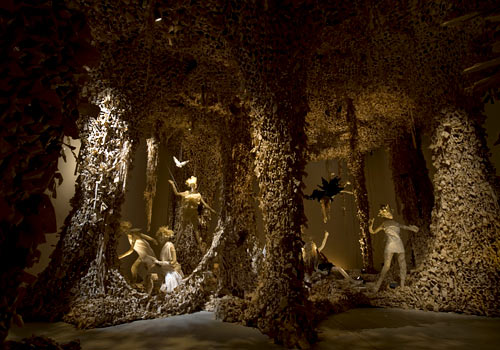
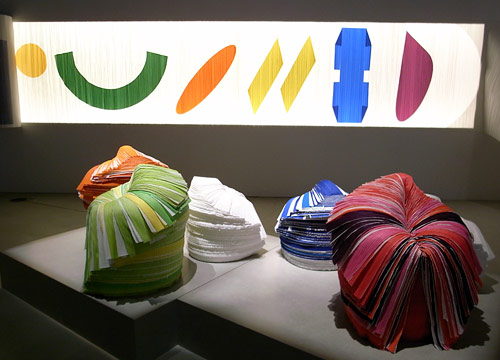
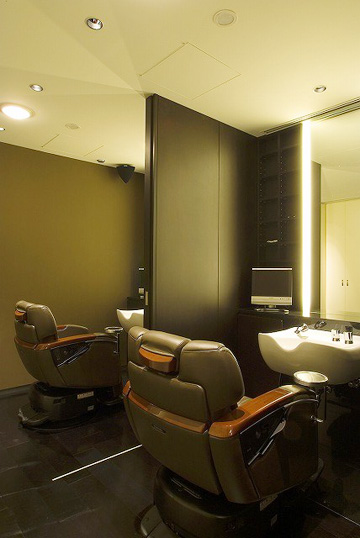
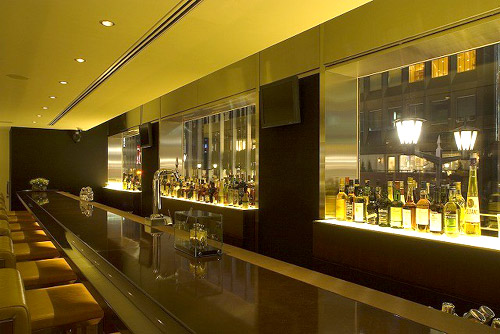
For the second time I visit Tokyo Midtown. I now come to like its decor. It's not conspicuous, but getting used to it reveals its aesthetics. See these pictures:


And Tokyo Midtown is not just about its appearance:

Edo-kirian

It's near 2pm when I arrive at Tokyo Midtown. I haven't had lunch yet. Among several Japanese restaurants inside the Midtown, Edo-kirian becomes my lunch place today. It's a soba noodle place. The price is very reasonable. For 1080 yen (6.66 euro), I have ebi kakiage seiro (cold soba noodle served on a bamboo steamer with shrimp and sliced vegetable tempura). I'm not particularly a fan of soba noodle, but I'm impressed by the consistent texture of the soba noodle at this place. They also serve soba-yu (hot water used for boiling soba noodle). We drink this after eating soba noodle.

Hinokicho Park

With the full stomach, I take a walk to Hinokicho Park. It is a Japanese style garden, but the garden was just constructed along with the creation of Tokyo Midtown. So it only gives me a superficial impression. Having said that, sitting on a wood bench under the roof of azumaya (a wooden hut meant for garden visitors to take a rest), watching a spacious pond with Tokyo Midtown's contemporary high-rise buildings behind, and listening to the sound of streaming water in the garden makes me relax in the middle of the bustle of megalopolis Tokyo.

Next to Hinokicho Park lies Midtown Garden, which features avant-garde swings and slides for children.
Walking on a slowly curved footpath leads to the low-rise concrete building of 21_21_Design_Sight, designed by Tadao Ando. The curvature of the footpath is well-designed so the horizontal spanning of Ando's building is fully appreciated.

21_21_Design_Sight

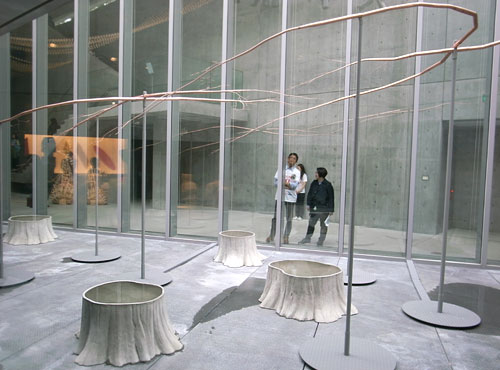
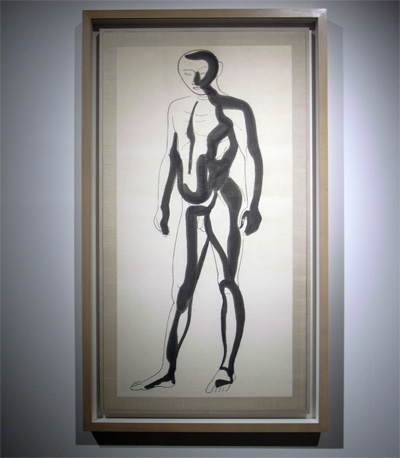
The current exhibition at 21_21_Design_Sight is "XXIst Century Man" curated by Issey Miyake. No photo is allowed at this gallery, but Excite Ism, a Japanese web magazine on design, takes picture of most works on display. Below I link these pictures from the title of each work (except for Tim Hawkinson's Dragon, whose picture comes from The Huffington Post.

There are several key words popping up in my mind while exploring this exhibition. First, recycling. Issey Miyake's "Myth of the 21st Century" uses pieces of paper used during designing clothes. "Cabbage Chair" by nendo utilizes used pleated paper. Koutarou Sekiguchi's "It's a departure at a bright night." is made of only newspaper and duct tape. "Dunan Endeavor" by Yazou Hokama also recycles paper used as a container for industrial material.

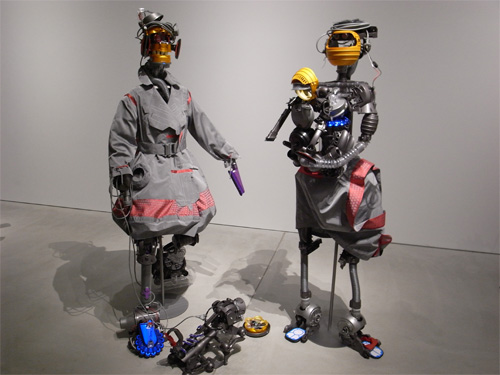
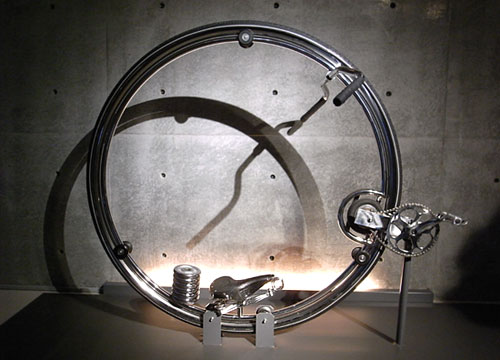
Next, what can be called the 21st century version of antimodernism. Ron Arad's "PizzaKobra" reveals a beautiful snake as a result of pursuing the state-of-the-art technology. "The Wind" by Issey Miyake Creative Room transforms parts of Dyson cleaners into human beings who wear the clothes inspired by parts of Dyson cleaners. Ben Wilson's "Monocycle" puts a driver inside the large single wheel, rather than on the top of it.

Third, the creation out of nothing. "Dragon" by Tim Hawkinson is not really a picture of a dragon if you look at it closely, but if you look at it from a distant, it's nothing else than a dragon. "Beginning of Time" by Yasuhiro Suzuki consists of two bronze branches which produce water out of nothing (because we do not see water vapour in the air: bronze induces dew condensation).

Finally, a human body. Isam Noguchi depicts "Standing Nude Youth" in ink brush painting. Stickman creates "Dui Seid" with wood branches as bones and blood vessels.

What should we take from these? Issey Miyake writes, "It is only through the miracles of creativity and imagination that this Earth will see dreams realized..." With environmental issues more serious than ever, we need to be more aware of ourselves as human beings in relation to the nature and what modernism brings to us. And only creation beyond most people's imagination can achieve it. That's my take.

It is a very well-curated exhibition. It would be perfect if visitors couldn't see Koutarou Sekiguchi's "It's a departure at a bright night." until the very end. Due to the space limitation, I suppose, this dream-incubating work of art has to be placed in an area where visitors go downstairs to start a visit. The sight of Sekiguchi's work at the beginning undermines the role of this work as a burst of hope after deep consideration.

Koots Green Tea

After being slightly tired from appreciating art and design, a Japanese tea cafe with an interesting concept refreshes my mind. Koots Green Tea is a perfect copycat of Starbucks in terms of the cafe decor and the presentation of drinks. But it doesn't serve espresso but matcha green tea. Matcha latte comes in several forms including the one topped up by kuromitsu (thick brown sugar in Japanese style) and kinako (soybean flour). Koots's version of Frappuccino is called Korichio (but not espresso but matcha green tea, red bean, or black sesami). Instead of sandwiches, they sell onigiri (rice balls wrapped in sea weed). Instead of biscotti, various Japanese sweets can be ordered. What's interesting is you can order an extra shot of matcha. I love this ridiculousness.

In addition, Koots sells fantastic matcha financiers. This is how Japanese people take French pastry to a next level.

Shopping

Although I was disappointed by the overall inferiority of interior design shops in Tokyo Midtown compared to those in Stockholm, there are two shops worth revisiting. Time & Style sells stylish towels. Hashicho sells myriads of Japanese chopsticks including traditional ones with contemporary design twists.

Monday, May 12, 2008

Guggenheim Museum

After spending a rather boring hour at the Met, I head for Guggenheim Museum by following Emilia's suggestion. She's right. This museum asserts itself with its spirally sloped gallery. What's more, the artist in the current exhibition, Cai Guo-Qiang, uses the spiral structure effectively to locate his works. (Instead of myself reviewing the exhibition, I let you read one by Nicole Wong published in Art It magazine (Spring/Summer 2008 issue).)

I will come to this museum everytime I visit New York.

Alice's Tea Cup Chapter III

On the way back from San Francisco to Stockholm, I stop over at New York, spending about 10 hours in the city. Emilia, who will be a colleague of mine this fall, takes me to a nice tea place called Alice's Tea Cup Chapter III for brunch. They serve more than 100 kinds of tea. I go for African Dew, a black tea without any stupid herbal flavor added. Still, it smells very aromatic and tastes excellent. And also excellent are smoked salmon and scones with poached eggs, rosemary hollandaise sauce, roasted asparagus and pears. There's no cafe like this in Stockholm...

Lipstick Building


At 885 Third Avenue, New York. Designed by Philip Johnson and John Burgee in 1986.

Sunday, May 11, 2008

Valencia Street

Although I do not have time to explore deeply, Valencia Street in the southern part of San Francisco known as the Mission appears to have a lot to offer. A restaurant named Conduit (at 280) has an appealing interior. Jack Hanley Gallery is on this street (at 395). Further down south, an Ethiopian restaurant Cafe Ethiopia at 876. Trendy cafes, boutiques, interior good shops and the like are lined up occasionally.

Murals on Balmy Alley

Balmy Alley in the Mission area of San Francisco (between 24th and 25th Streets) is an open air exhibition space for local mural artists. Below are my favorites:


Transamerica Pyramid


San Francisco's iconic skyscraper is best looked at through between its neighboring skyscrapers.

Hyatt Regent


The lobby of Hyatt Regent San Francisco is gorgeous, a typical example of modernism architecture during the '50s and '60s: the combination of straight concrete with plants interspersed. Eclipse, a round-shaped huge sculpture by Charles O Perry, matches with the atmosphere really well.

Modern Tea

An impressive cafe on Hayes Street (at Laguna Street). They take tea very, very seriously. Try to get a bar counter seat. As if they are serving a glass of cocktail, "tea bartenders" brew a wide variety of tea (from Assam, Darjeeling, Keemum to Japanese and Chinese green tea) in front of you. For each kind of tea, they have a different way of brewing: what tea pot to be used, the degree of temperature of hot water, the amount of tea leaf. For black tea, you need to brew with absolutely boiling water. They exactly do it. They also heat up tea pots and cups by generously using hot water in front of you as the bar counter table is fitted with a long narrow sink covered by a wooden lid with slits. Finally, they don't serve you a tea pot with tea leaf inside. They remove it so tea does not get too strong by the time you have the second and third cups of tea. Splendid. So splendid that I start up a conversation with a bartender (which is very unusual for me).

Tea drinkers are mistreated by way too many cafes around the world. Tea salons like Modern Tea should be more widely available.

Hayes Valley

It is true that Hayes Street between Laguna and Octavia Streets attracts edged boutiques and cafes alongside a contemporary art gallery and a Japanese sake shop, although furniture stores here do not keep up with the high standard of Stockholm. A short tree-lined boulevard in Octavia Street (between Hayes and Feel Streets) is pleasant on a sunny day.

St Mary's Cathedral


This is where liberal and hippy San Francisco meets Christianity. From outside the cathedral looks like a concert hall (see the photo below). Once you get inside the building, it's just mind-blowing to look up (see the photo above). I was tempted to believe in God.

SFMOMA

A very ugly building. So ugly it's not worth being taken picture of. It reminds me of the costume of a dancer in an anti-modernism film The Triadic Ballet by Oskar Schlemmer (like this), which means it makes you puke.

Contemporary Jewish Museum


A building I happened to encounter in San Francisco (On Yerba Buena Lane, off Market Street between Third and Fourth Streets). Log on to www.thecjm.org for detail.

And Beard Papa, a Japanese cream puff chain store, is located on the same street.

Cafe de la Presse

Following the 24 Hours section of Wallpaper* City Guide for San Francisco, I had breakfast at this French cafe in front of the China Town Gate (what an irony). Vanilla French toast with warm berries was beautiful. With a wide variety of international newspapers and magazines on offer (I took FT) and very pleasant waiters and waitresses, you can spend an intelligent but relaxed morning time here.

Saskia Leek @ Jack Hanley Gallery

The Center on Institutions and Governance at UC Berkeley invited me to present my work at their two-day workshop. As UC Berkeley is located near San Francisco, I take this opportunity to explore San Francisco after the workshop was over.

The first visit is Jack Hanley Gallery, recommended by Wallpaper* City Guide. The featured artist is Saskia Leek.

The first look gives me an impression that each picture draws a familiar object like a cat, a bunch of grapes, a plant, etc. The more I look at them, however, the more unfamiliar the pictures become. The sequence of impressions on a piece of contemporary art is usually the other way around. Very unfamiliar at first, but then you realize what it is about (or you never understand what it is about).

Now I head to Golden Gate Park.

Saturday, May 10, 2008

Golden Gate Park


Tourists in San Francisco usually do not explore the western part of the city. Therefore I do.

Taking a bus to the west (pay 1.5 dollars in exact amount of cash, and you'll get a paper slip which allows you to take a bus again during the next 90 minutes) takes me to the eastern edge of Golden Gate Park. It is a loooong park. It takes more than two hours to walk from one end to the other. I only managed to walk over the eastern half. I encountered three memorable things.

First, pick-up drum jams on the Hippie Hill. There were about 10 people jamming with various kinds of drums. It sounded like each participant was hitting their drum on their own. As a whole, however, the drums sounded quite interesting. If I were a resident in San Francisco, I might be willing to join them.

Second, De Young Museum. (See the two pictures above.) Some hate it, but I love its building covered in perforated and textured copper, designed by Herzog & de Meuron. The copper cover creates a very surreal impression of the building's appearance. With mist floating around the building, it looks as if it wasn't there. It looks like a mirage although it stands just in front of you. I never saw such a building before.

Finally, Stow Lake. Deep green water with Far Eastern plants like a narcissus made me forget where I was. Again mist floats over the water. The whole scenery looks like the one deep inland in China where a Chinese wizard hides himself from the world.


A caveat of this park is that many driveways crisscross the park, but that's the only thing that reminds you of where you are: car-infested America.

Friday, May 02, 2008

10th Anniversary: Part II

Dear hide-san,

Ten years on, what you invented in the Japanese pop music scene is now invading not only East Asia but also North America, Europe, and even Latin America. Thanks to this, I feel less lonely by living in the West. Growing up in Japan makes me feel very different from anyone I meet here in Europe. Now, however, I can share with some people here one thing I was passionate about during my adolescence and thus the one shaping my thoughts, attitudes, and feelings.

I thank you for this. You'll be remembered by many around the world. Rest in peace.

Masa

10th Anniversary: Part I

Dear Tomo-chan,

It's been 10 years since you left this world. I remember you and I, with some other college classmates of ours, were talking about our future. You said, "I'll take care of Japan. You take care of outside Japan." I'm not sure I realized what you said, but at least I manage to walk on the path that few other Japanese people follow. I hope you are happy with this.

I never forget you. I'll visit you in Tokyo soon. Until then, rest in peace.

With love,
Masa

Friday, April 04, 2008

Lund


I take a day trip to Lund, a university town in southern Sweden, to give a talk about how economists estimate the impact of climate change in front of meteorologists, hydrologists, biologists, and other non-economic scientists.

After the talk, I explore the town by following the Lund Tourist Office's walking tour route. Honestly speaking, I didn't expect anything from such a small city of 100,000 people. Lund, however, turns out to be quite pretty a city.

First, the cathedral (see the above picture), constructed around 1100, one of the oldest in Sweden. The light blue roofs match nicely in a modest way with white and black stones of the walls. The appearance from outside is rather attracting to me.

Then dotted across the northeastern part of the city are the cottages with walls of a distinct pattern: thick black grids on either white walls or red-brick walls. I've never seen such a pattern elsewhere.


And houses along the cobbled streets, especially on Adelgatan (see the photo below). They are very nicely coloured and do not intrude each other even though each has its own color. The color of walls nicely fits the color of window frames.


In addition, The Botanic Garden is likely to be pleasant during the summertime.

For dinner, I spot a nicely decorated restaurant serving seafoods in a Swedish style. At Klostergatans Fisk (Klostergatan 12), I have "3 flavors of Swedish herring with a small “Janssons frestelse”, boiled egg and cumin-cheese" for a starter. All of the three pickled herring taste very nice, especially the one with peppercorns and chopped onions. So does the Janssons frestelse, a Swedish speciality. And I manage to enjoy eating cumin-cheese even though I don't like cheese in general (unless it's melt).

For the main dish, I choose "Pan-fried monkfish with a grilled crayfish, orange flavored hollandaise and parmesan potato". Monkfish is amazingly juicy (it squirts when I try to slice it with a knife), and orange flavored hollandaise perfectly matches with the texture and taste of monkfish. The crayfish is good, too.

With a very pleasant waitress serving me, a glass of Chilean chardonnay Estampa, and a well-coordinated interior (light-blue candle glasses, black and light-blue abstract paintings covered blatantly with white paint on the walls, pitch-white table clothes, and brown chairs and aprons of waitresses), I have a fantastic dinner even though I am eating alone.

Friday, March 28, 2008

The Night of Destruction


The legendary Japanese rock group, X Japan, is back with another legendary gig in the Tokyo Dome today.

The opening song is The Last Song, literally the last song they played during their final concert at the Tokyo Dome 10 years ago. I believe it shivers every X Japan fan when vocalist Toshi starts singing with Yoshiki's piano. His departure from the group was the reason for their break-up a decade ago. He stopped being a rock vocalist and started taking a tour around the country to sing songs for those hurt mentally. His voice at this concert declares Toshi is back.

Drummer Yoshiki plays drums in public in Japan for the first time in ten years. As his drumming is physically too demanding, he collapsed quite a few times during the 1990s. Towards the end of X Japan's career, his doctors said he shouldn't play drums anymore.

Still, we are lucky enough to see him play drums (and destroy them) as before.

As an encore, they play Art of Life, a 29-minute long tune played live only twice in their concerts during the 1990s. During this performance, guitarist Hide, who died in 1998, is back on stage as a hologram. His death (officially diagnosed as a suicide, but no one believes it who knows him), was thought to make the reunion of X Japan impossible. But technology allows it to happen. X Japan is back with Hide on stage.

When the first movement of the tune (about 15 minute long) is over, drummer Yoshiki collapses. Which terminates the concert. He composed Art of Life as a piece reflecting his own life. Despite its length, the tune is very fast. Yoshiki needs to keep drumming super-quick as if it was self-destruction. Tonight it is indeed.

Intentionally or not, today's concert is aptly titled The Night of Destruction.

Sunday, March 16, 2008

Ice

Kosmic Blue


Get Down, Get Down, Get Down


Moon Child


Slow Love


These are the songs I listened to many times during the 1990s. The guitarist of Ice, Kazuyuki Miyauchi, passed away at the age of 43 on 18 December, 2007 (which I learned just today). I hope his music will remain alive for ever. And I sincerely hope that his partner both in music and in life, Mayumi Kunioka (the vocalist of Ice, appearing in these videos), will soon overcome such a deep sadness.

And special thanks goes to Wingedlove, who uploaded these videos on Youtube.

See moroha5963's videos for more from Ice. Blue Moon, one of their latest pieces, is rather good.

Rest in peace, Miyauchi-san.

Thursday, February 28, 2008

What lies behind China's success in poverty reduction (and perhaps a silent revolution in development economics)

A sporadic blog entry on development economics:

According to Martin Ravallion, Director of the Development Research Group of the World Bank, two-thirds of poverty reduction in China since 1981 took place in the 1980s, with 40 percent concentrated in the first three years. That was before foreign direct investment was encouraged. That was before international trade was opened up. That was before labor-intensive manufacturing sectors started growing.

The bulk of poverty reduction in China, therefore, should be attributed to agricultural productivity growth due to the introduction of the Household Responsibility System (HRS) around 1980. (The link between agricultural productivity growth and the HRS was established by Justin Lin, the new World Bank chief economist, in his paper published in AER in 1992.)

Mr Ravallion, in his working paper, mentions how Chinese political leadership pursues the promotion of economic development. They allow local governments to experiment new policies. If they succeed, such new policies are scaled up to the whole country. Interestingly, this sounds to me very similar to what Dani Rodrik and Esther Duflo advocate.

As is the case with all arguments on China's success in development, the biggest puzzle still remains. Why do top officials of the Chinese Communist Party have an incentive to promote development in a political system that cannot be called democracy in a standard way.

UPDATE (March 2, 2008): So it's not surprising that Justin Lin announces the trial-and-error approach to poverty reduction (HT: Dani Rodrik).

UPDATE 2 (March 2, 2008): Here's Justin Lin's view on development. Again it's not surprising given the Chinese path for poverty reduction described above.

Wednesday, January 23, 2008

Announcement

Added on August 17, 2008: I end up telling a lie to you...

I will stop updating Econoclasm.

As an assistant professor of economics, the number of things that distract me from publishing papers in academic journals of economics needs to be minimized. A trip back to Tokyo, and a great jazz performance in New Orleans, has invoked this kind of stoicism in my mind.

Occasionally, I may upload some photos especially when I make a trip. Also it may benefit myself to review development economics papers on this blog from time to time. But I cannot guarantee this.

I don't know how many of you read this blog, but thank you for your interest until today. I'll be back in six years time, after getting tenure as a professor of economics.

Sunday, January 06, 2008

Royal Street in French Quarter at night

Nicholas Sanders Trio at Snug Harbor

Although I lack in sleep, am tired from interviewing job candidates for our Institute, and need to take a flight in the morning the following day, I insist on going to a jazz club before leaving New Orleans. After having dinner with my colleagues and being told that they go back to the hotel, I walk to Snug Harbor on my own.

Time Out says there are two best contemporary jazz clubs in the town. One of them appears to be closed down as its official website address takes me to a porn website. The other, Snug Harbor, looks very professional: the website says, "We are not a disco. Do not speak. Do not take photo during the performance."

After a 30-minute pleasant walk through Royal Street in the French Quarter from my hotel, I arrive at Snug Harbor. The walls, the ceiling, and the floor are all made of old wood, looking slightly decrepit but in a pleasant and stylish way. The street it faces seems to be a jazz club street: there are two more jazz clubs here. When I enter, on the left spreads a dinning space, on the right a bar space. The doorman tells me, "For the music, walk in the bar to the end." Paying 12 dollars, I enter the music room.

A little cozy space has a stage just enough for three pieces (piano, bass, and drums) with several tables on the ground floor and on the balcony. The capacity doesn't seem to exceed 100. I take a seat on the balcony from which I can see all the three pieces at one glance. Some youngsters are hanging around the piano on the stage for a while, apparently discussing which piano phrase is cool. They look reserved and devoted with their thin physique suggesting some sort of stoicism, very different from ordinary youngsters in the English-speaking countries.

The performance begins slightly after 10pm. After the introduction by the club owner(?), the pianist, the bassist, and the drummer walk up to the stage. They are among those youngsters hanging around on the stage before.

From the very first tune, the trio impresses me to the extreme. Each of them, especially the pianist and the drummer, is amazingly skillful for their age. The pianist's right and left hands sound like different two individuals. The drummer, when he plays solo, maintains the rhythm in each part of the solo, something I never experienced before for a drum solo. Each of them plays independently, claiming their own presence without sacrificing the others'. The balance between individualism and harmony is maintained at the level where only a very minor deviation by any of the three players destroys it. And the three deliver the sheer energy of youth. It's contemporary jazz. It's not easy to understand. It's abstract. But I do feel the harmony, the rhythm, and the melody. I never felt this way before when I listened to jazz.

The trio plays about 8 tunes. Not a single tune bores me. They even play a fantastic mellow tune in the middle. Although the trio's strength appears to be uplifting pieces of music, they are versatile. The only caveat to me is the bass. His sound often sinks between the two expressive sounds of the piano and the drums. But towards the end of the performance, the bassist stands on par with the other two.

The trio's name is Nicholas Sanders Trio: Nicholas Sanders on piano, Max Moran on bass, and Joe Dyson on drums. I really want a CD that records their live performance.

Just popping up at a jazz club on Sunday night takes me to such a high level of jazz performance in New Orleans. I'm awed by the town's ability to churn out great jazz talents almost a century after the beginning of jazz.

Thursday, January 03, 2008

Review on Hilton New Orleans Riverside

Overall it's an unpleasant three-night stay at the hotel. My room (#4020) has: no kettle or coffee maker (but with ground coffee beans and tea bags), an alarm clock one hour ahead without any buttons for adjusting time (so I woke up one hour earlier than necessary), ants hiding beneath the alarm clock and strolling on the washing basin, a shower head fixed to the wall, a wireless Internet connection costing as much as 11.95 dollars per 24 hour. The only good thing is three mirrors surrounding the washing basin so I can easily look at the back of my head when I set my hair.

Restaurants downstairs are unpleasant, too. A breakfast buffet tastes horrible (bad coffee, bad bacon, bad smoked salmon, bad pan cake) except for spiced potato cubes sauteed with peppers and onions, but it still costs more than 20 dollars (including VAT and tips). A dinner and another breakfast at this same restaurant takes unnecessarily long before the waiter serves a light meal that I order, because I want to eat quickly. The hotel's cafe "proudly serves" Starbucks Coffee (that's what they put on the cup label).

The hotel effectively monopolizes eating and drinking options: we need to take an at least 10 minute walk to eat/drink outside the hotel. Plus the breakfast restaurant 10 minutes away is uninspiring (cheaper though).

For the sake of fairness, there are some good things. Checking out without queuing at the reception is a good thing. Another restaurant, Drago's, serves an excellent Crescent City Shrimp, grilled in rosemary-filled butter sauce.

I stay at the hotel for the business purpose (our Institute interviews newly-minted PhDs at the hotel from 10am on Friday till 1pm on Sunday). Ideally, then the hotel should provide excellent food options and comfy bed rooms. It spectacularly fails to do so. Even if I was in New Orleans for tourism, the location is not good at all as it takes at least 15 minute walk to the French Quater.

If you go to New Orleans, this Hilton hotel should certainly be out of question.

Monday, December 31, 2007

Tokyo Midtown

One of the newest additions to Tokyo's landscape (and places for shopping-spree and tasteful eating experiences) is Tokyo Midtown. I have a cup of superb, luxurious matcha green tea which costs nearly 1,000 yen (6.25 euro) at Kyo Hayashiya.

There is a floor of the building wholly devoted to interior goods and furniture, which is unheard before in Tokyo, where people have mainly been preoccupied with foods and clothes. Most of the stores on the floor, however, are pretty boring, especially when I compare them to those in Stockholm. The presentation is of poor quality. Each piece of furniture may be well-designed, but the shop managers don't seem to know how to present them in combination. There are very few surprises and learnings on how to decorate your rooms. If it looks stylish, the store mostly sells very expensive furniture. In terms of interior design, Tokyo is far lagging behind Stockholm.

The design of Tokyo Midtown does not look particularly deep. When I visit Roppongi Hills a 10 minute walk away afterwards, I do feel a difference. The design of Roppongi Hills is much more elaborate, not straightforward at all.

Sunday, December 30, 2007

Shiodome

Tokyo has undergone urban redevelopment projects in many of its areas during the past decade. I think the first was Ebisu Garden Place, followed by Shinjuku Southern Terrace, Ueno station, Shibuya Mark City, Akihabara station and its surrounding area, Roppongi Hills and Tokyo Midtown, and Marunouchi.

Shiodome is another example of this. Unlike other newly-refurbished areas of Tokyo, however, Shiodome feels inorganic because it simply consists of several skyscrapers and is cut off from the surrounding area resulting in the lack of historical and cultural connotations. Visiting the area this time makes me re-consider this impression I have had.

On Christmas Day, I visited one of those Shiodome skyscraper, Caretta Shiodome, to see its Christmas illumination at the entrance to the building. It employs 300,000 light-emitting diode (LED) bulbs, mostly blue, creating an image of ocean waves. The ocean of blue LED light is quite impressive. See the photos I took.

The illumination also features a 10-minute light and music show produced by Hideki Togi, a Japanese gagaku musician, which sucks. Gagaku is a Japanese traditional music for imperial court. Hideki Togi has reinvented it by incorporating pop music. The music played during the show, however, mainly features Western-style sounds with very little of the gagaku elements. Perhaps he is scared of the general public's response. This is very disappointing. If he composed a more traditional piece of music for this illumination, the cross-over of totally Western-inspired Christmas illumination and Japanese noble music would sure be mind-blowing.

After buying matcha castella of Gion Tsujiri tea shop inside Caretta Shiodome, I head for Shinbashi station to go home without expecting anything more. But I discover another set of Christmas illumination in front of the Nittele Tower (another skyscraper in Shiodome which houses the headquarters of Nihon Television, one of the four private nation-wide television channel networks). This one is totally white, creating an image of snow-covered woods. It's actually more beautiful than Caretta Shiodome's blue illumination. See the photos I took.

Obviously, the two skyscrapers in Shiodome compete with each other for the best Christmas illumination. There are some street performances, too, adding a more organic feeling to the Shiodome area.

Today, I go back to Shiodome, this time with Reiko, for a drink. We climb up the Shiodome City Center, yet another skyscraper in the area. On the 41th floor sits Japanesque Bar Gekka. The bar represents what Tokyo is all about: the combination of Japanese tradition, advanced technology, and Western culture taken to the next level by Japanese sensitivity.

It represents Japanese tradition because, first of all, customers need to take off their shoes to enter the bar. Reiko and I sit at a counter without folding our legs. And the bar serves what we call tsumami, small dishes accompanied with alcohol drinks, catering to the Japanese way of drinking. We usually don't just drink. We eat proper food, too, something more than just some snacks.

It represents advanced technology because, thnaks to the skyscraper, a glittering night view of Tokyo, mainly the Ginza area, spreads in front of us. Such a bar is hard to find in Europe where skyscrapers are scarce. (Even if there are, like in London, the owners of skyscrapers do not seem to be interested in making their top floors accessible to the general public.)

It represents "Western culture taken to the next level by Japanese sensitivity." The food the bar serves is deep-fried almond-crumb chicken. Almond is a Western thing, but chicken is deep-fried in Japanese style, which means a much better taste than its Western equivalent. The bar stocks almost all kinds of alcohol drinks: champaign, beer, wine, whisky, brandy, sherry, gin, volka, rum, tequila, and cocktails in addition to Japanese sake and shochu. For each, a wide range of choices are available. A bartender serving us manages to make proper glasses of cocktail. Although he doesn't know a cocktail I liked at Pet Sounds Bar in Stockholm (he says Nothern Europe is at the fore-front in the world of cocktail), the fact that he looks quite dejected by his failure to meet my request suggests that he's really professional.

So it's a pleasant evening. Shiodome rocks!

Friday, December 28, 2007

Ginza after dark


Neon lights in Ginza appear to get brighter and brighter year by year.

Thursday, December 27, 2007

Kagurazaka

Kagurazaka is an area of Tokyo lesser-known to foreign visitors to Japan's capital. It's located within the Yamanote loop, to the north-west of the Imperial Palace. Until the Second World War, the area thrived as a place for geisha. Today we still see the reminiscences of those days: narrow cobbled streets lined with Japanese traditional-style restaurants. In addition, French restaurants are scattered around (partly because there is a French language school nearby), and back streets maintain the atmosphere of Tokyo's residential areas until the 1970s, a rarity in the ever-changing central Tokyo.

Yoo-chan, one of my college mates, and I have lunch at Torijaya Honten. It's a udon-suki restaurant dating back from 50 years ago, facing Kagurazaka Street opposite to Bishamonten Shrine (4-2 Kagurazaka Shinjuku-ku: 03 3260 6661). We take off our shoes and sit down at a table with a gas cooker at the center. (There is a hole below the table so you don't need to let your legs folded.) A waitress brings a large pan topped with chicken, seafoods, quail's eggs, vegetables (17 kinds of food in total), and udon noodle soaked in kelp-and-bonito soup stock. (See a photo by JUN / LDK.) As the pan heats up, foods are getting cooked, and we are ready to start eating. The soup stock is so superb (light-tasted but very rich in taste) we don't need to dip foods into anything. The udon noodle is unusually so thick by Japanese standards (see another photo by JUN / LDK) it never becomes too soft by being soaked in boiling soup until the very end of the meal.

The lunch is very filling and one of the best meals I have had in my life, and we pay only 1,400 yen (about 9 euro) for each of us. This is Tokyo.
Torijaya Hoten's signboard at night

We then stroll around the area, the first time for both of us: Tokyoites often keep going to the same areas of Tokyo, never attempting to explore different areas within the city. We only find restaurants, bars, and cafes in Kagurazaka though almost all of these look stylish in a traditional way (i.e. not showy). Perhaps you should come to this area only when you are hungry and thirsty.

Going up Kagurazaka Street, there is Akagi Shrine, inside which the Akagi Cafe has been open since April of 2006. Although, unlike Christian churches and Islamic mosques, Japanese shrines and temples often have food stalls on their yard, a Western-style cafe inside the shrine is quite unusual.

The Cafe's atmosphere is quite nostalgic: each piece of furniture seems to date back to the early and middle 20th century, placed in a way that the cafe looks stylish as a whole. Revealing to me as I haven't seen such a place before. Each piece is old and uninspiring, but once properly placed they look pleasantly cool.


It's not just the interior, though. A piece of home-made raspberry pound cake and a cup of Toarco Toraja coffee offer me a pleasant feeling. (Toarco Toraja is an Indonesian coffee bean. After the Dutch left Indonesia, the production of beans became stagnant. Then Key Coffee, a Japanese coffee company, got involved in the restoration of coffee prodution in Indonesia, and it names the beans Toarco Toraja.)

It's very unfortunate that the Akagi Cafe will close down in March next year. If you are lucky enough to visit Tokyo before that, do try to visit the Cafe.

On a more personal note, talking to Yoo-chan reminds me of my inclination to only use words that properly reflect my ideas and feelings. Ever since I moved to London five years ago, I was forced to abandon such a habit because my English vocabulary was not wide enough. By the standard I had until five years ago, sentences in this post, for example, are a complete compromise. Especially when it comes to words describing foods and taste, the English language is very poor. Maybe reading great English novels help me develop such vocabulary. But I probably never understand the way the authors of such novels feel about their experiences, deep in my heart, because I'm not a Westerner. As long as I keep writing and speaking in English, compromise is probably inevitable. In a way, it's sad, unacceptable. In another way, that's how people live in a foreign culture.

Wednesday, December 26, 2007

Ura-harajuku


This is a shop in Ura-harajuku (literally meaning the flip side of Harajuku). Looks like a traditional Japanese cafe or sweet store. No, it sells jewellery. But the name of each piece of jewellery is a Japanese word.

Ura-harajuku is probably Tokyo's most edgy area for making you look stylish. It's full of small, independent boutiques, and, interestingly enough, these stores are mostly for young men. When they sell both women's and men's, the ground floor is devoted for men: women should go upstairs. Unlike Marui Men in Shinjuku, which houses tons of men's boutiques in the 7-story building and follows each season's trend more or less (but still sells clothes unseen anywhere else in the world), each shop in Ura-harajuku offers its own style of gear. I manage to find a lot of clothes that I won't be able to find anywhere else in the world.

The area is also famous for hair salons. I have my hair cut at Coup de Vent. The hair stylist not only cuts my hair but also trims my eyebrows. She also massages my head and shoulders. My hair style catches up with young fashion-conscious men in Tokyo, where there are several hair catalogues for men on sale.

One more thing that deserves mention. Ura-harajuku has some kimono stores. Banjiro sells bespoke kimonos with contemporary patterns while Tokyo135 stocks more affordable ready-made and second-hand kimonos. Both of them kindly tell me what kimonos men can wear. Next time I will try to buy my first kimono.

Tuesday, December 25, 2007

Lunch in Tokyo


Either in London or in Stockholm, I find it difficult to have a budget lunch. London offers a wide variety of options which are all sandwiches. Stockholm serves pasta salad in a plastic bowl, in addition to sandwiches. But vegetables are not necessarily fresh, and pasta is soaked in water coming out of salad. (So I don't really understand the concept of pasta salad in Sweden. Why do you need to top salad on pasta?) And both London and Stockholm charges you at least 4.5 euro for such crappy lunch.

Tokyo is great in this regard. Budget lunch options include gyudon (soy-sauce marinated cooked beef topped on steamed rice), udon noodle soup, soba noodle soup, ramen noodle soup (these three noodles are all different), gyoza (Chinese dumplings), magurodon (tuna sashimi topped on steamed rice), curry rice, spaghetti (including Japanese-style: cooked tuna with soy sauce and grated daikon radish), and so forth. These lunch options are available from about 3 euro.

The photo above is the lunch I have in Omotesando. It costs 6.5 euro (including a cup of cappuccino and good service: they ask me whether I'd like to have cappuccino during or after the meal).

Who says Tokyo is the most expensive city in this world?

Tokyo Metro

Every station of Tokyo Metro has a sign board showing which train carriage is the nearest to the staircase or the lift for exit. If there are more than one exit in the station, it also shows which exit is for where and for changing to this line or that line.

Another example of the stark contrast between Tokyo and London, where you often end up a staircase for passangers taking trains rather than for exits.

Shiodome Nihon Television Tower Xmas illumination 2007

Caretta Shiodome Xmas illuminations 2007

Monday, December 24, 2007

Sunday, December 23, 2007

New Chuo Line train carriage

Another view of Tokyo familiar to me has gone. Orange train carriages for the JR Chuo Line have been replaced with new ones. What amazes me about this new shining silver train carriage with orange lines is the electric displays on the side of the carriage (see the photo above). They not only show the destination of the train (white letters on top row) but also the name of the next station (yellow letters on bottom row). As the JR Chuo Line changes the stations it stops depending on whether it's a weekday or a weekend or whether it's during the morning rush hour or not, this is quite helpful for passengers.

Light-years away from the train carriages running in London Underground, for which passengers taking Disrict, Circle, Hammersmith & City lines (all of which confusingly run on the same rail track) ask each other which station the train goes to.

Audi Forum Tokyo


Audi's car show room in between Harajuku and Shibuya areas. There is a cafe (free of charge) on the second floor.

Contrast this to the Rikugi-en Garden below. This is Tokyo, the coexistence of super modernity and uniquely Japanese tradition.

Saturday, December 22, 2007

Rikugi-en Garden

Rikugi-en is a Japanese garden dating back from the year of 1702. People say it is one of the two most beautiful in Tokyo (the other is Koishikawa Koraku-en). The best seasons to visit the garden are either spring (with cherry blossoms blooming) or autumn (with leaves turning red and yellow). In fact, I don't really enjoy it under cold winter weather with most leaves having fallen. But I manage to take some nice photos:


See japan-guide.com for how to get there. It's located off the beaten track for foreign tourists in Tokyo.

Friday, December 21, 2007

Tokyo December 2007

I stay at my parents' home in Tokyo from 21 December 2007 to 3 January 2008. Initially, I miss Stockholm to my surprise, perhaps because Tokyo is not anymore what I remember as my hometown. The city changes so quickly the places I'd frequent look different today. Going back to Tokyo is not anymore equivalent of going home. It is simply a tourism in which I enjoy shopping and experience culture shocks.

Some photos and blog entries will be added soon.

Saturday, December 08, 2007

More new things in Tokyo

Two more new places to visit in Tokyo:

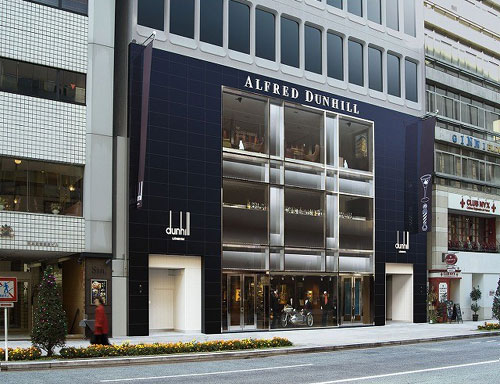
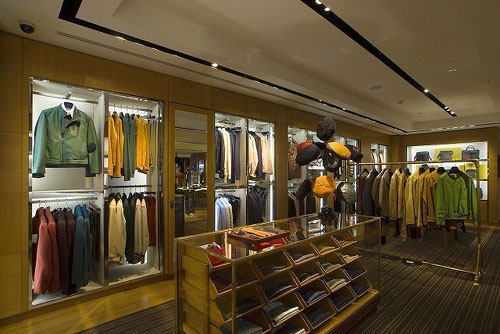
Dunhill opened a new flagship store called "Home" in Ginza on 1 December. It also plans to open the same concept store in London and Shanghai, but Tokyo's store was chosen as the first to open. The store houses not only Dunhill men's boutique but also a barber and a bar lounge The Aquarium, which serves lunch and afternoon tea as well (open from 11 to 24 Mon to Sat, 11 to 22 on Sun). (All the photos linked are from Excite Ism's article on December 6, 2007.)

In Akihabara, Akiba Guild, a casino with female dealers in French maid costume, was opened last September. "Maid dealders" are actually professional as the owner of Akiba Guild, a professional casion dealer, trains them. As gambling is prohibited in Japan, you cannot earn money at Akiba Guild, but you can keep coins you earned for the next visits. And, most importantly for guys in Akihabara, you can enjoy conversations with a maid who is the casino dealer, a lot more frequently than at maid cafes. And these maid dealers all run a blog that's linked from the store website. (Hat tip for a Nikkei BizPlus article by Takuro Morinaga on November 27, 2007.)

Saturday, December 01, 2007

Oxygen capsules

I cannot stop finding weird things in Japan. This time, an oxygen capsule (also known as Beckham capsule because David Beckham used it to heel his injury just before the 2002 World Cup).

By paying 5,000 yen (slightly more than 30 euro) for an hour, you can indulge yourself in a capsule full of oxygen.

Brisbane Times reports this last September.

Here are some images obtained by Google Japan search.

Tokyo's still happening.

After more than 5 years of living in Europe, learning what's happening in Tokyo is mesmerising. If you plan to visit Tokyo, make sure that your travel guidebook is the latest one. As far as I know, the year of 2007 saw the following new additions to the already overwhelming range of places to visit.

In Roppongi, Tokyo Midtown, a new shopping complex with office, residential, and art/design gallery spaces, was opened on 30 March.

In Yurakucho, a new shopping complex called Itocia was opened on 12 October. Its main attraction is the newest branch of Marui department store chain, which Monocle magazine sees as one of the five retail giants around the world that "should act as benchmarks for other floundering businesses."

In Omotesando, another new shopping complex called Gyre was opened on 2 November, housing Bvlgari and Channel among others.

In Ginza, Bvlgari opened its largest store in the world on 30 November, following Armani, which itself opened the Ginza Tower on 7 November (see an Extite Women Garbo article in Japanese for some photos).

In Shiodome, the entrance plaza of Caretta Shiodome, yet another shopping complex celebrating its 5th anniversary, started a Christmas illumination using 300,000 blue LEDs to create an image of an ocean yesterday. Lights are illuminated from 5 to 11:30 pm until 25 December. Every 30 minutes from 5:30 to 11 pm, gagaku music (Japanese traditional music) is played for 10 minutes.

Maybe you are now beginning to understand the Japanese high-maintenance, materialistic consumers.

Wednesday, November 28, 2007

Q & A

A reader of this blog posted the following question to me:

A question for a cosmopolitan Japanese, connoisseur and graduated in the art of living: where is that, in this city called London, I can order for delivery Japanese and oriental flowers?
I'm sorry I don't know the answer. You may want to visit the Japan Centre on Piccadilly and ask its shop assistants. They may know something.

Tuesday, November 27, 2007

The Latest Research Findings on Corruption

Let me put on a hat as a development economist today.

The November issue of the Quarterly Journal of Economics (or QJE for short), one of the top 5 academic journals in economics, is released today. It features two papers in the field of development economics.

One paper, written by Marianne Bertrand, Simeon Djankov, Rema Hanna, and Sendhil Mullainathan, analyzes corruption involved in the acquisition of driver's licenses in India. They find the following facts in a convincing way (there are other findings in the paper, but these are less convincing):

1. If a man in Delhi is more willing to obtain a license quickly, he will be more likely to obtain one without taking the licensing exam.

2. Such a man pays about 50 percent more fees over and above the official fee for licensing.

3. But he is no more likely to bribe bureaucrats at the transport office.

4. Instead he is more likely to hire an "agent", a professional who helps individuals obtain a license in return for a fee. Presumably, these "agents" pay bribes to bureaucrats on behalf of license applicants.

5. These agents can procure licenses irrespective of the applicant's driving ability. They don't even charge a higher fee for applicants who can't drive.

6. These agents are, however, less likely to procure licenses for applicants who don't have documents required for application (proof of age and area of residence).

Maybe these findings are obvious to Indians or people from developing countries with rampant corruption. For development economists, however, this is a "finding", especially the presence of "agents". We always believed that when corruption occurs, citizens directly pay bribes to bureaucrats. That's not the case, at least for driver's license applications in India.

Another lesson from this paper is that corruption is socially harmful. Some economists in the past argued that corruption is good because it speeds up the lengthy bureaucratic process. But the study shows that corruption increases the number of people with a driver's license who actually cannot drive.

Finally, finding 6 suggests that corruption to bend official rules is more difficult for rules that are easy for higher-up government officials to check.

For the other development economics paper published in the QJE this month, please wait.

Sunday, November 25, 2007

Japan and its consumption culture

Last week the publication of Tokyo Michelin Guide hit the news headline. A Swedish colleague of mine was surprised by the total number of stars awarded to Tokyo restaurants which exceeds any other city in the world (including Paris).

What I was surprised is, however, the lack of the Michelin Guide for Tokyo until now. It well reflects the Westerners' ignorance of the quality of services in Tokyo, and in Japan more generally.

The year of 2007 already saw a change in this: the launch of Monocle magazine, the magazine I keep talking about since day one. Every monthly issue introduces the reader in the West to Japanese top quality players in the service and consumption goods industry, from hotels and airlines to cosmetics, foods, and bags. And the magazine recognizes Tokyo and Kyoto as among the 20 most livable cities in the world.

But it's not enough. The world isn't fully aware of how demanding Japanese consumers are and how great, as a response, is the services provided by companies, both domestic and foreign, in Japan.

What I recently discovered is a stark difference in HP's website between Japan and UK. I was trying to find the best HP printer for me. But electronics shops in Stockholm are stressfully unhelpful because each shop stocks a different set of printers. The comparison of all the available products in the market takes a lot of walk. Also, each shop is pretty much under-staffed. It's difficult to seek assistance, or it takes a lot of time by waiting to be served. So I did search on the web.

As the Swedish website is, as always, hieroglyphic to me, I turn to the UK one. But the website doesn't help me choose which one suits my need. I then access to the US website. It looks like a search result on Amazon.com, which means that it's not easy for me to spot the best printer.

So I visit the Japanese one. And it is amazing. When I see the list of HP printers, it's almost immediate to learn which functions are available for which printer. Each function takes up one square in a 3 by 5 matrix shown next to the printer image. If a printer lacks in a particular function, the square for that function is left blank. As the position of each function in the matrix is fixed for all printers, just a glance at the list tells you the difference among printers. So I immediately learn which printer is what I'm looking for. Compare this to the British version in which each printer's functions are listed in the bullet-point style.

Usually, this method of searching the best product in the market doesn't work because what's available in Japan is often unavailable in Europe. This is because the range of products in Europe is smaller or because the European electronics market lags behind the Japanese one by 6 to 12 months. Thankfully, this time the best printer in Japan was available in Stockholm.

Since I'm used to this Japanese-style product catalogue during the 24 years of my life in Tokyo, shopping electronics products in London was, and in Stockholm is, (and, I believe, in other European countries will be) such a pain in the neck.

I'm not sure whether this difference in consumption culture between Japan and the West (or at least UK and Sweden) comes from the difference in awareness (ie. people in Europe have never imagined that such a level of service quality is feasible) or the cultural difference at a deeper level (ie. Japanese people are materialistic while Europeans derive satisfaction from invisible things---travelling abroad, staying with family members, etc.).

But I'm sure that daily life in Japan, such as things described in this post, should be intriguing to Westerners. This blog keeps trying to spread the word on what's standard in Japan but not in the rest of the world (the post below is an example).

The latest Japanese mobile handset

The Japanese mobile market is so isolated from the rest of the world (e.g. Apple's iPhone is not available in Japan, and Apple has no plan to sell it in the Far Eastern country) that its evolution is beyond your imagination (just like animals in Australia is different from the rest of the world).

By clicking here (this is a news video clip in Japanese, but just keep watching the images), you will see the latest mobile handset in Japan (called Infobar 2). The round-shaped edge of the handset is amazing. And this handset allows you to watch digital television channels (called "1-seg").

Once you are aware of Japan's latest mobile handsets, mobile shops in Europe start looking so boring.

Wednesday, November 21, 2007

A tip for development economics fieldworks

The number of blogs written by development economists appears to be on the rise. One of such blogs, the one by Chris Blattman, offers a tip for fieldwork:

[When] running surveys ... [i]n western Kenya, parents were reluctant to name their exact number of children lest it be seen as boastful, provoking God to take one of them away. ... [W]e learned with time to ask about an eldest child, counting down child-by-child without ever mentioning the total number.


By the way, I don't try to make this blog as another development economics blog. I prefer a more personal blog, juxtaposing various topics that interest the blogger. But from time to time, things on development economics will show up in this blog as I'm interested in them.

Friday, November 16, 2007

Allkort

Allkort is a Swedish term for a credit card. Or so I believed. When I opened my bank account, I applied for a credit card. A week later, my credit card was delivered by post. So far so good.

Then I tried to pay by this credit card. It didn't work.

The card was rejected. I called the bank up. They said I needed to activate the card. So I asked them to do it.

Then I tried to pay by this credit card. It didn't work.

In Britain, debit cards are clearly different from credit cards. That's why I applied for a credit card. My Swedish debit card, however, can be used as a Mastercard. So I actually don't really need a credit card.

So I just left aside the useless credit card.

Today, I need to visit my bank to obtain my ID card. The ID card is an essential item in Sweden because you are often asked to show it when you pay by credit/debit card. (You also need to show it when you rent a DVD, or so they say. I don't watch DVDs, so I don't know for myself.) It takes 4 to 6 weeks to issue after placing an order either at a post office (which is almost non-existent in this country, by the way) or at a bank.

When receiving my ID card, I ask the bank staff why my credit card does not work. They say,

"Because you don't put any money on the credit card account."


"What?"


I'm totally confused. By definition, you can use a credit card when you don't have money, can't you?

The bank staff at the desk cannot answer my question in English. She asks for help from her colleague. And I learn this. You can use your credit card by transfering your money in the standard bank account to the credit card account. (And the money in the credit card account earns a higher interest rate than the standard bank account.) You can also use your credit card by applying for a credit limit with your income statement as proof of your payment ability.

In Japan and in UK, when I applied for a credit card, I could immediately use it without applying for a credit limit. The credit limit is automatically provided. And there was no such system as depositing money in the credit card account to use the card.

I don't know if this applies to other Swedish banks as well. So I cannot generalize this to Sweden as a whole, especially because my bank appears to be the worst one in Sweden. (I couldn't choose because it's almost part of my employment contract.) But I didn't know that the system of using credit cards could be different from country to country.

Wednesday, November 14, 2007

Luna Sea's back. X Japan's back.

By visiting a tiny bookstore selling Japanese books and magazines in Stockholm today, I learn that Luna Sea, my favorite rock group since my secondary school days, will hold a gig on the Christmas Eve this year, 7 years after they broke up. The gig is aptly titled "One Night Dejavu". This news was actually released last September. I just didn't know it until I found the September issue of a magazine at the bookstore. (This bookstore sells Japanese magazines with a few month delay.)

X Japan, another favorite Japanese rock group of mine since my secondary school days, will soon release a new single "I.V." for the first time in 10 years after it broke up. The new single is featured in the ending credit of US film "Saw 4".

These news bring back my memory during those days, which I'm not sure if I'm comfortable with. These rock groups mean a lot more to me than you would imagine.

Added on March 28, 2008
Luna Sea's gig on December 24, 2007, can be seen in this post.
X Japan's gig on March 28, 2008, can be seen in this post.

Friday, November 09, 2007

Proof of Impossibility Theorem: Step 2

This is a sequel to the previous post.

Ray Fisman, an economist at Columbia University's business school, empirically proved the following. (These are quotations from Fisman's column at Slate.) In choosing whom to date with,

Finding #1: "Men avoided women whom they perceived to be smarter than themselves. The same held true for measures of career ambition—a woman could be ambitious, just not more ambitious than the man considering her for a date. When women were the ones choosing, the more intelligence and ambition the men had, the better."

Finding #2: "Women of all the races we studied revealed a strong preference for men of their own race: White women were more likely to choose white men; black women preferred black men; East Asian women preferred East Asian men; Hispanic women preferred Hispanic men."

Finding #2 is a serious threat to my marriage perspective. In Stockholm, there are very few East Asian women. What's worse, an additional finding says,

"East Asian women did not discriminate against white men (only against black and Hispanic men). As a result, the white man-Asian woman pairing was the most common form of interracial dating—but because of the women's neutrality, not the men's pronounced preference."
So the precious East Asian women in Stockholm are likely to date with white men. (Of course, this assumes external validity of the finding. What happens in U.S. is the same as in Stockholm.)

Proof of the Impossibility Theorem moves one step forward.

Finding #1, on the other hand, implies that the smartest and most ambitious women and the dumbest and least ambitious men are left out. This could be a good news for me, because I'm an outlier. I don't mind dating with a woman who is smarter and more ambitious than myself. But for some reason, finding the smartest and most ambitious women left out in the marriage market is extremely difficult in this world. (The only explanation of this seems to be that the smartest and most ambitious men are smarter and more ambitious than the smartest and most ambitious women, but I don't want to go down this line of reasoning.) Or I'm probably the dumbest and least ambitious man in the world, especially in terms of communication skills.

Proof of the Impossibility Theorem moves one more step forward.

Thursday, November 08, 2007

Customer Services

I didn't know that asking help from customer services is the most difficult thing for a person who lives in a country whose native language he/she doesn't understand.

My broadband connection at home has failed since two days ago. Since making a phone call to the broadband provider's customer service just ends up in an automated message in Swedish (which of course I don't understand), I emailed them writing my request in English yesterday.

Within an hour, an auto-reply message came to my email inbox, which is of course written in Swedish. I initially thought this was just an indication that they received my email. So I didn't try to ask somebody Swedish to translate it for me.

One day later today, no further response. I asked a Swedish colleague at the workplace for translating the auto-reply message. She said, "You need to click this line in the message to confirm your email message."

So I clicked it today, which took me to a webpage which is of course in Swedish. I asked the colleague again to translate it. It says that this is your inquiry number and they will respond shortly.

Fixing the broadband connection is, therefore, delayed by one day.

Monday, November 05, 2007

Dark winter has begun.

After coming back from Boston, the summer time has ended in Sweden.

Which means that the sunset time is now 1 hour earlier.

After 3pm, the sky starts darkening; by 4:30pm, darkness prevails. It's early November, but I'm here in Stockholm.

Temperature does not exceed 5 degrees celcius these days. A couple of days ago, the landscape was covered with snow when I woke up, this winter's first snowfall in Stockholm.

I've decided to wake up early and go to bed early so that I can maximize the exposure to the sunlight, from dawn to dusk.

Welcome to dark winter in Stockholm.