Tuesday, December 25, 2007

Lunch in Tokyo


Either in London or in Stockholm, I find it difficult to have a budget lunch. London offers a wide variety of options which are all sandwiches. Stockholm serves pasta salad in a plastic bowl, in addition to sandwiches. But vegetables are not necessarily fresh, and pasta is soaked in water coming out of salad. (So I don't really understand the concept of pasta salad in Sweden. Why do you need to top salad on pasta?) And both London and Stockholm charges you at least 4.5 euro for such crappy lunch.

Tokyo is great in this regard. Budget lunch options include gyudon (soy-sauce marinated cooked beef topped on steamed rice), udon noodle soup, soba noodle soup, ramen noodle soup (these three noodles are all different), gyoza (Chinese dumplings), magurodon (tuna sashimi topped on steamed rice), curry rice, spaghetti (including Japanese-style: cooked tuna with soy sauce and grated daikon radish), and so forth. These lunch options are available from about 3 euro.

The photo above is the lunch I have in Omotesando. It costs 6.5 euro (including a cup of cappuccino and good service: they ask me whether I'd like to have cappuccino during or after the meal).

Who says Tokyo is the most expensive city in this world?

Tokyo Metro

Every station of Tokyo Metro has a sign board showing which train carriage is the nearest to the staircase or the lift for exit. If there are more than one exit in the station, it also shows which exit is for where and for changing to this line or that line.

Another example of the stark contrast between Tokyo and London, where you often end up a staircase for passangers taking trains rather than for exits.

Shiodome Nihon Television Tower Xmas illumination 2007

Caretta Shiodome Xmas illuminations 2007

Monday, December 24, 2007

Sunday, December 23, 2007

New Chuo Line train carriage

Another view of Tokyo familiar to me has gone. Orange train carriages for the JR Chuo Line have been replaced with new ones. What amazes me about this new shining silver train carriage with orange lines is the electric displays on the side of the carriage (see the photo above). They not only show the destination of the train (white letters on top row) but also the name of the next station (yellow letters on bottom row). As the JR Chuo Line changes the stations it stops depending on whether it's a weekday or a weekend or whether it's during the morning rush hour or not, this is quite helpful for passengers.

Light-years away from the train carriages running in London Underground, for which passengers taking Disrict, Circle, Hammersmith & City lines (all of which confusingly run on the same rail track) ask each other which station the train goes to.

Audi Forum Tokyo


Audi's car show room in between Harajuku and Shibuya areas. There is a cafe (free of charge) on the second floor.

Contrast this to the Rikugi-en Garden below. This is Tokyo, the coexistence of super modernity and uniquely Japanese tradition.

Saturday, December 22, 2007

Rikugi-en Garden

Rikugi-en is a Japanese garden dating back from the year of 1702. People say it is one of the two most beautiful in Tokyo (the other is Koishikawa Koraku-en). The best seasons to visit the garden are either spring (with cherry blossoms blooming) or autumn (with leaves turning red and yellow). In fact, I don't really enjoy it under cold winter weather with most leaves having fallen. But I manage to take some nice photos:


See japan-guide.com for how to get there. It's located off the beaten track for foreign tourists in Tokyo.

Friday, December 21, 2007

Tokyo December 2007

I stay at my parents' home in Tokyo from 21 December 2007 to 3 January 2008. Initially, I miss Stockholm to my surprise, perhaps because Tokyo is not anymore what I remember as my hometown. The city changes so quickly the places I'd frequent look different today. Going back to Tokyo is not anymore equivalent of going home. It is simply a tourism in which I enjoy shopping and experience culture shocks.

Some photos and blog entries will be added soon.

Saturday, December 08, 2007

More new things in Tokyo

Two more new places to visit in Tokyo:

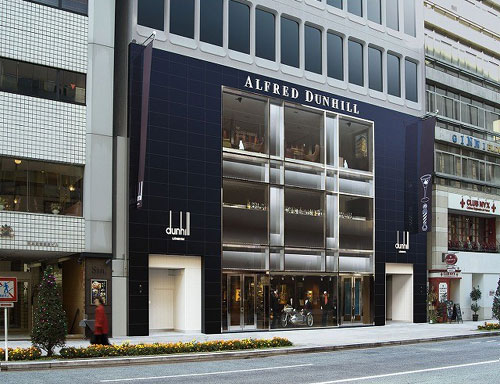
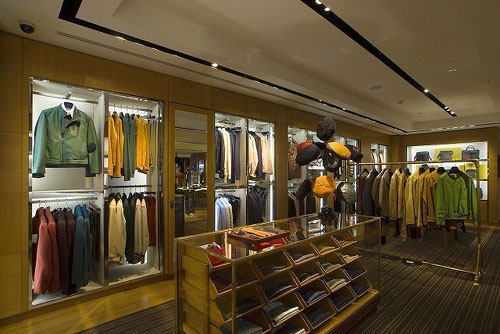
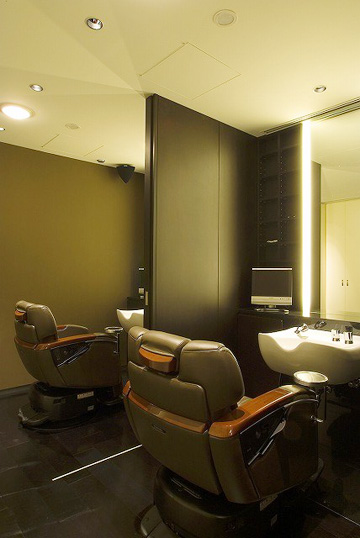
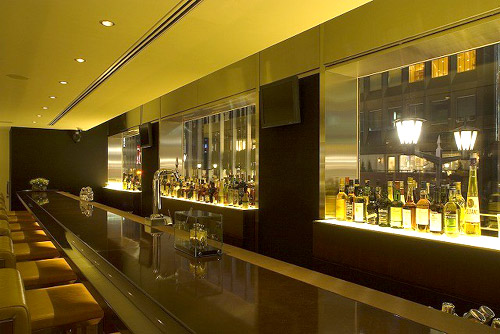
Dunhill opened a new flagship store called "Home" in Ginza on 1 December. It also plans to open the same concept store in London and Shanghai, but Tokyo's store was chosen as the first to open. The store houses not only Dunhill men's boutique but also a barber and a bar lounge The Aquarium, which serves lunch and afternoon tea as well (open from 11 to 24 Mon to Sat, 11 to 22 on Sun). (All the photos linked are from Excite Ism's article on December 6, 2007.)

In Akihabara, Akiba Guild, a casino with female dealers in French maid costume, was opened last September. "Maid dealders" are actually professional as the owner of Akiba Guild, a professional casion dealer, trains them. As gambling is prohibited in Japan, you cannot earn money at Akiba Guild, but you can keep coins you earned for the next visits. And, most importantly for guys in Akihabara, you can enjoy conversations with a maid who is the casino dealer, a lot more frequently than at maid cafes. And these maid dealers all run a blog that's linked from the store website. (Hat tip for a Nikkei BizPlus article by Takuro Morinaga on November 27, 2007.)

Saturday, December 01, 2007

Oxygen capsules

I cannot stop finding weird things in Japan. This time, an oxygen capsule (also known as Beckham capsule because David Beckham used it to heel his injury just before the 2002 World Cup).

By paying 5,000 yen (slightly more than 30 euro) for an hour, you can indulge yourself in a capsule full of oxygen.

Brisbane Times reports this last September.

Here are some images obtained by Google Japan search.

Tokyo's still happening.

After more than 5 years of living in Europe, learning what's happening in Tokyo is mesmerising. If you plan to visit Tokyo, make sure that your travel guidebook is the latest one. As far as I know, the year of 2007 saw the following new additions to the already overwhelming range of places to visit.

In Roppongi, Tokyo Midtown, a new shopping complex with office, residential, and art/design gallery spaces, was opened on 30 March.

In Yurakucho, a new shopping complex called Itocia was opened on 12 October. Its main attraction is the newest branch of Marui department store chain, which Monocle magazine sees as one of the five retail giants around the world that "should act as benchmarks for other floundering businesses."

In Omotesando, another new shopping complex called Gyre was opened on 2 November, housing Bvlgari and Channel among others.

In Ginza, Bvlgari opened its largest store in the world on 30 November, following Armani, which itself opened the Ginza Tower on 7 November (see an Extite Women Garbo article in Japanese for some photos).

In Shiodome, the entrance plaza of Caretta Shiodome, yet another shopping complex celebrating its 5th anniversary, started a Christmas illumination using 300,000 blue LEDs to create an image of an ocean yesterday. Lights are illuminated from 5 to 11:30 pm until 25 December. Every 30 minutes from 5:30 to 11 pm, gagaku music (Japanese traditional music) is played for 10 minutes.

Maybe you are now beginning to understand the Japanese high-maintenance, materialistic consumers.

Wednesday, November 28, 2007

Q & A

A reader of this blog posted the following question to me:

A question for a cosmopolitan Japanese, connoisseur and graduated in the art of living: where is that, in this city called London, I can order for delivery Japanese and oriental flowers?
I'm sorry I don't know the answer. You may want to visit the Japan Centre on Piccadilly and ask its shop assistants. They may know something.

Tuesday, November 27, 2007

The Latest Research Findings on Corruption

Let me put on a hat as a development economist today.

The November issue of the Quarterly Journal of Economics (or QJE for short), one of the top 5 academic journals in economics, is released today. It features two papers in the field of development economics.

One paper, written by Marianne Bertrand, Simeon Djankov, Rema Hanna, and Sendhil Mullainathan, analyzes corruption involved in the acquisition of driver's licenses in India. They find the following facts in a convincing way (there are other findings in the paper, but these are less convincing):

1. If a man in Delhi is more willing to obtain a license quickly, he will be more likely to obtain one without taking the licensing exam.

2. Such a man pays about 50 percent more fees over and above the official fee for licensing.

3. But he is no more likely to bribe bureaucrats at the transport office.

4. Instead he is more likely to hire an "agent", a professional who helps individuals obtain a license in return for a fee. Presumably, these "agents" pay bribes to bureaucrats on behalf of license applicants.

5. These agents can procure licenses irrespective of the applicant's driving ability. They don't even charge a higher fee for applicants who can't drive.

6. These agents are, however, less likely to procure licenses for applicants who don't have documents required for application (proof of age and area of residence).

Maybe these findings are obvious to Indians or people from developing countries with rampant corruption. For development economists, however, this is a "finding", especially the presence of "agents". We always believed that when corruption occurs, citizens directly pay bribes to bureaucrats. That's not the case, at least for driver's license applications in India.

Another lesson from this paper is that corruption is socially harmful. Some economists in the past argued that corruption is good because it speeds up the lengthy bureaucratic process. But the study shows that corruption increases the number of people with a driver's license who actually cannot drive.

Finally, finding 6 suggests that corruption to bend official rules is more difficult for rules that are easy for higher-up government officials to check.

For the other development economics paper published in the QJE this month, please wait.

Sunday, November 25, 2007

Japan and its consumption culture

Last week the publication of Tokyo Michelin Guide hit the news headline. A Swedish colleague of mine was surprised by the total number of stars awarded to Tokyo restaurants which exceeds any other city in the world (including Paris).

What I was surprised is, however, the lack of the Michelin Guide for Tokyo until now. It well reflects the Westerners' ignorance of the quality of services in Tokyo, and in Japan more generally.

The year of 2007 already saw a change in this: the launch of Monocle magazine, the magazine I keep talking about since day one. Every monthly issue introduces the reader in the West to Japanese top quality players in the service and consumption goods industry, from hotels and airlines to cosmetics, foods, and bags. And the magazine recognizes Tokyo and Kyoto as among the 20 most livable cities in the world.

But it's not enough. The world isn't fully aware of how demanding Japanese consumers are and how great, as a response, is the services provided by companies, both domestic and foreign, in Japan.

What I recently discovered is a stark difference in HP's website between Japan and UK. I was trying to find the best HP printer for me. But electronics shops in Stockholm are stressfully unhelpful because each shop stocks a different set of printers. The comparison of all the available products in the market takes a lot of walk. Also, each shop is pretty much under-staffed. It's difficult to seek assistance, or it takes a lot of time by waiting to be served. So I did search on the web.

As the Swedish website is, as always, hieroglyphic to me, I turn to the UK one. But the website doesn't help me choose which one suits my need. I then access to the US website. It looks like a search result on Amazon.com, which means that it's not easy for me to spot the best printer.

So I visit the Japanese one. And it is amazing. When I see the list of HP printers, it's almost immediate to learn which functions are available for which printer. Each function takes up one square in a 3 by 5 matrix shown next to the printer image. If a printer lacks in a particular function, the square for that function is left blank. As the position of each function in the matrix is fixed for all printers, just a glance at the list tells you the difference among printers. So I immediately learn which printer is what I'm looking for. Compare this to the British version in which each printer's functions are listed in the bullet-point style.

Usually, this method of searching the best product in the market doesn't work because what's available in Japan is often unavailable in Europe. This is because the range of products in Europe is smaller or because the European electronics market lags behind the Japanese one by 6 to 12 months. Thankfully, this time the best printer in Japan was available in Stockholm.

Since I'm used to this Japanese-style product catalogue during the 24 years of my life in Tokyo, shopping electronics products in London was, and in Stockholm is, (and, I believe, in other European countries will be) such a pain in the neck.

I'm not sure whether this difference in consumption culture between Japan and the West (or at least UK and Sweden) comes from the difference in awareness (ie. people in Europe have never imagined that such a level of service quality is feasible) or the cultural difference at a deeper level (ie. Japanese people are materialistic while Europeans derive satisfaction from invisible things---travelling abroad, staying with family members, etc.).

But I'm sure that daily life in Japan, such as things described in this post, should be intriguing to Westerners. This blog keeps trying to spread the word on what's standard in Japan but not in the rest of the world (the post below is an example).

The latest Japanese mobile handset

The Japanese mobile market is so isolated from the rest of the world (e.g. Apple's iPhone is not available in Japan, and Apple has no plan to sell it in the Far Eastern country) that its evolution is beyond your imagination (just like animals in Australia is different from the rest of the world).

By clicking here (this is a news video clip in Japanese, but just keep watching the images), you will see the latest mobile handset in Japan (called Infobar 2). The round-shaped edge of the handset is amazing. And this handset allows you to watch digital television channels (called "1-seg").

Once you are aware of Japan's latest mobile handsets, mobile shops in Europe start looking so boring.

Wednesday, November 21, 2007

A tip for development economics fieldworks

The number of blogs written by development economists appears to be on the rise. One of such blogs, the one by Chris Blattman, offers a tip for fieldwork:

[When] running surveys ... [i]n western Kenya, parents were reluctant to name their exact number of children lest it be seen as boastful, provoking God to take one of them away. ... [W]e learned with time to ask about an eldest child, counting down child-by-child without ever mentioning the total number.


By the way, I don't try to make this blog as another development economics blog. I prefer a more personal blog, juxtaposing various topics that interest the blogger. But from time to time, things on development economics will show up in this blog as I'm interested in them.

Friday, November 16, 2007

Allkort

Allkort is a Swedish term for a credit card. Or so I believed. When I opened my bank account, I applied for a credit card. A week later, my credit card was delivered by post. So far so good.

Then I tried to pay by this credit card. It didn't work.

The card was rejected. I called the bank up. They said I needed to activate the card. So I asked them to do it.

Then I tried to pay by this credit card. It didn't work.

In Britain, debit cards are clearly different from credit cards. That's why I applied for a credit card. My Swedish debit card, however, can be used as a Mastercard. So I actually don't really need a credit card.

So I just left aside the useless credit card.

Today, I need to visit my bank to obtain my ID card. The ID card is an essential item in Sweden because you are often asked to show it when you pay by credit/debit card. (You also need to show it when you rent a DVD, or so they say. I don't watch DVDs, so I don't know for myself.) It takes 4 to 6 weeks to issue after placing an order either at a post office (which is almost non-existent in this country, by the way) or at a bank.

When receiving my ID card, I ask the bank staff why my credit card does not work. They say,

"Because you don't put any money on the credit card account."


"What?"


I'm totally confused. By definition, you can use a credit card when you don't have money, can't you?

The bank staff at the desk cannot answer my question in English. She asks for help from her colleague. And I learn this. You can use your credit card by transfering your money in the standard bank account to the credit card account. (And the money in the credit card account earns a higher interest rate than the standard bank account.) You can also use your credit card by applying for a credit limit with your income statement as proof of your payment ability.

In Japan and in UK, when I applied for a credit card, I could immediately use it without applying for a credit limit. The credit limit is automatically provided. And there was no such system as depositing money in the credit card account to use the card.

I don't know if this applies to other Swedish banks as well. So I cannot generalize this to Sweden as a whole, especially because my bank appears to be the worst one in Sweden. (I couldn't choose because it's almost part of my employment contract.) But I didn't know that the system of using credit cards could be different from country to country.

Wednesday, November 14, 2007

Luna Sea's back. X Japan's back.

By visiting a tiny bookstore selling Japanese books and magazines in Stockholm today, I learn that Luna Sea, my favorite rock group since my secondary school days, will hold a gig on the Christmas Eve this year, 7 years after they broke up. The gig is aptly titled "One Night Dejavu". This news was actually released last September. I just didn't know it until I found the September issue of a magazine at the bookstore. (This bookstore sells Japanese magazines with a few month delay.)

X Japan, another favorite Japanese rock group of mine since my secondary school days, will soon release a new single "I.V." for the first time in 10 years after it broke up. The new single is featured in the ending credit of US film "Saw 4".

These news bring back my memory during those days, which I'm not sure if I'm comfortable with. These rock groups mean a lot more to me than you would imagine.

Added on March 28, 2008
Luna Sea's gig on December 24, 2007, can be seen in this post.
X Japan's gig on March 28, 2008, can be seen in this post.

Friday, November 09, 2007

Proof of Impossibility Theorem: Step 2

This is a sequel to the previous post.

Ray Fisman, an economist at Columbia University's business school, empirically proved the following. (These are quotations from Fisman's column at Slate.) In choosing whom to date with,

Finding #1: "Men avoided women whom they perceived to be smarter than themselves. The same held true for measures of career ambition—a woman could be ambitious, just not more ambitious than the man considering her for a date. When women were the ones choosing, the more intelligence and ambition the men had, the better."

Finding #2: "Women of all the races we studied revealed a strong preference for men of their own race: White women were more likely to choose white men; black women preferred black men; East Asian women preferred East Asian men; Hispanic women preferred Hispanic men."

Finding #2 is a serious threat to my marriage perspective. In Stockholm, there are very few East Asian women. What's worse, an additional finding says,

"East Asian women did not discriminate against white men (only against black and Hispanic men). As a result, the white man-Asian woman pairing was the most common form of interracial dating—but because of the women's neutrality, not the men's pronounced preference."
So the precious East Asian women in Stockholm are likely to date with white men. (Of course, this assumes external validity of the finding. What happens in U.S. is the same as in Stockholm.)

Proof of the Impossibility Theorem moves one step forward.

Finding #1, on the other hand, implies that the smartest and most ambitious women and the dumbest and least ambitious men are left out. This could be a good news for me, because I'm an outlier. I don't mind dating with a woman who is smarter and more ambitious than myself. But for some reason, finding the smartest and most ambitious women left out in the marriage market is extremely difficult in this world. (The only explanation of this seems to be that the smartest and most ambitious men are smarter and more ambitious than the smartest and most ambitious women, but I don't want to go down this line of reasoning.) Or I'm probably the dumbest and least ambitious man in the world, especially in terms of communication skills.

Proof of the Impossibility Theorem moves one more step forward.

Thursday, November 08, 2007

Customer Services

I didn't know that asking help from customer services is the most difficult thing for a person who lives in a country whose native language he/she doesn't understand.

My broadband connection at home has failed since two days ago. Since making a phone call to the broadband provider's customer service just ends up in an automated message in Swedish (which of course I don't understand), I emailed them writing my request in English yesterday.

Within an hour, an auto-reply message came to my email inbox, which is of course written in Swedish. I initially thought this was just an indication that they received my email. So I didn't try to ask somebody Swedish to translate it for me.

One day later today, no further response. I asked a Swedish colleague at the workplace for translating the auto-reply message. She said, "You need to click this line in the message to confirm your email message."

So I clicked it today, which took me to a webpage which is of course in Swedish. I asked the colleague again to translate it. It says that this is your inquiry number and they will respond shortly.

Fixing the broadband connection is, therefore, delayed by one day.

Monday, November 05, 2007

Dark winter has begun.

After coming back from Boston, the summer time has ended in Sweden.

Which means that the sunset time is now 1 hour earlier.

After 3pm, the sky starts darkening; by 4:30pm, darkness prevails. It's early November, but I'm here in Stockholm.

Temperature does not exceed 5 degrees celcius these days. A couple of days ago, the landscape was covered with snow when I woke up, this winter's first snowfall in Stockholm.

I've decided to wake up early and go to bed early so that I can maximize the exposure to the sunlight, from dawn to dusk.

Welcome to dark winter in Stockholm.

Monday, October 29, 2007

Zurich

I fly with Swiss Air to Boston because it allows me to stay in Zurich for 8 hours on the way back. Just wanted to see what one of the 10 most livable cities in the world is like.

Going to the city center from the airport is extremely easy: it takes 11 minutes by train. When I bought a ticket to Zurich city center at the counter, I was told (before asking) which platform and what time the next train to the city center departs. The way back to the airport is also easy. Just need to find an airport mark on the list of train departures, which tells you which platform you should go. The signage at the city center station (Zurich HB) is also clear enough.

Lunch at Adler's Swiss Chuchi, a cheese fondue restaurant every travel guidebook appears to mention, is a mixed blessing. Fondue with cube tomatoes tastes certainly great. But the amount of cube tomatoes is tiny, and I end up just eating melted cheese topped on cubic bread. A bit boring. And very expensive: with a 500ml bottle of mineral water, it costs 30 Swiss franc or 20 euro. And I feel unhealthy as I didn't eat vegetables properly.

A stroll on Bahnhofstrasse, Zurich's counterpart of London's Bond Street, Tokyo's Omotesando, or Milan's Golden Rectangular, is for sure elegant. Unusual for such an expensive shopping street, the atmosphere is rather laid-back with trams going back and forth in the middle of the street. But at the end of the day the list of shops is the same: Gucci, Prada, Dior, Tod's, and so forth. Way too many bag and shoe shops, of course mostly for women. Boring.


Bahnhofstrasse

Having latte macchiato (there's no "cafe latte") with creme brulee at a cafe by Confiserie Sprungli, Switzerland's most famous chocolatier, is truly refreshing though entering the coffee shop is slightly intimidating.

There are several nice views in the city, but overall central Zurich appears to be a place for the rich. Next time I should explore the area north-west of the Zurich HB station, the former industrial area transforming itself into a bohemian district.


Lake Zurich


A view from Munsterhof square

Sunday, October 28, 2007

Chez Henri @ Logan International Airport

Dine Boston Cafe, a restaurant just in front of the security check gate in the Logan International Airport (Terminal E) seasonally features some meals by a chef of a Boston's local restaurant, a very admirable initiative given that nobody wants to end their trip to Boston with uninspiring meals at the airport. This season's featured restaurant is Chez Henri, serving French meals with Cuban twists. Fresh oysters slightly topped with chili and vinegar sauce for a starter, and beef steak with tomato and basil sauce accompanied with crunchy and spicy French fries for the main, beautifully puts an end to my four-day stay in Boston.

Boston

I find Boston similar to London in many ways: dimly-lit interior spaces, uncomfortable metro trains, smelly booze pubs, the difficulty to eat salad in restaurants, etc. The cityscape of Boston is better than that of London: Boston has at least got this pleasant, red-brick covered street-scapes.

Marlborough Street, Back Bay

But I see stupid demonstrators blocking city traffic here as well. The presumably picturesque Copley Square was spoiled by politically-charged Americans shouting their ideology. (Boston Public Library was an escape from all this.)

Cambridge, a neighbouring town where Harvard and MIT are located, is a weird place. From central Boston, take the red subway line and the first station is Kendall/MIT. The area is Tokyo-ish: super-modern high-rise residential buildings without any hint of tradition. But it seems to be the place where you can find some hidden gems (like The Blue Room, Toscanini's, List Visual Arts Center---see below). Stata Center looks rather ugly, though.


Stata Center at 32 Vassar Street, Cambridge

The second station Central is in the area with many immigrants: the atmosphere is a bit like London's Brixton. I smell of ganja. Then the third station is Harvard, where I feel rather uncomfortable and sometimes even depressing. Perhaps because I'm never comfortable with the mainstream or what the majority believe is true.

In the end, I didn't try hard to explore the city because I didn't feel like doing so (I didn't visit downtown Boston). Given that Boston is called the Athens of America, maybe I'm fundamentally disinterested in what constitutes America.

Toscanini's


Having a dinner until late last night and checking out by 9:30am, I'm hungry but don't fancy the hotel's mediocre breakfast. I walk around outside the hotel, finding this nice neighbourhood cafe at 899 Massachusetts Avenue, Cambridge.

Freshly squeezed organge juice and warm bread puddings with maple syrup and soft cream cheer me up. The window-side comfy sofa seat receives the morning sunlight, with fat b-lined chillout music as background. Waitresses and a hippy-looking cafe owner are nice and pleasant. Around 10:15am, there is a long queue of people presumably living nearby. They also serve a variety of coffee, brunch menu, and "the best ice cream in America" according to the New York Times (so reads the sign on the cafe window). If I were a PhD student in Boston, I would definitely come here for a weekend brunch.

Saturday, October 27, 2007

List Visual Arts Center at MIT

A free-to-enter gallery of contemporary video installations in the middle of MIT campus is a pleasant surprise if you think MIT is all about technology geekiness. Each of white-cube style exhibition spaces features one video installation with a comfy leather bench in front of the screen.

I find one interesting installation (entitled "Hor-champs" by Stan Douglas, 1992). In a rather spacious cubic space, a double-sided video screen is hung diagonally at the center. One side shows a free jazz band's performance in a standard TV style: the camera mostly focuses the main saxophone player with backing trombone, bassist, and drummer just occasionally shown. The other side of the screen shows the video shots usually discarded: the bassist and drummer while the saxophone player plays the main melody or the saxophone and the trombone just standing while the drummer or the bassist is playing solo. It captures my interest because this is how I often listen to music: the vocal or the main guitar is just background for me; my ears focus on the bass line or the drumming rhythms. So I like this installation.

Boston Public Library's courtyard

Friday, October 26, 2007

A conference for development economists

For the uninitiated, here is an example of how a large-scale academic conference (with participants more than 100) proceeds.

It begins at 8am when breakfast (just sweet bread and cakes with Starbucks coffee and Tropicana orange juice) is served for an hour. Participants chat with their freinds based in other universities or meet with new researchers who may become their collaborators in the future.

From 9am to 10:40 am, five different sessions start in parallel, each consisting of four papers tackling more or less similar research questions. (How similar the four papers are depends on how much the conference organizers put an effort to group a number of papers presented at the conference.) Each paper is assigned 25 minutes. The first 15 minutes is a presentation by the author, followed by 10 minutes questions and comments by a "discussant" who is supposed to read the paper carefully beforehand and by other participants. A horrendously large number of the paper authors cannot clearly talk about the paper within 15 minutes: they take too much time for stating a research question, talk too much about related research in the past, and explain things that are not really important, ending up running out of time and explaining the most important things too quickly with the audience lost in confusion. The discussants then follow the same trap: they re-state what the paper is about (that's the author's job though it can be helpful for the audience when the author fails to explain clearly) and praise the paper superficially, ending up having no time to explain their comments clearly enough. As a result, the audience is not allowed to speak up with comments potentially useful for the author or simply don't know what to say because they don't understand what the paper is about.

After a 20 minute coffee break, the second session begins at 11am until 12:40pm with the same thing repeated. Lunch follows with a box of a sandwitch, crisps, and a fruit served to each participant. Participants chat to each other, talking about which paper was interesting etc. From 2 to 3:40pm, the third session, followed by a 20 minute coffee break, and the final session until 5:40pm.

From 6pm, a buffet dinner begins with poster presenters (I was one of them; that's why I posted this last week) standing next to their poster describing their research. Participants may go to a poster for which they're interested. Or they simply just chat with their friends, possibly on future joint research.

By 8pm, the conference dinner is over. Participants are separated into several groups, each going to a bar etc.

Attending an academic conference is simply tiring unless you are naturally smart. It's difficult to make new friends unless you manage to give smart comments to paper presenters. Young, up-and-coming researchers try to talk to senior researchers by overcoming their intimidation by presence.

But I have learned. It's a matter of getting used to it. This is the second conference for development economists that I attended since I started a job as a researcher. I see several people for the second time. I manage to talk to some of them this time even though I couldn't last time. What's important is to keep attending this kind of conference. It takes time to build a network.

Thursday, October 25, 2007

The Blue Room

After an 8 hour trans-Atlantic flight, with a 2-day academic conference awaiting me next morning, I definitely need to have a great dinner with an excellent atmosphere. The Blue Room (1 Kendall Square, Cambridge, MA 02139), a restaurant in a rather Tokyo-ish area of Kendall (where MIT campus is located), almost perfectly satisfies my picky expectation. Wood-grilled whole branzino fish, served with pomegranate syrup, crushed olives, herby leaves, and bits of pink grapefruit, is super. A whole baked fish often exhibits a steep decline in the degree of extra pleasure from eating more: the second half of fish meat quickly starts tasting boring even if the first half was gorgeous. The Blue Room's chef knows how to avoid this: serving grilled fish with what tastes continuously stimulating with texture in stark contrast: pink grapefruit.

A dessert (cream cheese flan) is rather mediocre, but the service is extremely beautiful here. A waiter taking my order tells me that baking fish can take at most 35 minutes. When the fish is almost ready, he comes to my table again, saying, "In two minutes." A waitress serving the fish asks me if I have an experience of eating a whole fish (when I reply by saing, "I'm Japanese," she says, "I don't want to make any presumption."). The decor and atmosphere is stylish without being pretentious.

A truely excellent restaurant (and its website is cool).

A Shocker

On the way to Boston, a Greek girl sitting next to my flight seat said to me, "You look 18 years old." When I told her that I'm 30, she looked shocked. I was shocked by her remark, too.

I'm now in Boston to attend an annual academic conference for development economists. Some photos and restaurant reviews etc. will shortly appear on this blog.

Sunday, October 21, 2007

How to create a PDF poster with LaTeX

If you are an economist or any other researcher using maths, you should be using LaTeX to write a paper or to create a presentation slide. If your paper is accepted in a poster session in a conference, then what would you do to create a poster involving mathematical expressions? Here's what to do.

1. Visit the beamerposter package website.

2. Download "beamerposter-example.zip" from somewhere in the middle of the page.

3. Extract the downloaded zip file.

4. Open "example.tex" with TeXnixCenter or any other TeX editor.

5. Customize it to your taste.

If you repeatedly need to create posters with LaTeX, then do the following in addition:

1. Create a new directory of your preferred name (e.g. beamerposter) under the directory "C:\Program Files\MiKTeX 2.5\tex\latex" or "C:\texmf\tex\latex" (depending on how your MiKTeX is installed).

2. Download "beamerposter.sty" from somewhere in the middle of the beamerposter package webpage, and save it under the directory you just created.

3. Launch MiXTeX option (Start > Programs > MiXTeX > Settings).

4. Click "Refresh FNDB", and wait for a while.

5. Close MiXTeX option.

(See here for why you need to do this.)

Saturday, October 20, 2007

Djurgården


Although my trip to Milan this week was academically very fruitful (sightseeing of Milan was rather disappointing though), the return flight was horribly tiring (the coach to the airport got caught up in a traffic jam, arriving just one hour before the departure time (6pm) and the flight delayed 30 minutes, the cafe at the boarding gate refused to accept a credit card, sandwitches were out of stock on the Ryanair aircraft, and arriving at home at 1:30am with the frige empty). I need to take a break.

If I were in London or in Tokyo, I wouldn't be able to enjoy nature to refresh myself. But I'm in Stockholm now. I can easily go to Djurgården, an island in Stockholm where nature is well-preserved.

Walking along the north shore is a very pleasant experience. Sea water here is mystically tranquil and beautiful (see the above photo which was taken last September).

Arriving at Djurgårdsbrunn bridge, I notice a cafe/restaurant on the opposite shore. Usually cafes and restaurants in this kind of natural place are rather dull or traditional at best. This one, called Djurgårdsbrunns, pleasantly turns out to be different: stylish interior and amazingly great dishes. It's a bit expensive, but paying 195 krona, you can enjoy brunch buffet. Juicy meat (chicken and sparerib), fresh smoked salmon, crispy bread, roast tomatoes and mushrooms in English breakfast style, tasty polenta, crunchy lettuce, etc. If I think this is just about 14 British pounds, it's a bargain. (This is what's good about having lived in London: your sense of "value for money" is screwed up.)


On the way back, I walk on the shore opposite to Djurgården. This side of the creek is also pleasant.


And on the way home, I find yet another nice crockery store in Östermalm: The House of Villeroy & Boch.


I think I fall in love with Stockholm. :)

Thursday, October 18, 2007

Milanese cuisine

During my trip, I try to eat Milanese cuisine. One of such is cotoletta alla milanese, deep-fried breaded veal chop. I learn that there is an endless debate on whether Vienna or Milan is the first to invent this style of cooking. But I also learn that the origin of tonkatsu, a Japanese dish of deep-fried breaded pork fillet dating back to the early 20th century, can also be Milan.

I also have a Milanese saffron risotto, which is okay.

Golden Rectangle

A visit to the Quadrilatero d'Oro (or the Golden Rectangle) area is rather disappointing. Along small alleyways line the world's renowned brand shops.

But so what?

Even Viktor & Rolf's store, whose interior is all upside down, is not impressive at all, probably because the materials used for the interior look rather cheap. Worse, when I visit the store, a Japanese couple, a fashion-designer-looking guy with his girlfriend, is having a chat. Am I in Milan?

I guess all the Milanese fashion brands have become too famous and too ubiquitous around the world. An area like the Golden Rectangle is everywhere in the world. That's why taking a stroll around doesn't make me feel any different. Omotesando in Tokyo is much more interesting.

Cimitero Monumentale

Probably the world's weirdest cemetry. Can you imagine the photos below were taken at a cemetry? It makes me think of my tomestone as if I was thinking of my flat interior design.


Obika Mozzarella Bar

For lunch on my own, I follow Monocle 25/25's recommendation: Obika Mozzarella Bar. I try three different types of mozzarella on a salad of tomatoes and spinach. With tasty bread (as a compliment), it's an enjoyable experience though, again as is often the case in Italy, I get bored towards the end of the meal.

After 1pm, the bar becomes busy, popular with office workers in the area.
They have branches in Rome and London (I didn't know...), and are going to open the second place in Milan, in front of touristy Duomo.

Zona Tortona

As Wallpaper* City Guide Milan puts a nice photo of it, I try to go inside Teatro Armani, Giorgio Armani's headquarter building designed by Tadao Ando.

The name of Tadao Ando keeps popping up these days. I still don't really understand what he's great about. So I want to see his architecture with my own eyes.

But security guards at the entrance tell me that I cannot enter because people work inside. This is a caveat of Wallpaper* City Guide: it does do an excellent job to quickly overview the city with many beautiful photos, but lacks in practical information at all.


The area around Teatro Armani, Zona Tortona, turns out to be an interesting place to walk around, however. I come across a contemporary art gallery, MyOwnGallery (via Tortona 27), where I find Simo Neri's walls, curtains, and falls of myriads of regular-sized photos (see right) quite interesting.

I also find a "showroom" inside the courtyard (you don't know what's inside until you open the door; it's a tiny boutique for women), a stylish cafe (Fiore Food & Drink at via Savona 59), a fancy restaurant, etc. A bit flashy Nhow hotel is also here. The major areas of Milan give you a sense of conservatism, but here alternative things in Milanese style are going on. It is a shame that I don't have enough time to walk around the backstreets in this area.

Galleria Vittorio Emanuele II


Milan's shopping arcade dating back to 1867, housing the original Prada store opened in 1913. I think designers of contemporary shopping malls around the world (including Stockholm's Gallerian) should have got inspirations from here more or less.

You still see a disproportionate number of Japanese tourists here.

Duomo


The third largest church in Christendom (according to Time Out Milan). The lower half of the facade is still under renovation (which was supposed to end this year, but will understandably continue until next year). So you cannot take a good picture of the facade. The above is the south side of Duomo.


The inside can be more impressive than the outside. Perhaps because it is misty outside today, the mist has flown into the inside, making it mysteriously religious.

And you find a disproportionate number of Japanese tourists, often in a group of 30 to 40 middle aged women here. (I thought they were Chinese. But I understand what they are talking about.)

Torre Velasca


Constructed in 1957, Torre Velasca may represent the reason why non-Milanese Italians say Milan is the ugliest city in Italy. People talk about the swell of upper storeys, but I notice that the lower part is slightly bell-shaped, which is rather amazing.

Wednesday, October 17, 2007

Milanese malaise

I find two things horrible in Milan.

First, air pollution. Once I get off the airport coach at the Central Station, I cannot help remembering the smell of Havana or Damascus. I mean, it smells of low-quality gasoline. Since Damascene buildings have a Roman influence, I cannot help thinking that Milan is similar to Damascus. Don't get me wrong. This can be a compliment as I love Damascus.

Second, taxi drivers. They don't accept credit cards. I ask how much it will cost from the Central Station to the hotel I'm staying so that I can figure out how much I should withdraw cash. This driver ignores me and takes another passenger. When my hosts Martina and Elsa take me to dinner by booking a taxi, the driver does not show up. After calling the taxi company again, another taxi finally shows up, taking 15 minutes or longer in the end. If they cannot find the street where customers are waiting, Martina says, the Milanese taxi driver simply ignores it without contacting the taxi company headquarters.

If taxi is not an option, then you need to take metro to get around. Taking metro for the first time, however, is very intimidating. No English display at ticket machines. You cannot find station staff. If you do, they are sitting inside a booth next to ticket barriers, and this booth has no window. Between you and station staff stands black translucent plastic walls. No matter how you appeal, they never notice you.

So remember the following if you plan to visit Milan: find the phrase abbonamento giornaliero urbano on the ticket machine screen, and select it to buy a 24 hour travelcard. It costs 3 euro (but prepare cash; credit cards are not accepted). This ticket allows you to pass the ticket barrier and to take bus and tram (Milan has an extensive tram network) for the next 24 hours.

Tuesday, October 16, 2007

Guiulio Pane e Ojo

Arrive in Milan very late. But I haven't had dinner. Among the restaurants near my hotel that Time Out Milan guidebook lists, only Guiulio Pane e Ojo (via L Muratori 10) opens till late. Although this restaurant serves Roman cuisine, I have no choice.

For a primo (8 euro), I take lombrichelli all'Etrusca, home-made pasta with tomato sauce. Pasta really looks home-made: each piece has a different, rough shape. But it tastes very good. The texture of al dente pasta goes very well with tomato sauce.

For a secondo (11 euro), I follow Time Out Milan: abbacchio aromatizzato, grilled lamp chops. As Time Out says, very tender lamp chops make me smile. But, as is often the case with Italian cuisine, the amount is a bit too much, and towards the end I find it rather boring.

The atmospher is laid-back. The decor is rather traditional. The service is quite good. They prepare a menu in English.

After asking him for a bill (he doesn't understand the term "bill", but he is eager to learn it by asking me to say it again), the waiter gives me home-made biscotti and a shot of sangria-like sweet red wine. As I have a seminar presentation at Bocconi University tomorrow, I do not want to drink alcohol, but just one sip makes me unable to resist. I walk to the hotel half-tipsy.

Friday, October 12, 2007

Phantasmagoria - 'Kamiuta'

I thought rock music was long dead, perhaps after Kurt Cobain killed himself.

Today I start thinking I may be wrong, because I discovered a song by a "visual-kei" rock band from Japan, which sounds rather good to me. It's called "Kamiuta" (God song) by Phantasmagoria. Check out this promo on YouTube:


What's fascinating about this song is its unpredictability of what comes next. There are several catchy rhythms and melodies in almost random sequence flowing into your ears. Guitar refrains are not straightforward. Vocals exhibit several hues: violent shouts, scary murmurs, sensitive monologues, religiously high-tone chants. Along with elaborate structure of the tune, this makes continuous tension felt throughout the tune. And the promo follows the "visual-kei" tradition (dating back to the early 1990s in Japan): featuring band members in fancy feminine gears with make-up and dyed hair. As an audio-visual entertainment, I must say the quality is very high.

A Lecture on Democracy and Development

I gave an one-off lecture on democracy and development at the university today, partly based on my own research. Three takeaway messages are:

1. Be careful about the difference between correlation and causality. Comparing the average performances between democracies and autocracies does not tell you anything about whether democracy is better for development. We need to know, for example, how quickly the Chinese economy would grow if China was democratic. Which is impossible to observe.

2. The competitiveness of national leadership selection appears to be key for democracy to have a good impact on development. Other aspects of democracy such as human rights protection do not seem to matter much.

3. The flip side of democracy, or autocracy, is more heterogeneous than democracy. A simple comparison between democracy and autocracy is therefore misleading.

You can have a look at slides and figures that I used for the lecture. Technical details are kept at minimum.

For a succinct background reading for the lecture, check out the discussion between Daron Acemoglu at MIT and Ed Glaeser at Harvard on Wall Street Journal Online.

Wednesday, October 10, 2007

Flat White


I was in London for a week. Kirsten, my former flatmate, recommended a Soho cafe called Flat White (17 Berwick Street, W1F 0PT). She went to this cafe because Tyler Brule, currently the editor in chief of Monocle magazine, wrote about it on one of his FT columns.

So when I met up with Kotono-chan, I took her to Flat White and each of us ordered a cup of flat white which, according to a waiter, is a double-shot espresso topped with steamed milk. What they served was the above picture. It was also tasty enough for us to order another cup. It didn't have any bitterness or sourness typical for bad coffee. It still had some distinct taste which I never enjoyed before.

Tuesday, October 09, 2007

Broadband at home

Finally got the broadband at home!

But Telia sent me an invoice in which they overcharge my telephone line installation fee by 300 krona (more than 20 British pounds). I need to ask a Swedish friend to tell me which numbers I should press after calling their customer service to reach an operator rather than automated voices in Swedish...

Wednesday, September 26, 2007

Telia

I still haven't really settled in Stockholm.

After finally opening a bank account last Wednesday, I tried to arrange the opening of my landline phone to use the Internet (my landlord does not allow me to open a fiber connection for the Internet). With help of an assistant at the Institute, I placed an order on the website of Telia, Sweden's telecommunication company, which is all in Swedish.

This morning someone from Telia is supposed to come to open my landline phone. So I wait at home in the morning.

Nobody shows up.

I call their customer service number 90200. The computerized message answers me IN SWEDISH. I wait for them to automatically connect to an operator. This never happens.

Come to the Institute, and ask a friendly Swedish PhD student sitting at the Institute to help me. Then I finally manage to talk to an operator. She says, "The appointment is this Friday morning."

Without any notice, they've changed the appointment time.

Opening a landline phone, and thus opening the Internet access at home, is delayed at least two days.

Saturday, September 01, 2007

Microwave and Skype headphone obtained

Go to the Institute to email Sonia with photos of Swedish plugs and sockets so that she can bring converters when she visits Stockholm in a few weeks.

Head for Mörby Centrum. According to Torsten, Mörby is an area of Stockholm the most affluent live in. According to the Sato memo, the term centrum means a shopping mall. So I suspect there may be a better shop than those in the city center, to buy a microwave and bed linens.

My guess is wrong. The shops at the centrum include Åhlens and Hemtex, exactly the same list as in the city center. Anyway, buy an olive green double bed size flat sheet.

Have lunch at a Mexican fast food restaurant. Not too bad, and only 60 krona (4 pounds). If you have 4 pounds for lunch in London, the only option is a sandwitch.

After paying 5 krona for a public toilet (I can't stand this...), take Tunnelbana to Hötorget, to check if Siba on Kungsgatan has a better microwave than Åhlens City. On the way, stop by at On/Off and ComputerCity if they have a Skype headphone. Their stock is more expensive than what I saw in Tokyo. Philips offers the least expensive one at 149 krona. I remember a store in Tokyo sold one at about 55 krona...

On the first floor of the Siba store, find a Samsung microwave for a price of 899 krona, about 400 krona cheaper than the one available at Åhlens City. To buy an electric appliance in Stockholm, you do need to walk around a bit to find the best offer.

The shop assistant tells me that the delivery costs more than 300 krona while taking a cab shouldn't cost more than 200 krona.

Before going home with a microwave, then head for Teknik Magazinet if they have a good Skype headphone. The shop assistant shows me a 99 krona Chinese one as the cheapest. Ask for the second cheapest. He shows me a gigantic headphone costing 149 krona. Philips's one looks much better and costs the same. I come to think that Teknik Magazinet is actually quite useless.

Then visit Åhlens City to buy magazine boxes and a Ordning & Reda's mouse pad on the downstairs.

Go back to Siba and buy the Samsung microwave with Philips skype headphone. Take a cab home with it.